The Jerusalem issue
One Square Kilometre, Four Worlds: Walking Jerusalem's Old City Quarters
A calm, hour-by-hour guide to walking the Old City's Jewish, Muslim, Christian and Armenian quarters — with honest door policies, prayer-time realities and what actually suits couples versus groups in 2026.

By Inês AlmeidaOne city, four quarters
Step through Jaffa Gate at first light and the noise hasn't started yet: shutters still down, a cat on a warm stone, the smell of cardamom coffee being set up somewhere you can't see. The Old City is barely a square kilometre — you can cross it in fifteen unhurried minutes — yet inside those Ottoman walls sit four quarters that pray in different languages, keep different weekly rhythms, and ask different things of a visitor. This guide walks them in the order a first day rewards, with the timing that matters most: in Jerusalem, when you arrive at a place decides what kind of place it is.
A word before the first step. Every site here is a living religious space for someone, not a backdrop. Dress modestly across the whole walled city — shoulders and knees covered for everyone, and carry a scarf you can pull up at a threshold. Keep your voice down inside sanctuaries. Fridays and Saturdays reshape everything (the Muslim day of prayer and the Jewish Shabbat), so read the practical section at the end before you fix a date.
Get your bearings first: the walls and one great museum
Don't plunge straight into the lanes. Half an hour of orientation saves a day of being lost, and the best of it is at the Jaffa Gate corner where the Armenian, Christian and Jewish quarters meet.
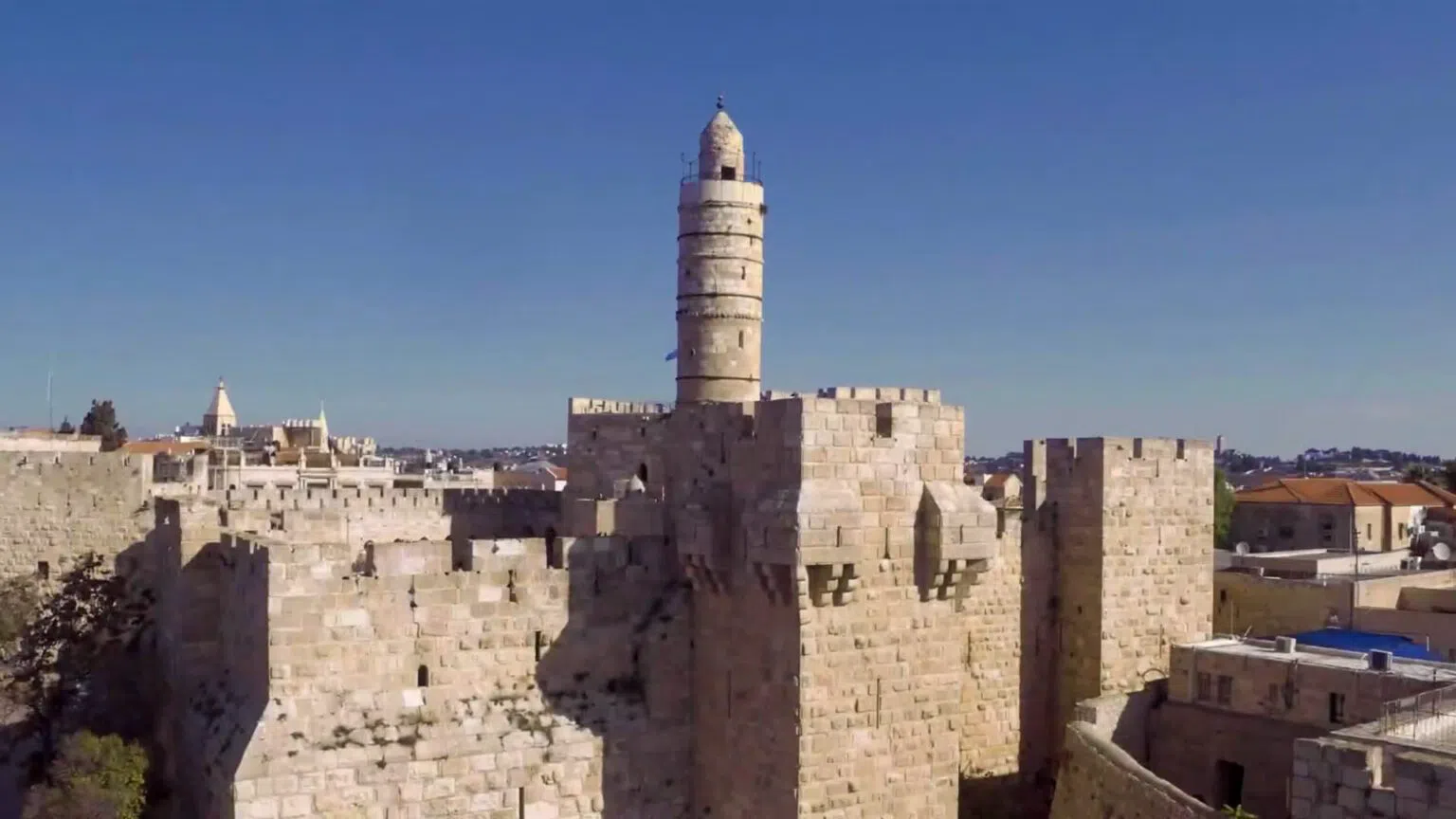
Start at the Tower of David Jerusalem Museum (just inside Jaffa Gate), which reopened this June after a $50M, eight-year overhaul and is now the city's official museum. Ten new tech-driven galleries walk you through 4,000 years in the citadel's own courtyards, and it is genuinely built for organised tours — newly added lifts and ramps make it the most accessible major site inside the walls, a real consideration if anyone in your party can't manage steps and cobbles. Tickets run roughly ₪40–60. Give it 90 minutes and you'll read the rest of the day far better.
For a human map rather than a stone one, SANDEMANs NEW Europe — Free Tour of Jerusalem (meets near Jaffa Gate) runs a two-hour loop through all four quarters on a pay-what-you-like basis. Turnout regularly tops 40 and is split among several guides, so it's easy to join solo or as a small group — just book online or show up. Treat it as scaffolding for exploring alone afterwards, and tip what the guide earns; "free" here means the guide works for your generosity.
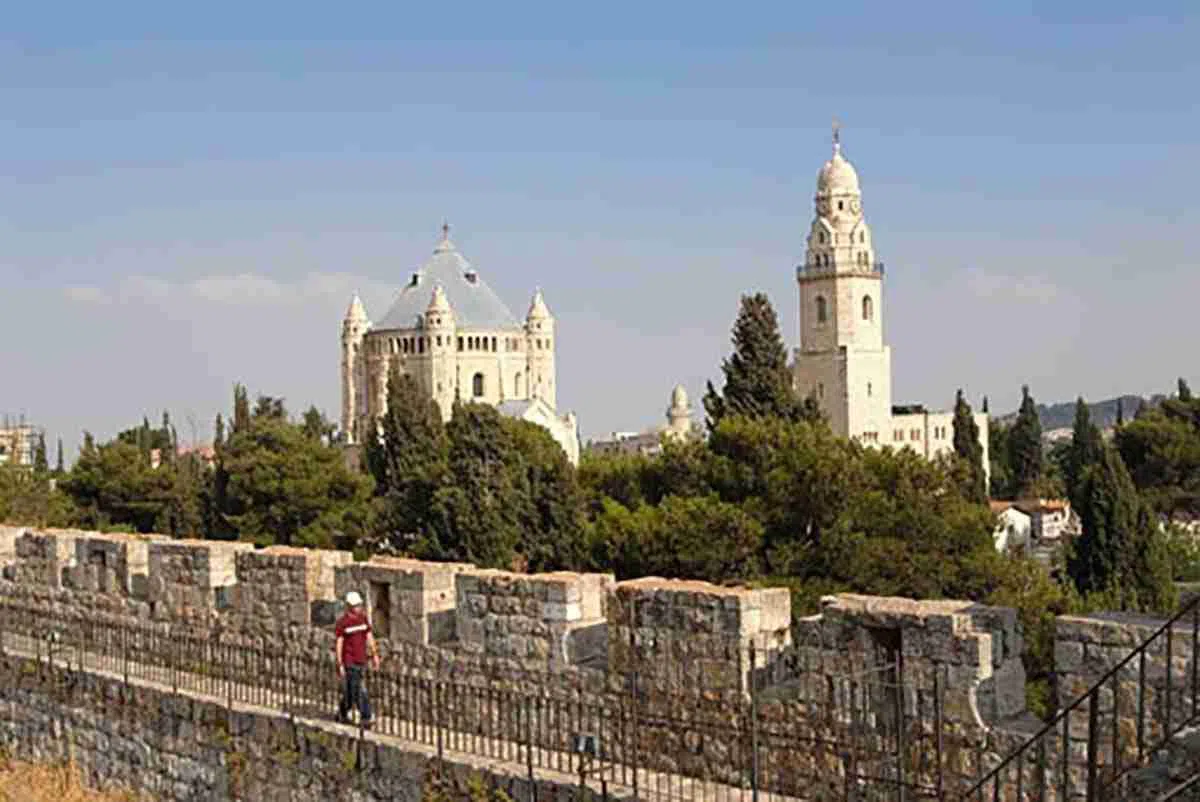
If you'd rather see how the quarters knit together from above, the Ramparts Walk (ticket from Jaffa Gate) takes you along the top of the 16th-century walls with the best high-level perspective on the whole maze. Be honest with yourself about the party, though: it's stairs, narrow passages and no shade, so it suits couples and small, sure-footed groups and is genuinely unsuitable for large tour groups or anyone with mobility limits. A day-valid ticket is about ₪20–30; carry water and sun cover, because facilities up there are sparse.
Plan your Jerusalem trip
Live prices from our booking partners.
Free cancellation on many rooms. We may earn a commission when you book.
The Muslim Quarter: the narrowest window and the loudest lanes
The Muslim Quarter is the largest and most crowded, and it holds the single most time-sensitive visit in the city — so start here early.
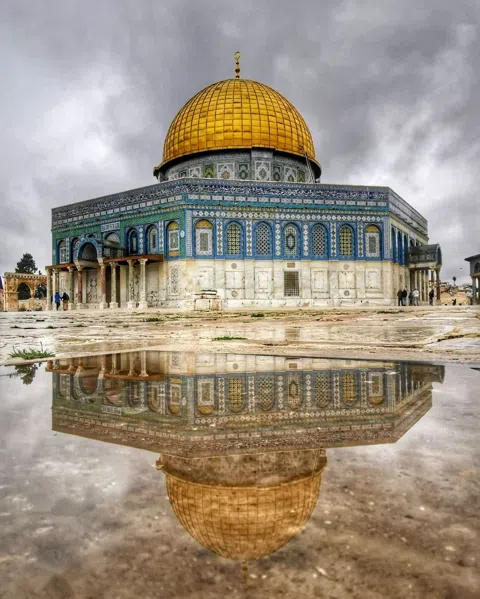
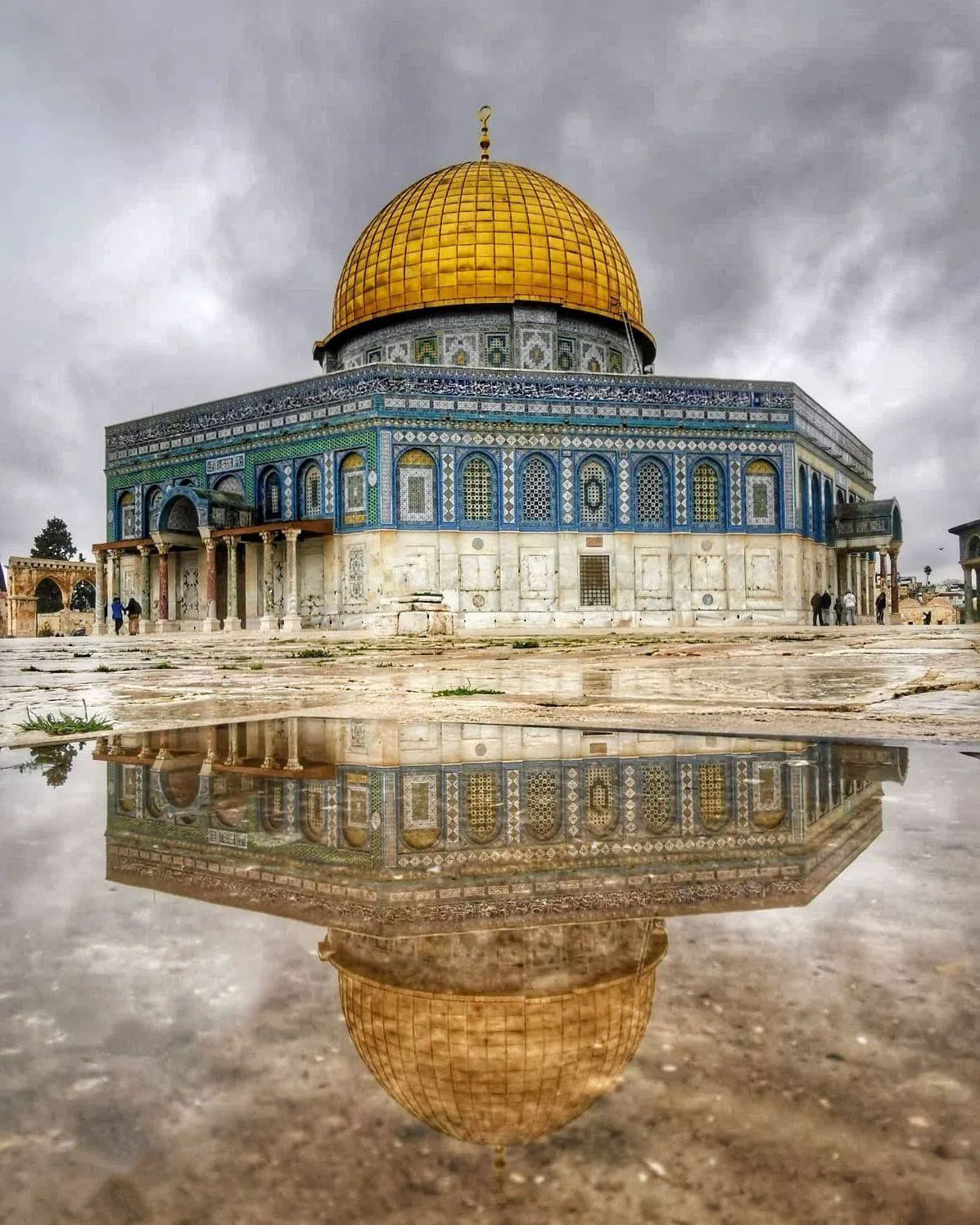
For non-Muslim visitors, the Temple Mount / Dome of the Rock esplanade (Haram al-Sharif, entered only via the Mughrabi Gate ramp beside the Western Wall) opens in short morning windows, roughly 07:30–11:00 and closed Friday and Saturday. The queue routinely swallows that window by 09:00, so this is a be-in-line-by-07:00 item; verify the hours the same morning, because they shift often. Bring your passport. Non-Muslims may walk the esplanade but cannot enter the shrine interior, and no non-Muslim prayer or religious items are permitted — respect that completely; it is the condition on which access rests. Entry to the esplanade is free. Groups are fine, but keep them quiet and together.
When you come back down into the lanes, you're in the Arab Souk (Muslim and Christian Quarter markets, running from Damascus Gate to the Via Dolorosa). Reopened and refilling through 2026, this 800-merchant maze is the sensory core of the Old City — spice, ceramics, street food, and the theatre of haggling, which is expected rather than rude. It's free to wander, but the lanes are narrow: groups end up single-file and can't actually stop at stalls, so this rewards couples and pairs over big parties. Go small, go slow, and let yourself get a little lost.
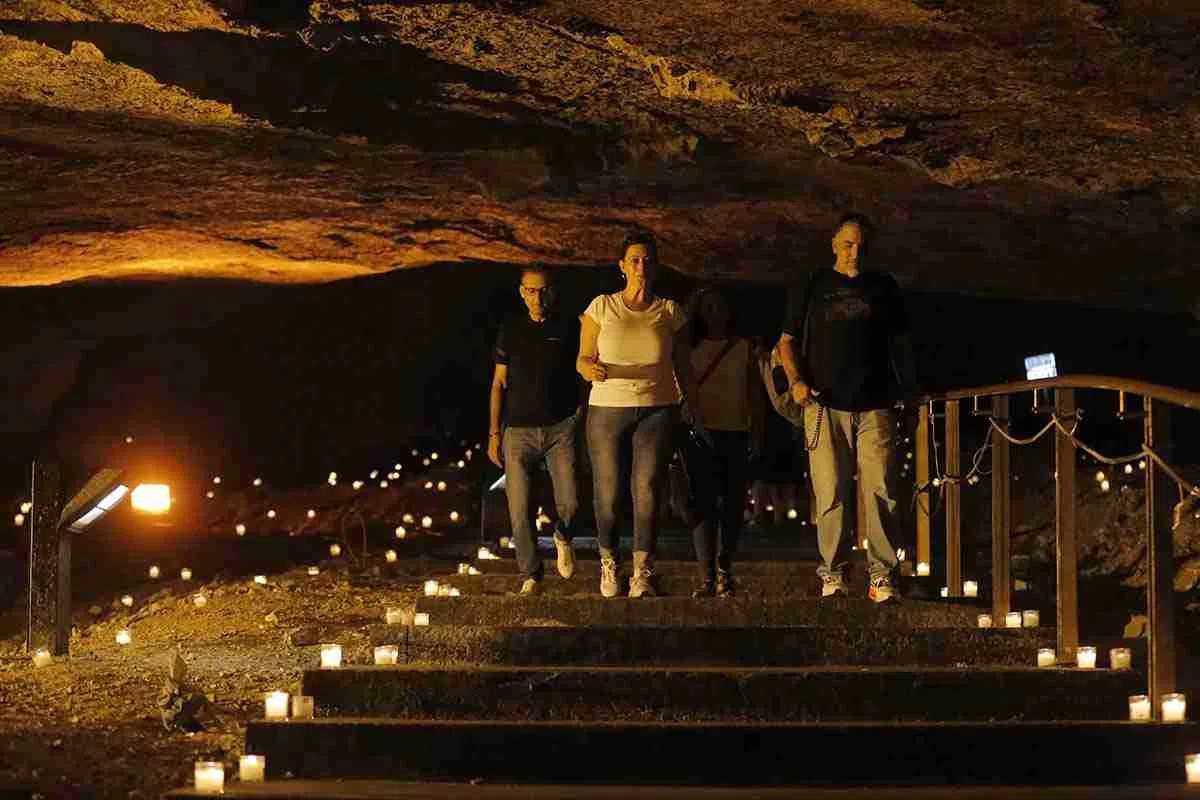
When the crowd and the heat start to win, two escapes sit close by. Climb to the Austrian Hospice — Café Triest and rooftop terrace (on the Via Dolorosa at the heart of the Muslim Quarter), a slice of Central Europe above the souk where strudel and coffee come with one of the best free-ish views in the city — rooftop access is a token ₪5 coin, the café à la carte and mid-priced. The catch is size: the terrace and café seating are small, lovely for a few at a time but tight for a full group, so send people up in shifts. For a cooler, weather-proof change of pace, Zedekiah's Cave (King Solomon's Quarries, near Damascus Gate) runs a 30-minute audiovisual show, "Mysteries beneath the Walls," in a vast quarry beneath the quarter. Entry is about ₪20, it comfortably takes groups — it even hosts concerts — and on a fierce afternoon its stone-cool dark is a mercy.
The Christian Quarter: arrive before the incense clears
The Christian Quarter is compact and steep, and its centrepiece rewards the disciplined early riser above all else.
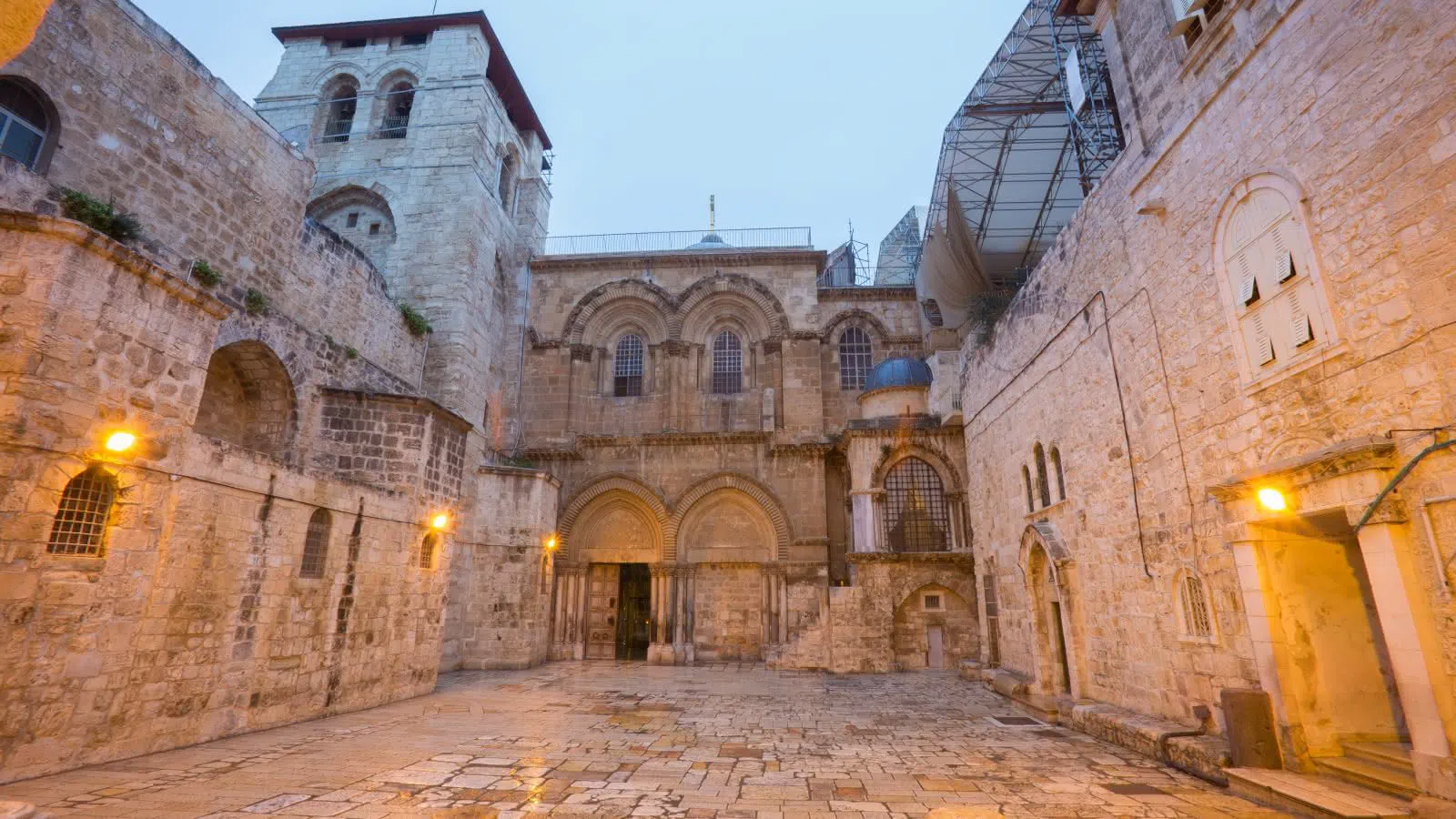
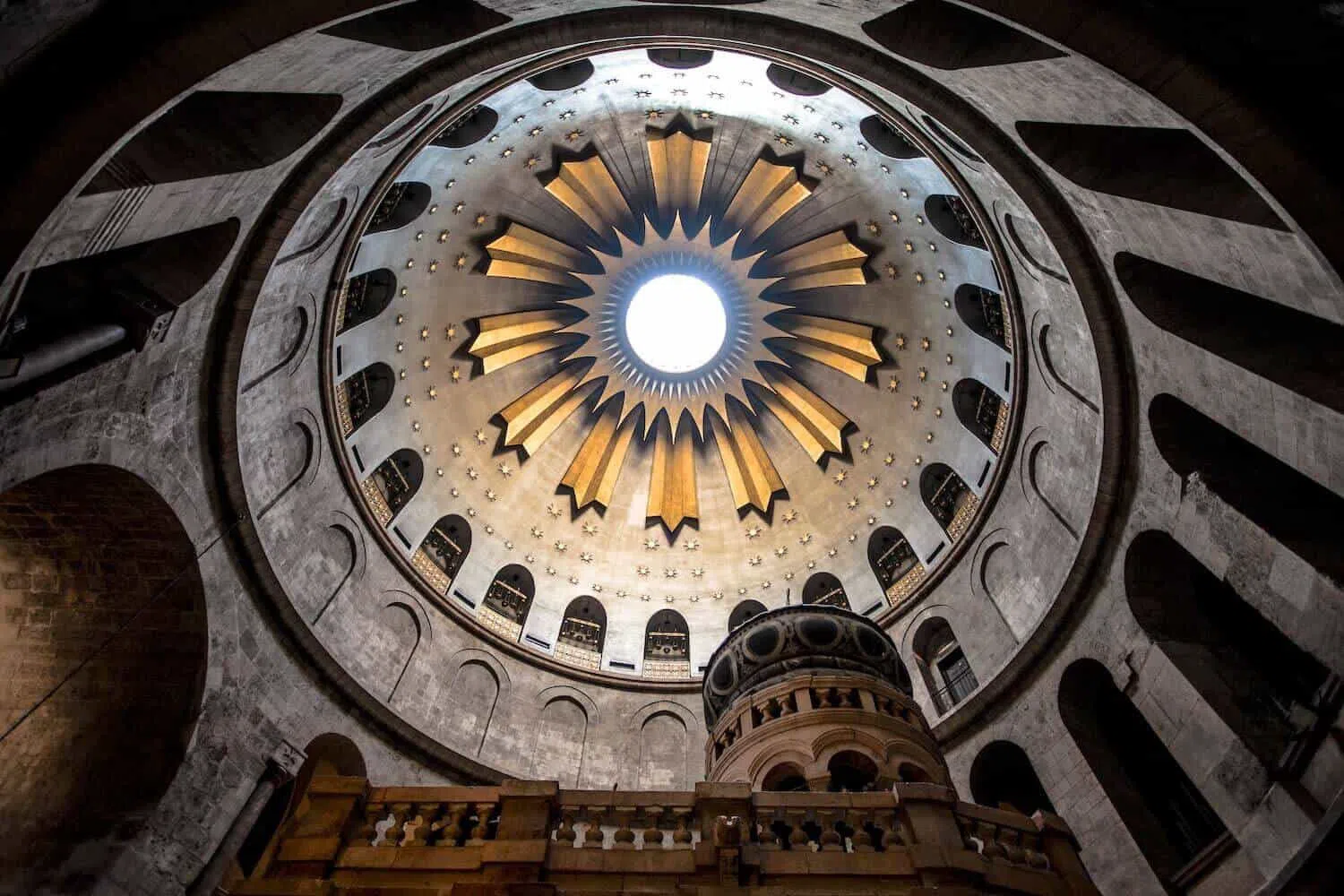
The Church of the Holy Sepulchre (in the heart of the Christian Quarter) is open 365 days a year, free to all faiths, and shared — not always peacefully — by six denominations. The trade-off is crowds: queues at the Tomb grow brutal by mid-morning. Come at opening, from 04:00–05:00 depending on the season, and the reward is the church at its most itself — candlelight, incense hanging in the columns, the low sound of overlapping liturgies before the tour groups arrive. It suits everyone, but the atmosphere that makes it unforgettable belongs to the first hour.
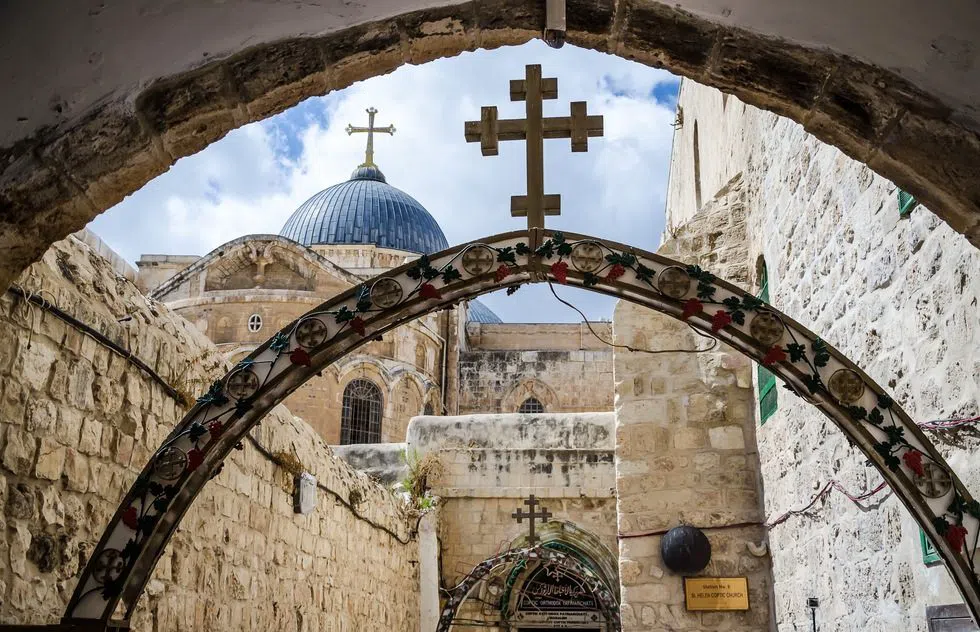
Threading out from the church is the Via Dolorosa (stitching the Muslim and Christian quarters), the 14-station route you can walk self-guided any day. Every Friday at 15:00 the Franciscan friars lead a public procession along it, open to all and joined by large crowds; it's a genuinely moving communal walk regardless of your faith, though the press of people is real, so hold small children close and don't expect quiet contemplation. On any other day you can trace the same stations in near solitude.
Just inside Lions' Gate, at the quarter's eastern edge, stands one of the Old City's quietest wonders: the Church of St. Anne and the Pools of Bethesda. Nine centuries on, the bare Crusader stone acts as one enormous instrument for the human voice, and pilgrim groups are warmly welcomed — indeed invited — to sing; the acoustics are the entire point. A group finding a hymn together under that vault is one of the most affecting free experiences in Jerusalem (entry is a small ~₪10). If you're travelling as a couple, linger until a choir arrives and simply listen. The adjacent excavated pools reward an unhurried, respectful poke around.
The Armenian Quarter: the smallest, the quietest, the most craft
The Armenian Quarter is the smallest and most self-contained, walled and calm, and it is easy to walk straight past. Slow down for it.
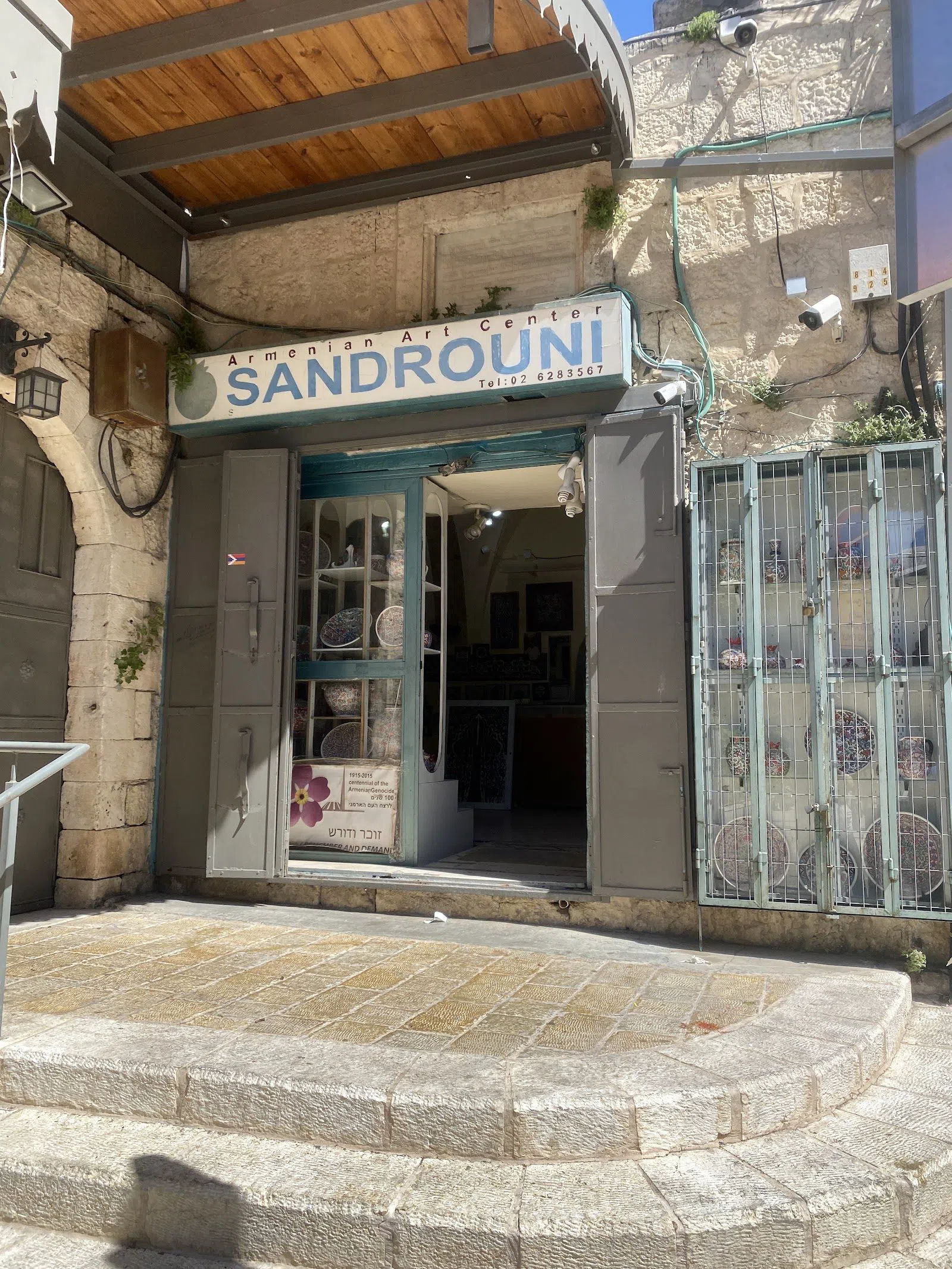
Its defining stop is the Sandrouni Armenian Art Center (Armenian Quarter, near Jaffa Gate), a small shop-studio that is a genuine maker rather than a souvenir stall. This is the living continuation of the century-old Jerusalem Armenian ceramic tradition — the very craft behind the tiles of the Dome of the Rock — and pieces range from modest tiles to collector platters. It's free to browse, and because the studio is intimate it's best for couples or small groups; a full coach-load would simply swamp it. Buy here and you carry home an authentic, quarter-defining keepsake rather than a factory magnet.
The Jewish Quarter: rebuilt stone, deep tunnels, and the wall that never closes
The Jewish Quarter is the most rebuilt of the four — much of it reconstructed after 1948 — and it's also the most walkable, with wider, cleaner lanes and a clear spine to follow.
That spine is the Roman Cardo (running through the Jewish Quarter), a 150-metre stretch of Emperor Hadrian's original main street, half open-air ruin and half working gallery-arcade. It's self-guided and easy for groups to navigate, and it doubles as a naturally sheltered walking route on a hot or wet day — history you stroll straight through, free to walk (the shops price themselves).
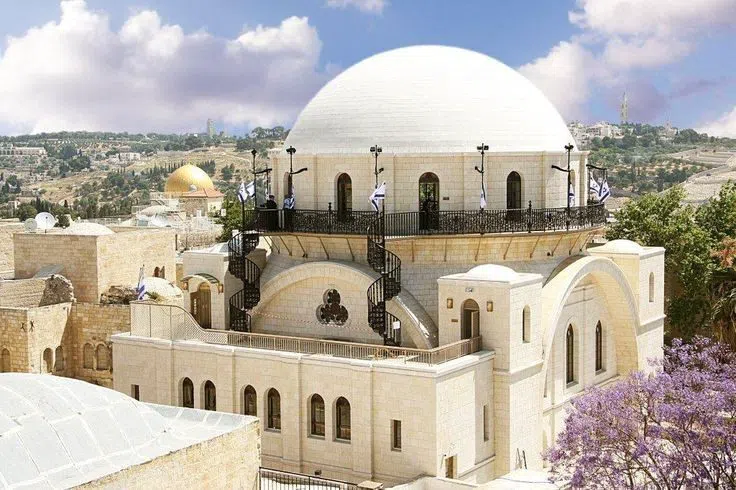
At the quarter's high point sits the Hurva Synagogue (central Jewish Quarter), rebuilt to its 19th-century glory in 2010 after being levelled in 1948. Entry is by a short guided group tour that runs through the day (about ₪25), and the payoff is the balcony climb to one of the Old City's best rooftop panoramas — the four quarters laid out around you. It's the visual heart of the quarter and worth timing for the tour rather than just glancing at the dome from the square.
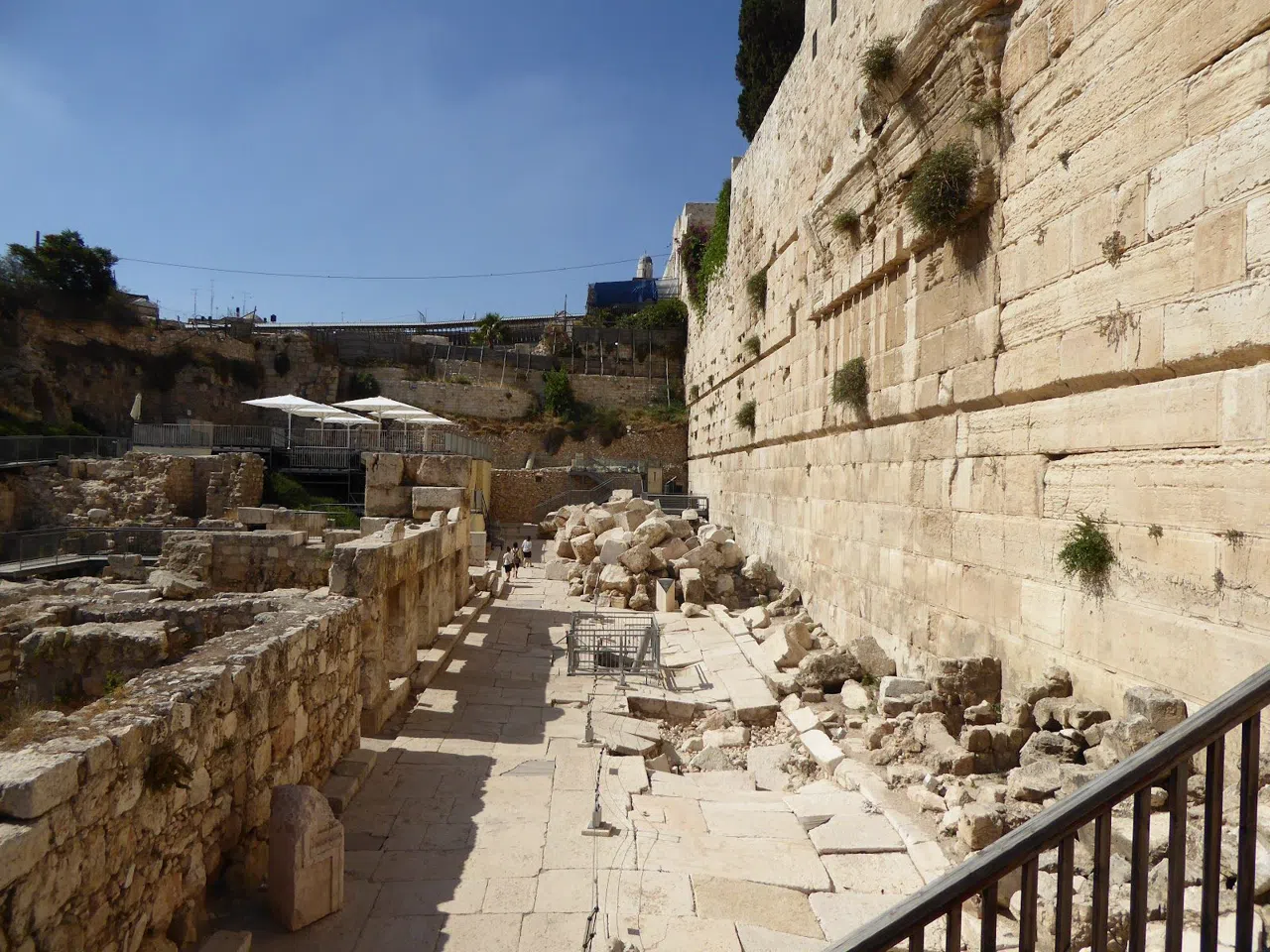
Everything here funnels down to the Western Wall — the Kotel (foot of the Jewish Quarter), the single most iconic site in the Old City and, uniquely, open around the clock in 2026. The plaza is free, open-access, and fine for groups at any hour; men and women pray in separate sections, and modest dress is expected. It carries a different charge at different times — dawn is contemplative, Friday evening as Shabbat comes in is electric with song. Approach as a witness, keep back from those praying, and note that photography is discouraged from Friday evening through Saturday.
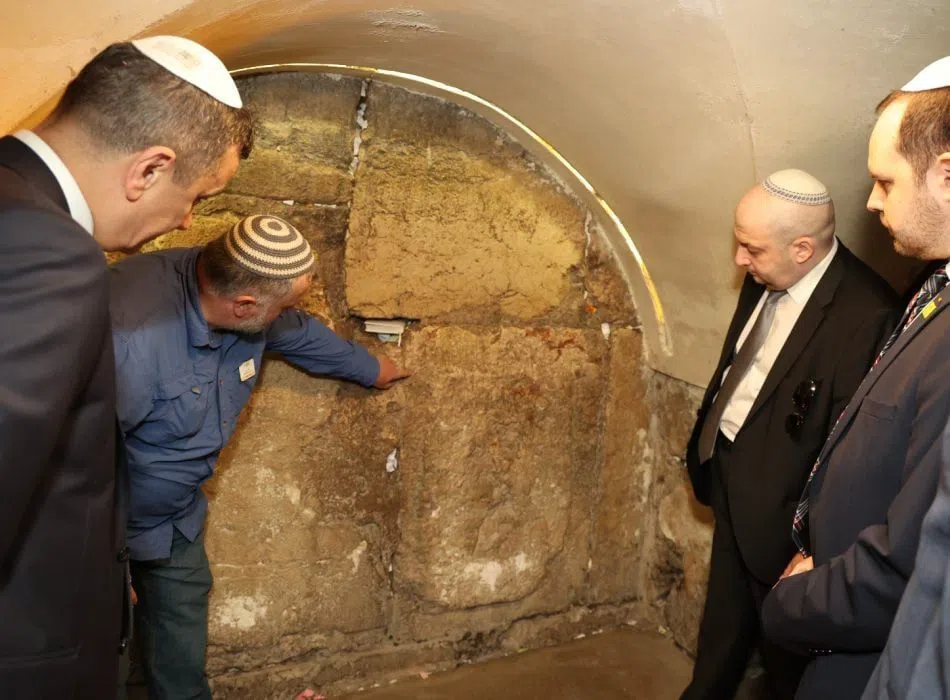
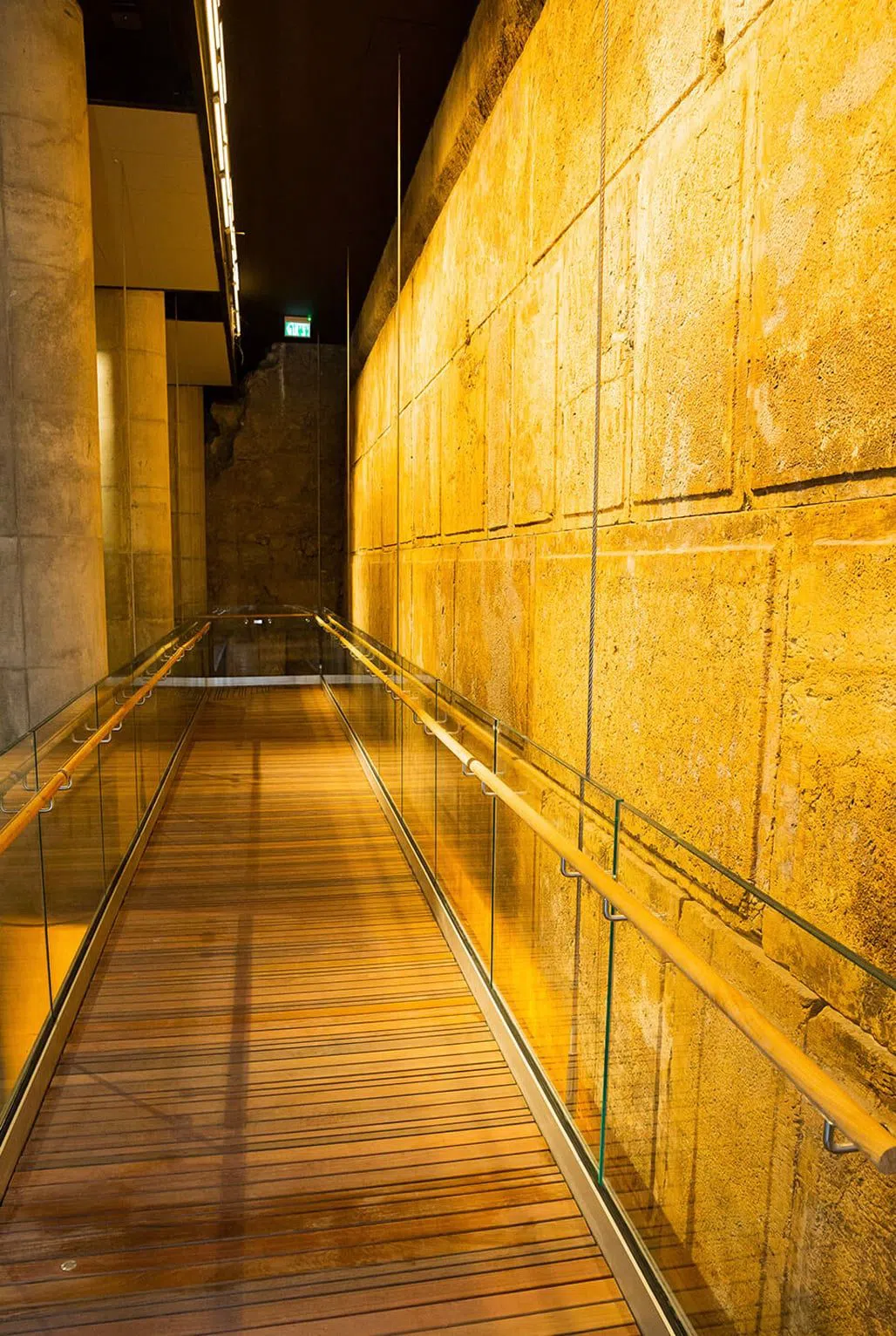
Beneath the plaza, the Western Wall Tunnels (Western Wall Heritage Foundation, entered from the plaza's northern edge) are a genuinely different experience from the surface — a guided descent along the wall's hidden lower courses. You must pre-book, as groups (up to about 35) fill fast; the tour runs about an hour and ten, Sunday to Thursday only, never on Shabbat. Adult tickets are about ₪38 (~$10), concessions ₪25. The newer "Great Bridge Route" extension now drops visitors a further level below the Old City, and it's worth the advance planning. Book online days ahead — walk-up space is rare.
Practical notes for the walled city
When to come, and the weekly rhythm. Sunday to Thursday is the fullest visiting window: the Western Wall Tunnels run, the Temple Mount opens its morning slot, and shops keep normal hours. Friday winds down toward Shabbat — the Temple Mount is closed to non-Muslims, the Via Dolorosa procession fills the Christian Quarter at 15:00, and Jewish-quarter businesses shut in the afternoon. Saturday (Shabbat) is the quietest in the Jewish Quarter; the Christian and Muslim quarters stay livelier. Plan the two time-locked visits — Temple Mount at 07:00, Holy Sepulchre at opening — for the same early start, since neither waits.
Timing a single day. Roughly: Temple Mount at dawn, Holy Sepulchre straight after (or swap them and do the church at 05:00, the Mount at 07:30), the souk and Austrian Hospice through late morning, a cool indoor stop (Zedekiah's Cave or the Tower of David Museum) in the afternoon heat, then the Jewish Quarter and the Kotel toward dusk when the light softens the stone.
Getting there and around. The Old City is walkable-only inside the walls — no cars, cobbles throughout, so wear real shoes. Enter on foot through Jaffa Gate (west, by the Tower of David) or Damascus Gate (north, into the souk). Everything in this guide is within a 15-minute walk of everything else; the challenge is navigation, not distance. If steps and uneven ground are a concern, lean on the Tower of David Museum's new lifts and skip the Ramparts Walk.
Cash, tickets and budget. Carry shekels (₪) in small notes — souk stalls, the Austrian Hospice rooftop coin, and small church entries often don't take cards, though museums do. Pre-book the Western Wall Tunnels online; everything else you can buy on the day. A lean day inside the walls costs very little: the Western Wall, Holy Sepulchre, Temple Mount esplanade, Roman Cardo and the SANDEMANs tour are all free (tip the guide), with the museum, tunnels, Hurva and Ramparts the only real ticket costs. Budget roughly ₪120–180 per person if you do the paid sites, plus food and whatever the ceramics tempt you into.
Where to sleep. Staying inside or just outside the walls means you can catch the Holy Sepulchre at 05:00 and the Kotel at midnight without a commute. Compare rooms with a Jerusalem hotel search, and for neighbourhoods, food and day trips beyond the walls, see our wider Jerusalem guide.
One square kilometre, four worlds. Walk it slowly, arrive early where it counts, cover your shoulders at every threshold, and the Old City gives back far more than its size promises.
Before you go
What's the best order to walk Jerusalem's four quarters in a day?
Start early with the two time-locked sites: the Temple Mount esplanade in its 07:30–11:00 window and the Church of the Holy Sepulchre at opening (04:00–05:00). Then wander the Muslim Quarter souk and the Austrian Hospice rooftop late morning, take a cool indoor break (Zedekiah's Cave or the Tower of David Museum) in the afternoon heat, and finish in the Jewish Quarter at the Western Wall toward dusk. Everything is within a 15-minute walk.
Can non-Muslims visit the Temple Mount and Dome of the Rock?
Non-Muslims can enter the Haram al-Sharif esplanade only via the Mughrabi Gate ramp, in short morning windows (roughly 07:30–11:00, closed Friday and Saturday). The queue often fills that window by 09:00, so line up by 07:00 and verify the hours that same morning. Bring your passport. The shrine interiors are closed to non-Muslims, and no non-Muslim prayer or religious items are allowed. Esplanade entry is free.
What should I wear in the Old City?
Dress modestly everywhere inside the walls — shoulders and knees covered for all visitors — and carry a scarf you can pull up at religious thresholds. At the Western Wall, men and women pray in separate sections. These rules apply across the Muslim, Christian, Jewish and Armenian quarters; the sites are living places of worship, not photo backdrops.
How do I avoid the crowds at the Church of the Holy Sepulchre?
Arrive at opening, from 04:00–05:00 depending on the season. The church is open 365 days a year and free, but queues at the Tomb grow long by mid-morning. The first hour, with incense and candlelight and overlapping liturgies before the tour groups arrive, is when the atmosphere is strongest.
Which Old City sites need to be booked in advance?
The Western Wall Tunnels must be pre-booked online — group slots (up to about 35) fill fast, and tours run only Sunday to Thursday, never on Shabbat. Everything else in this guide can be bought or joined on the day, including the Tower of David Museum, the Hurva Synagogue tour, the Ramparts Walk and the SANDEMANs free walking tour.