
The shutters come down along Jaffa Road in a rough sequence, one street at a time, from early Friday afternoon. An hour before sunset the traffic has thinned until you can hear your own shoes on the limestone, and by nightfall a city of nearly a million people has given you a day on foot with almost nothing moving in it. Shabbat is not an inconvenience to plan around here. It is the most interesting twenty-five hours of the week, and it belongs to whoever is willing to walk.
Build the day backwards from candle-lighting
Shabbat runs from sunset on Friday to nightfall on Saturday, roughly twenty-five hours, and the clock shifts every week with the season. In deep winter the city is folding up before 16:30; in high summer you can still be waiting for the light to go at 19:45. Look up the candle-lighting time for your specific week before you book anything, because every piece of the plan below hangs off that one number.
Two consequences follow. Public transport winds down about an hour before sunset on Friday and returns roughly an hour after dark on Saturday, so if your arrival lands mid-Shabbat you will be walking or paying a taxi from wherever the airport train sets you down. The closing also happens in a wave rather than all at once. The markets thin from early afternoon, the bakeries sell through their challah, and the last hour before sunset has a hurried, slightly electric quality that is worth being outdoors for rather than reading about.
None of this itinerary needs a vehicle. Jaffa Gate to the Western Wall is ten or twelve minutes through the Armenian and Jewish Quarters. Zion Gate to the abbey on Mount Zion is two. The longest leg runs from Rehavia down across the Valley of the Cross and up to the museum campus, about half an hour at an unhurried pace.
The last two hours of noise on Friday
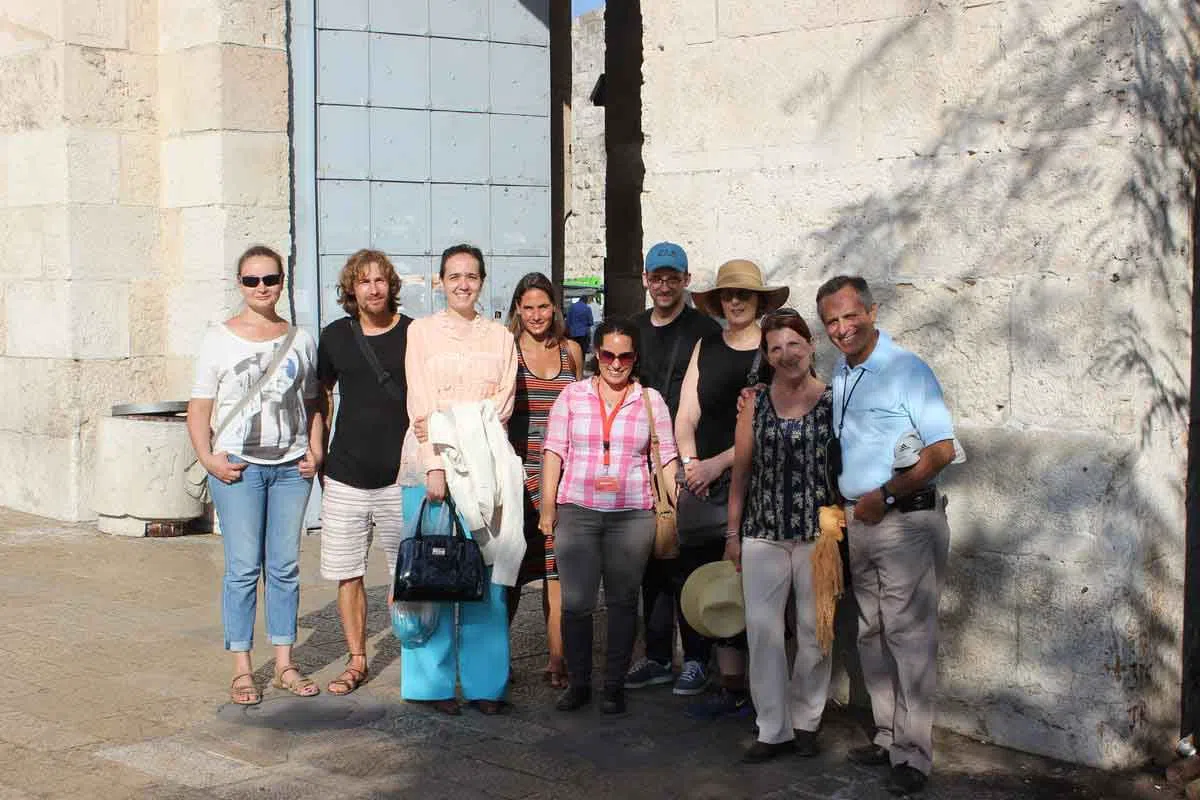
If you have no local invitation and no family in the city, the honest options for Friday evening narrow fast, and the most reliable of them is a walking group. Abraham Tours' Jerusalem Shabbat Experience (meets outside Jaffa Gate, Old City) runs every Friday at 17:00, lasts about two and a half hours and starts from 140 ILS per person, with free cancellation up to 24 hours ahead. It is built for mixed groups and for solo travellers, which matters more than it sounds. Friday night in Jerusalem is a family event, and turning up alone at the Wall with no context means you watch it rather than follow it.
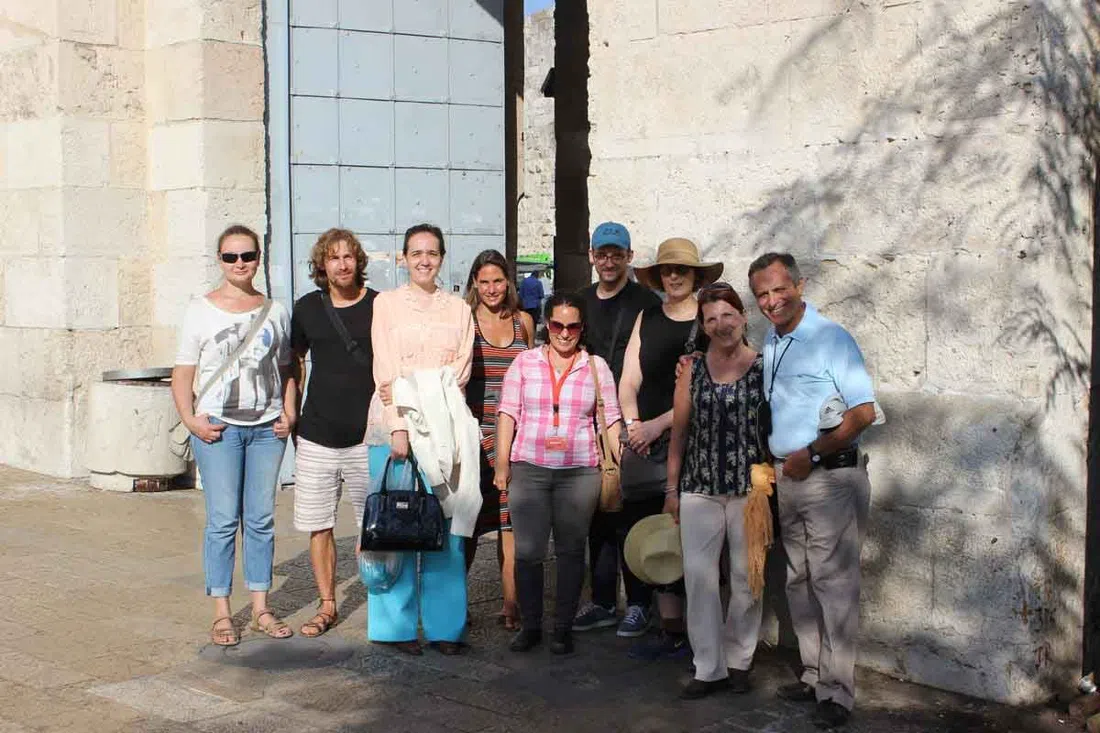
The route takes the Jewish Quarter first, then the Four Sephardic Synagogues, four small prayer rooms sunk below street level, built low rather than tall because height was not permitted to them, and times its descent so you reach the Western Wall as the sun goes. Modest dress is enforced rather than suggested: shoulders and knees covered, head covering for men, which they will hand you if you arrive without one. One caveat on timing. Because 17:00 sits very close to candle-lighting in the winter months, confirm the start time for your week when you book rather than assuming it.
A second caveat, because the internet has not caught up. A long-running Friday-night programme that placed visitors in a local family's home for dinner still appears in plenty of guides and blog posts; it currently shows as permanently closed. Do not build your evening around it without a phone call confirming it is running.
The one view in Jerusalem you are forbidden to photograph
Western Wall Plaza (the Kotel, Jewish Quarter) is free, open every hour of every day, takes no booking and has no practical group limit. You pass through a security screening at the entrances and you are in. Men need a head covering, and paper ones sit in a box at the edge of the plaza. Women need knees and shoulders covered; a light scarf in your bag solves most of it in summer.
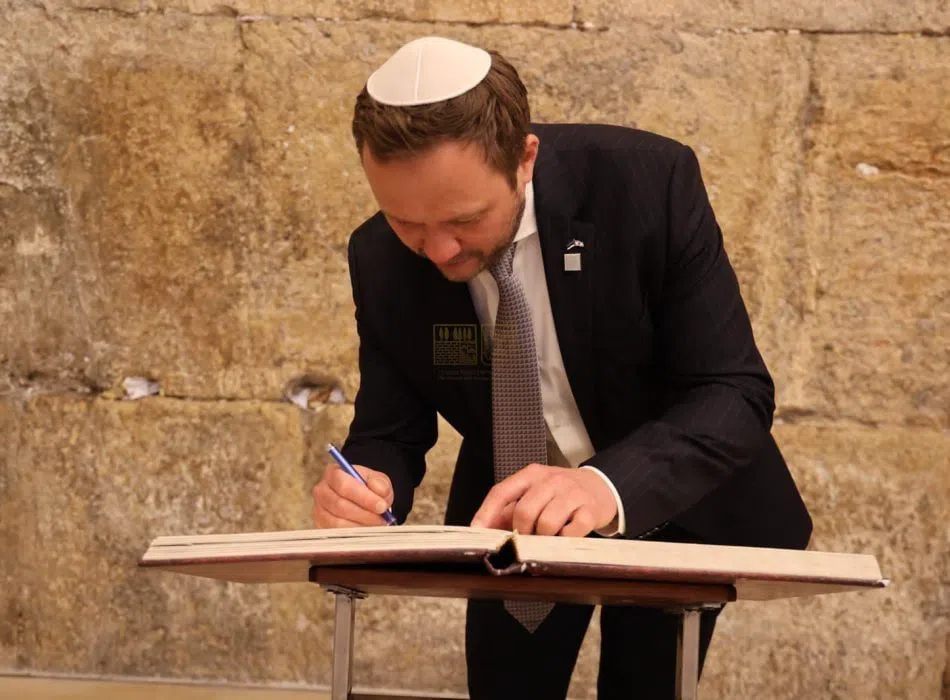
Arrive about thirty minutes before Friday sunset. That gets you the change itself rather than the aftermath: the plaza filling from the alleys above, students coming down in circles already singing, soldiers off duty, families walking in formation, and in among all of it people standing alone with their hands flat on the stone. The prayer sections for men and women are separate, and the plaza behind them is open to anyone.
From sunset on Friday until nightfall on Saturday, cameras and phones are not permitted here, and the rule is enforced. This is the one famous sight in the city you cannot take away with you. With nothing to compose, you are left standing still and looking, which is what you came for. The place is a working synagogue that happens to have no roof, so stand at the edge of a singing circle rather than inside one, do not cut between a person and the wall, and if a service forms around you, either join the stillness or step back out of it.
It is not a serene experience, either. On a warm Friday it is loud, crowded and jostling, and if you want the quiet version, come back on Saturday afternoon when the plaza empties out and the same stones get a tenth of the volume.
Two synagogues that could not be less alike
Saturday morning is when visitors most often freeze, because the obvious options are shut and the interesting ones feel like someone else's house. Two rooms solve it, and choosing the wrong one for your group size is the most common mistake.
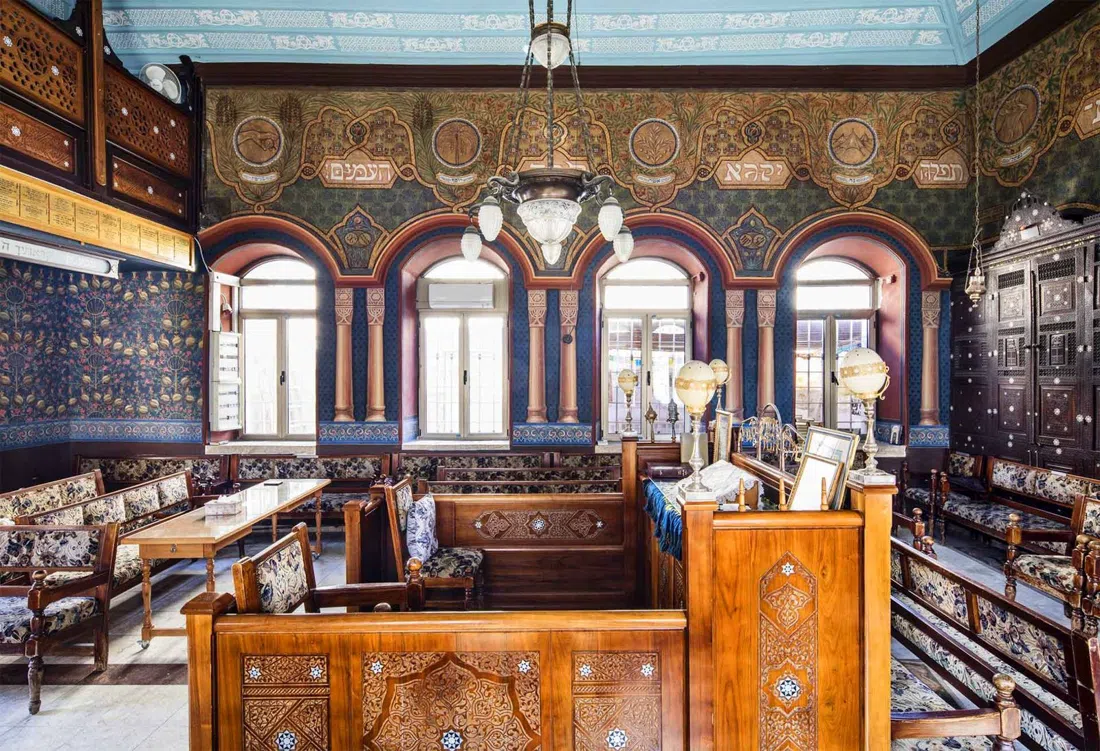
Ades Synagogue (Nachlaot) is a tiny working shul and should be treated as one. Entry is free with a donation customary, seating is separate for men and women, and a quiet word with a gabbai as you arrive is the polite move. It takes ten seconds and changes how the morning goes. This is a couples-and-handfuls place, never a coach party; a group of twenty would simply take the room away from the people who pray in it. What you come for is the music. Prayer here runs strictly on the maqamat of the Syrian rite, and the scale shifts with the weekly Torah portion, so the same service sounds different from one week to the next. Saturday afternoon brings singing after Minha, unhurried and mostly unaccompanied. The purist's answer is Baqashot, which begins around three in the morning through the winter months. If you are that person, go. Everyone else should take Friday night or Shabbat morning and be perfectly happy.
Jerusalem Great Synagogue (King George Street, city centre) is the deliberate opposite number, and the only synagogue in this article that comfortably absorbs a full tour group. It seats 1,400, visitors are openly welcomed, and siddurim with English translation are handed out at the door. Shabbat Shacharit begins around 08:00 and runs roughly three hours, free to attend. It is the seat of the Chief Rabbinate and still pulls congregations well over a thousand in 2026, with a world-class hazzan and a trained choir, closer to cantorial performance than to intimate prayer, and unapologetic about it. The practical kindness of the place is that you can arrive mid-service and leave mid-service without causing any offence, which no small shul will ever offer you.
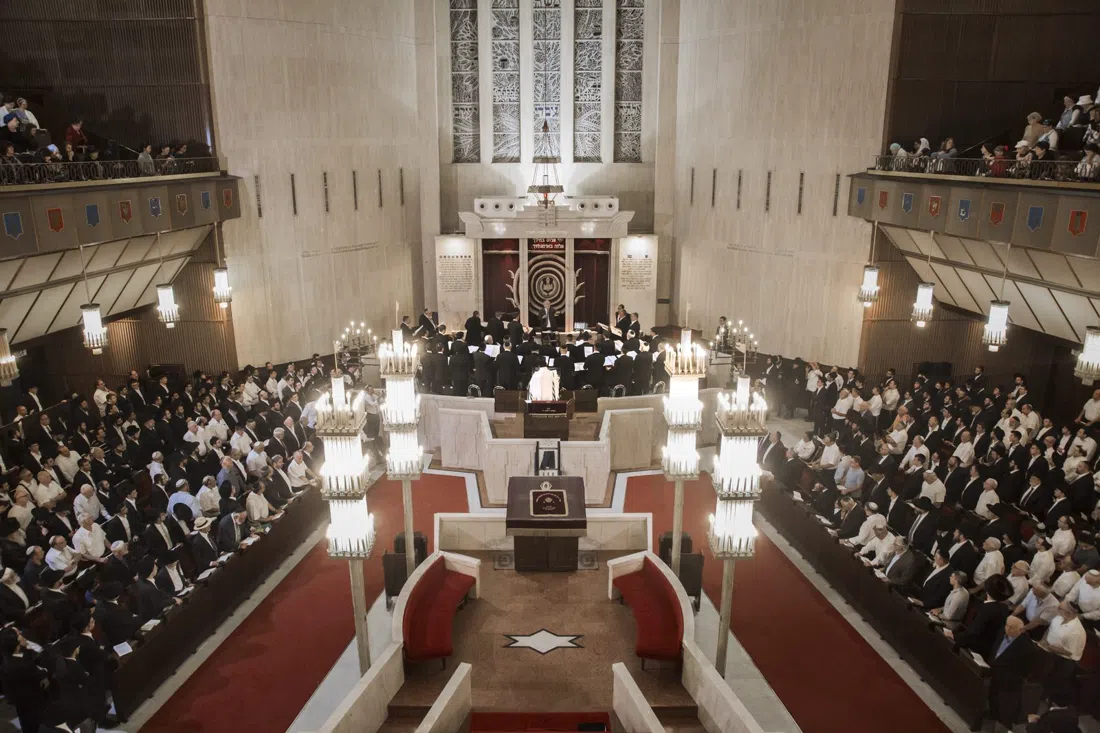
So: two of you, go to Ades. Twenty of you, go to the Great Synagogue. Doing it the other way round is rude in one direction and disappointing in the other.
Saturday afternoon on the other calendar
Saturday after lunch is the moment Shabbat turns disorienting for visitors, because Jewish Jerusalem is at its quietest and most things with a till are closed. The answer is to walk into a part of the city keeping a different week.
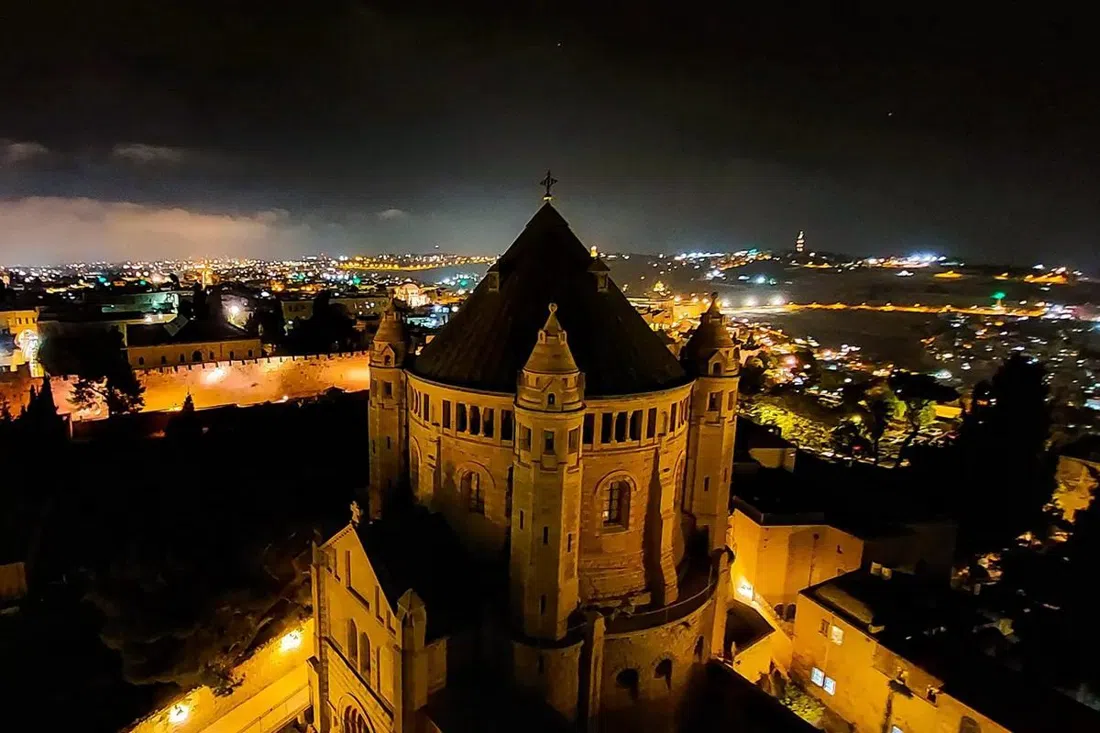
Dormition Abbey (Mount Zion, two minutes outside Zion Gate) is open on Saturday from roughly 09:00 to 17:30, free to enter. It is a German Benedictine community, and that pivot is the reason to go: you step out of a city observing Shabbat and into a monastery whose calendar has nothing to do with it. Pilgrim groups are routine here, so arriving with numbers is no problem, but silence is expected in the crypt and during the monks' offices. If your timing is lucky you will catch Gregorian chant from the choir stalls, which is reason enough to sit down for twenty minutes. There is a community praying inside this building every day, and the crypt in particular deserves your phone staying in your pocket on your own initiative.
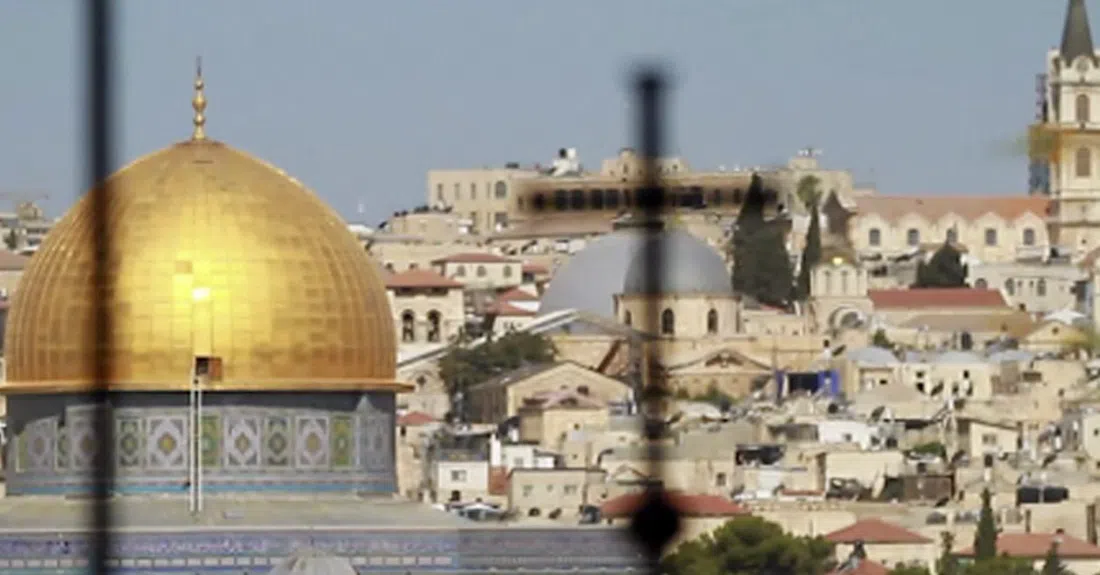
From there, walk back in through Zion Gate and across to the Austrian Hospice of the Holy Family (Café Triest, Muslim Quarter, on the Via Dolorosa). It opens daily including Shabbat, with the café running from 10:00, the kitchen until 21:00 and the coffee house until 22:00. Because it sits in the Muslim Quarter, it keeps its own hours while Jewish Jerusalem is closed. The rooftop costs 5 ILS per person and gives you the best orientation view inside the walls: domes, bell towers and minarets all in one sweep, with the Old City's four quarters laid out as actual geography rather than a map legend. The roof itself is small, so send a group up in shifts and keep everyone else on the garden terrace, which takes numbers comfortably. Coffee and strudel run roughly 35 to 55 ILS. Sachertorte and an Austrian coffee house on the Via Dolorosa is also, quietly, the best joke in the city.
The strongest ticket open on a Saturday
Tower of David Jerusalem Museum (just inside Jaffa Gate) opens 364 days a year, Shabbat included, and after its full renovation it is comfortably the best ticketed thing you can do inside the walls on a Saturday. Hours are 09:00 to 15:00 on Saturday with the box office shutting at 14:00. That early close catches people out constantly, so treat it as a morning or immediately-post-lunch plan rather than an afternoon fallback. Adult admission is around 60 ILS, with reductions for students, seniors and children.
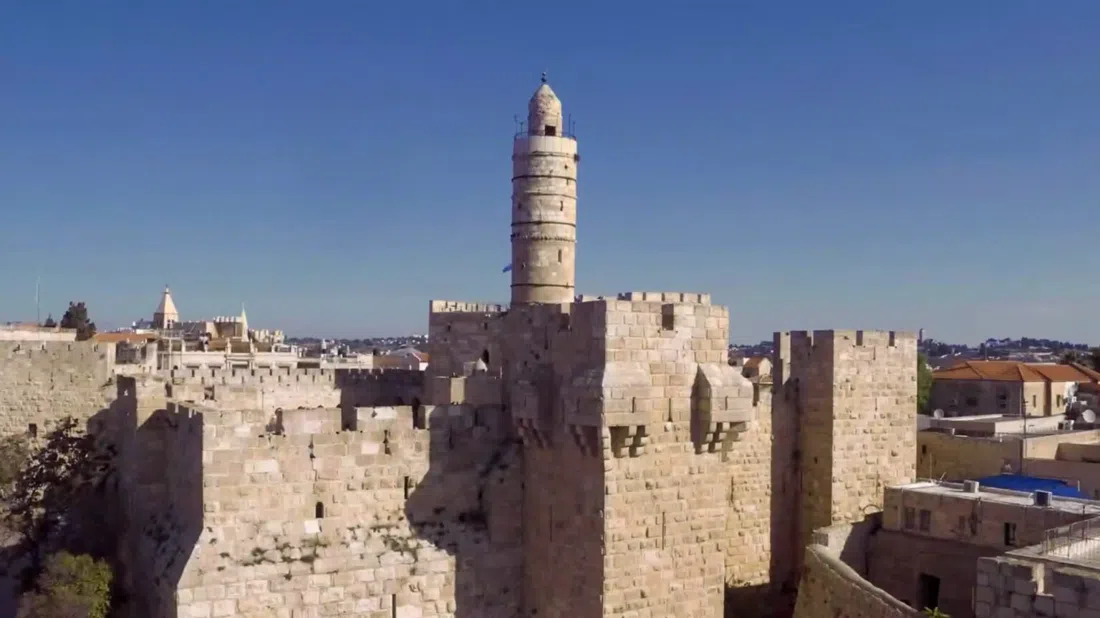
The citadel runs dedicated Shabbat group programmes on every Saturday of the year, with advance registration. For groups, booking ahead is the condition of entry rather than a courtesy. And if you keep Shabbat yourself, buy your ticket before sunset on Friday so you are not handling a transaction on the day. The museum has deliberately made that possible.
The anchor for heat, rain and tired legs
When the sun is brutal or the winter rain sets in sideways, The Israel Museum, Jerusalem (museum campus, west of Rehavia) is the plan that does not fail. It opens Saturday 10:00 to 16:00, and 10:00 to 14:00 on Friday. Adult tickets are 62 ILS, 45 ILS for students and seniors, and under-18s go free on Saturday, which makes it the obvious family move of the weekend. It takes booked group tours, and it sells tickets in advance specifically so that Shabbat-observant visitors never have to transact on the day.
That the country's flagship museum opens at all on Shabbat is one of the compromises this city runs on. Best of all for this itinerary, you can walk there, out through Rehavia, down across the Valley of the Cross and up the other side, half an hour, so the museum extends the walking day instead of breaking it with a vehicle.
Where to sleep so the walk starts at your door
This itinerary rewards staying close. Anywhere near the Old City gates or in the city centre around King George Street puts the Wall, the citadel, both synagogues and the abbey inside twenty minutes on foot, which is the whole trick of a weekend when nothing drives. Start with a Jerusalem hotel search and filter for walking distance rather than price alone.
When you book, ask three questions directly: whether the lifts run on a Shabbat setting, whether room entry is by key or keycard, and whether Friday dinner must be pre-ordered. Many kitchens serve a pre-arranged Friday meal and then nothing hot until Saturday night, and finding that out on arrival at 18:00 is a bad way to start. For wider context on the city beyond this one weekend, the broader Jerusalem guide covers the rest of the week.
Practical notes for the quiet day
The light rail and city buses stop roughly an hour before Friday sunset and restart about an hour after dark on Saturday. Taxis do operate through Shabbat, but agree the fare or insist on the meter before you get in, because Saturday is a seller's market. Everything in this article is walkable, and the walking is the better version anyway.
Draw small notes on Friday morning. Card works at the citadel, the museum and the café, but the 5 ILS rooftop charge and a donation at a small shul are both easier in coins, and most places that would break a large note are shut.
Build the timings backwards from candle-lighting. Be at the Western Wall thirty minutes before Friday sunset. The two Saturday closes that ruin plans are 14:00 at the citadel box office and 16:00 at the museum. The abbey and the café both run late into the afternoon, so put them last.
On money: the Friday walking group from 140 ILS, the citadel around 60 ILS, the museum 62 ILS, the rooftop 5 ILS and coffee with strudel 35 to 55 ILS comes to roughly 310 ILS per person for the whole weekend of paid entries, a little under €80, before meals and your room. The Western Wall, Ades, the Great Synagogue and Dormition Abbey are all free, which means the best hour of the trip costs nothing and cannot be photographed.
For dress, shoulders and knees covered for women, head covering for men at the Wall and in both synagogues, and the same modesty standard holds at the abbey. Carry a scarf in summer and you will never be turned around at a door.