 In this area
The Jerusalem issue
East Jerusalem, Jerusalem: markets, pilgrim sites and old hotels
From Damascus Gate to Sheikh Jarrah, East Jerusalem moves to its own rhythm: Palestinian food, serious pilgrimage sites, bookshops, old hotels and a street life that feels local rather than polished.
By Tamar ElbazOld City ramparts to the Israel Museum
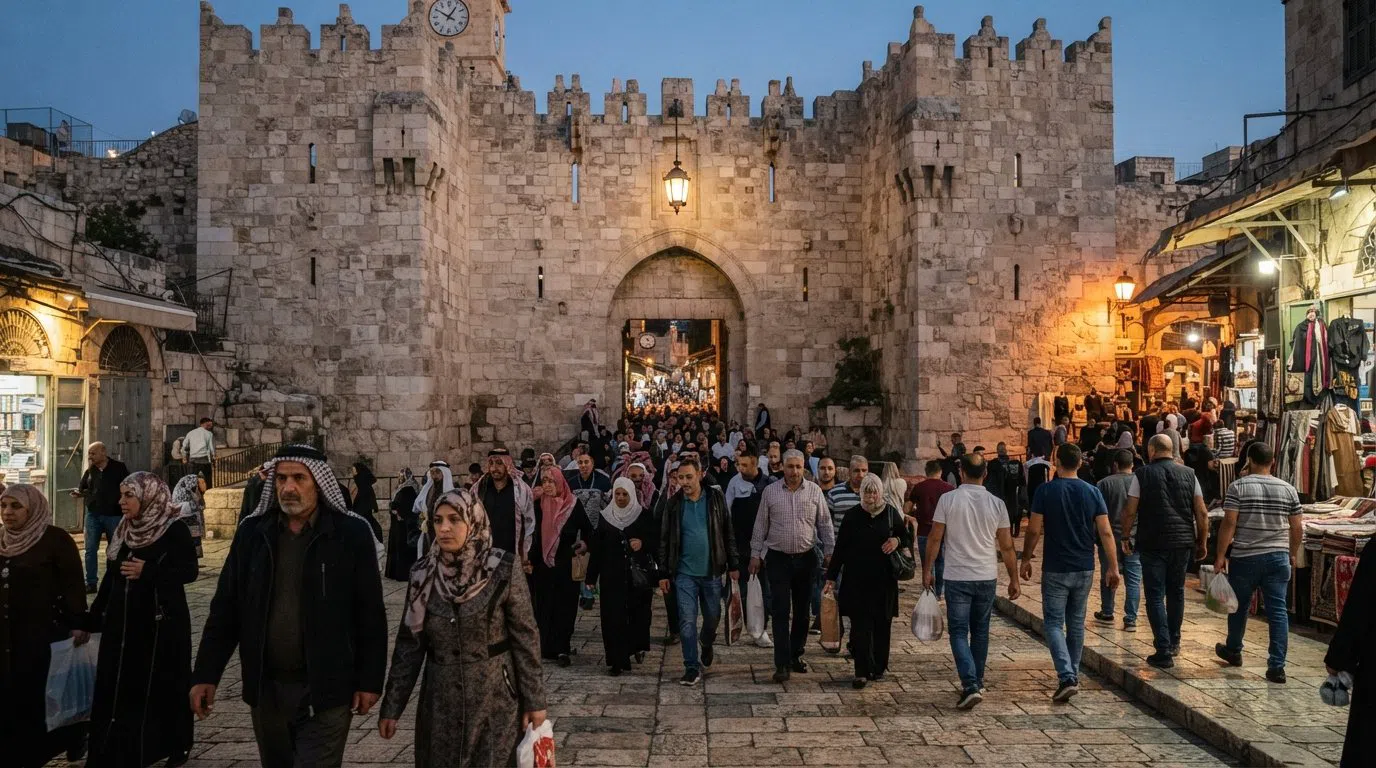
Walk out of Damascus Gate and the city changes register at once: the signage flips to Arabic, the light rail slides past juice stalls, and Salah al-Din Street carries the smell of grilling shawarma and cardamom coffee. East Jerusalem is not a mood board city. It is a working, lived-in, Palestinian part of Jerusalem, and it rewards anyone willing to slow down, carry some cash, and let the week bend around Friday prayers rather than Saturday brunch.
The centre of gravity sits in a tight wedge between Damascus Gate, Salah al-Din Street and Nablus Road, where the pavements stay busy with shoppers, students and NGO staff rather than tour groups. Vegetable sellers stack produce on the kerb. Money changers work from tiny booths. In winter, sahlab vendors ladle out warm cups that steam in the cold. Up the hill in Sheikh Jarrah, the mood softens into leafy consular streets, old stone villas and the walled gardens of the grand hotels. After dark, the neighbourhood quietens quickly. That is part of its charm, and part of the point.
What East Jerusalem is known for
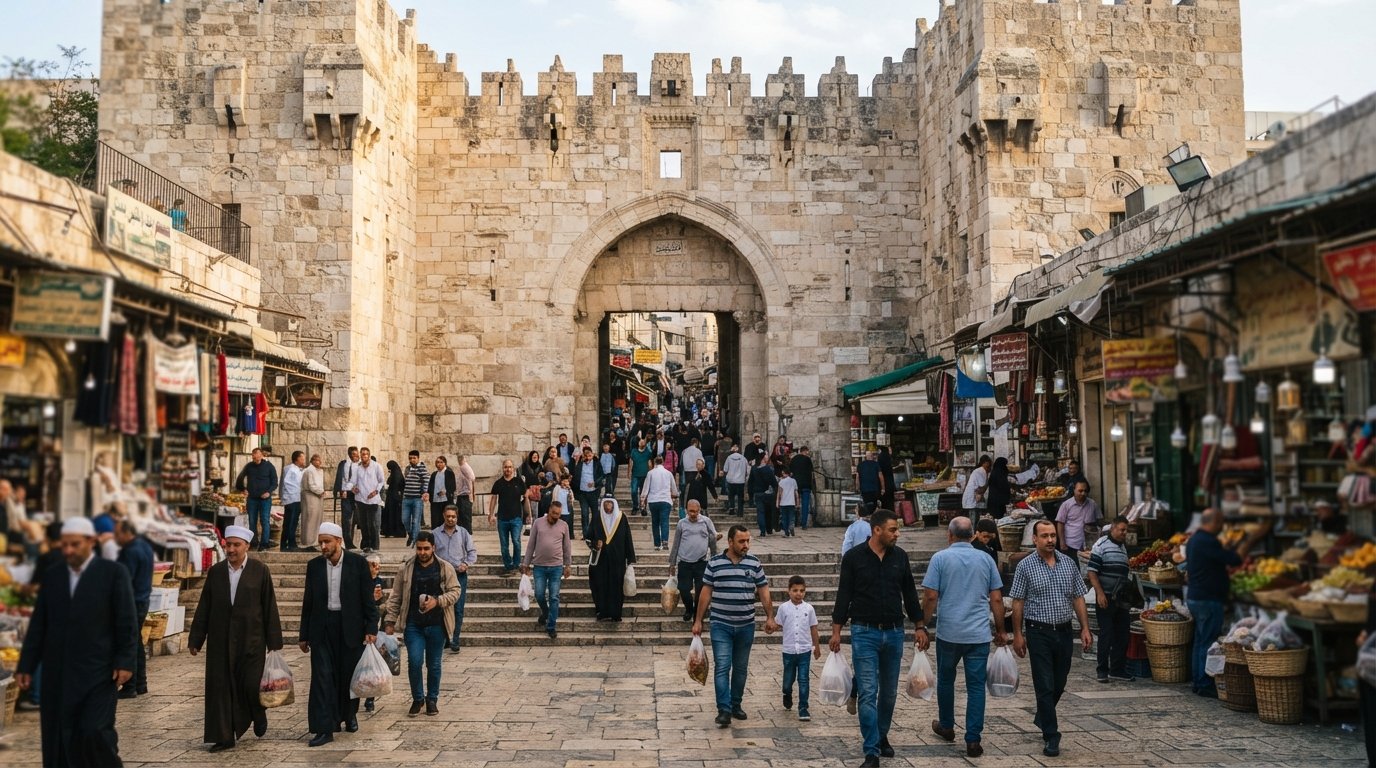
East Jerusalem is the Palestinian half of the city, and its landmarks read that way. Damascus Gate — Bab al-Amud — is the theatrical anchor, the grandest of the Old City gates, with a sunken plaza that doubles as a market and a meeting point. Stand there for a minute and you understand the neighbourhood’s tempo: people crossing, pausing, bargaining, greeting, drifting on. It is less a threshold than a living room.
Radiating out from that gate, Salah al-Din Street is the main commercial artery: bookshops, bakeries, gold merchants, phone repair stalls and juice bars, with the money changers you will actually want if you are carrying cash. This is a street for errands and habits, not souvenir theatre. The rhythm is practical, the language Arabic, and the pace determined by people who live here rather than by the tour bus timetable.
The area is also a serious pilgrimage cluster. The Garden Tomb, a quiet walled garden off Conrad Schick Street just north of Damascus Gate, is the Protestant candidate for the site of Jesus’s burial and resurrection. It is free to enter and open Monday to Saturday, and after the crush of the Holy Sepulchre, its calm can feel almost medicinal. East, across the Kidron Valley, the Mount of Olives delivers the classic panorama of the Old City and the golden Dome of the Rock, with the Garden of Gethsemane and the mosaic-fronted Church of All Nations on the lower slope. The landscape here is steeped in scripture, yes, but also in ordinary foot traffic: pilgrims, school groups, gardeners, taxi drivers, monks, and local families moving through the same terrain.
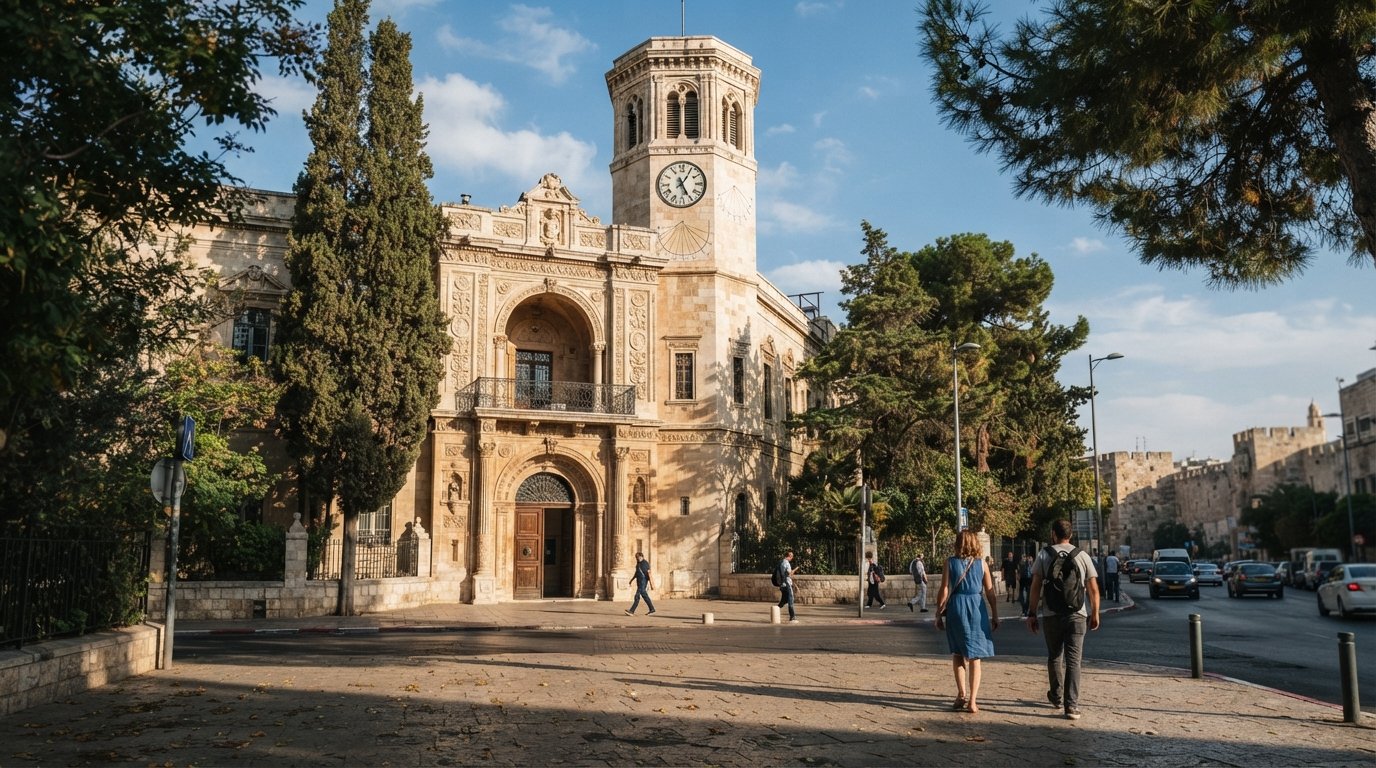
For culture, the Rockefeller Archaeological Museum on Sultan Suleiman Street holds finds from a century of Holy Land digs in a striking 1930s building. It has the kind of sober architectural presence that makes you slow your step before you even reach the door. Since its recent reopening, it is generally visited on guided tours rather than as a walk-in, which only adds to the sense that this is a place for people who want to look closely.
Plan your Jerusalem trip
Live prices from our booking partners.
Guests & rooms
Free cancellation on many rooms. We may earn a commission when you book.
Where to eat & drink
This is where East Jerusalem earns its reputation. Food here is not an accessory to the day; it is part of the day’s structure, a reason to linger, to sit, to talk a little longer than you meant to.
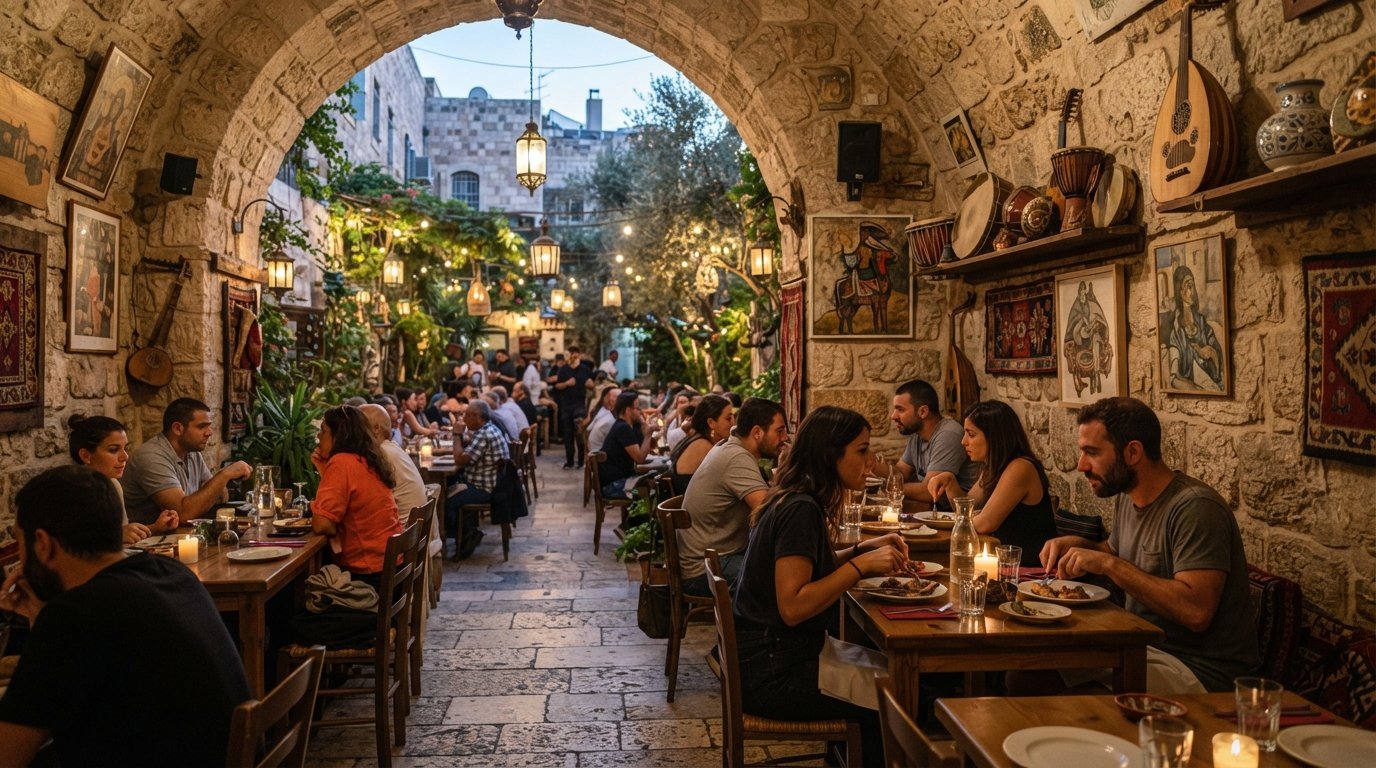
For a proper sit-down dinner, Askadinya on Shimon HaTzadik Street in Sheikh Jarrah has been a neighbourhood institution since 1996. It is a stone-walled bistro hung with local art and antique instruments, with a summer patio, occasional live music on Thursdays, and a bar that pours Palestinian Taybeh beer and wine from Bethlehem alongside mezze and grills. The room has the easy confidence of a place that knows exactly what it is. Come in the evening, when the patio catches the last warmth and the whole place feels like a conversation that has already been going on for years.
Azzahra Restaurant, on the street of the same name, is the reliable classic: a white-tablecloth dining room where journalists and local families come for Palestinian staples like mansaf and mulukhiyah, plus genuinely good thin-crust pizza from an olive-wood brick oven. That combination says a lot about East Jerusalem at its most unforced: tradition without fuss, a little cosmopolitanism without performance. It is the sort of place where lunch can stretch into the afternoon if you let it.
A few doors along, Philadelphia Restaurant is the old-guard Palestinian grill house near Damascus Gate, family-run and going since 1979. The appeal here is straightforward and therefore hard to fake: charcoal meats, mezze, the steady competence that comes from decades of repetition. Near a gate as busy as Damascus, that steadiness matters.
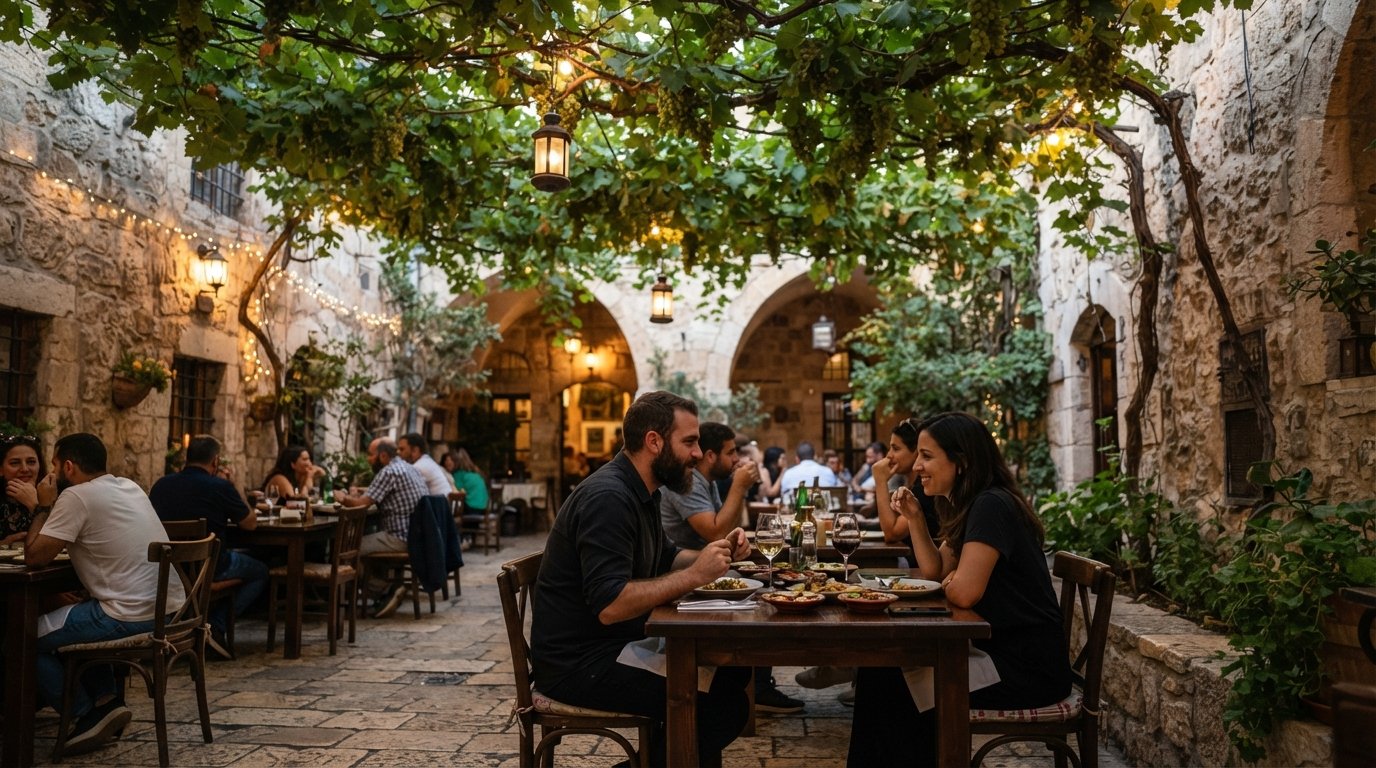
For atmosphere over ambition, Kan Zaman at the Jerusalem Hotel on Nablus Road serves Levantine food under a grape arbour in the courtyard of an 1890s Ottoman mansion, with live oud on some evenings. It is one of those places that reminds you how much of Jerusalem’s pleasure lies in courtyards — in shade, in stone, in the slow unspooling of time between courses.
And then there is the market food, which is often the most memorable of all. Walk the stalls just inside Damascus Gate for falafel, fresh-squeezed pomegranate juice and warm knafeh. Eat standing up if you have to. That is how this part of the city is meant to be encountered: with juice on your fingers and the sound of the street in your ears.
Going out
East Jerusalem is not a nightlife district, and it would be dishonest to pretend otherwise. Bars are few, and most of the neighbourhood winds down not long after dinner. If your idea of an evening is a long pub crawl, this is not your corner of the city. But if you like a drink with a sense of place, there are a few addresses that matter.
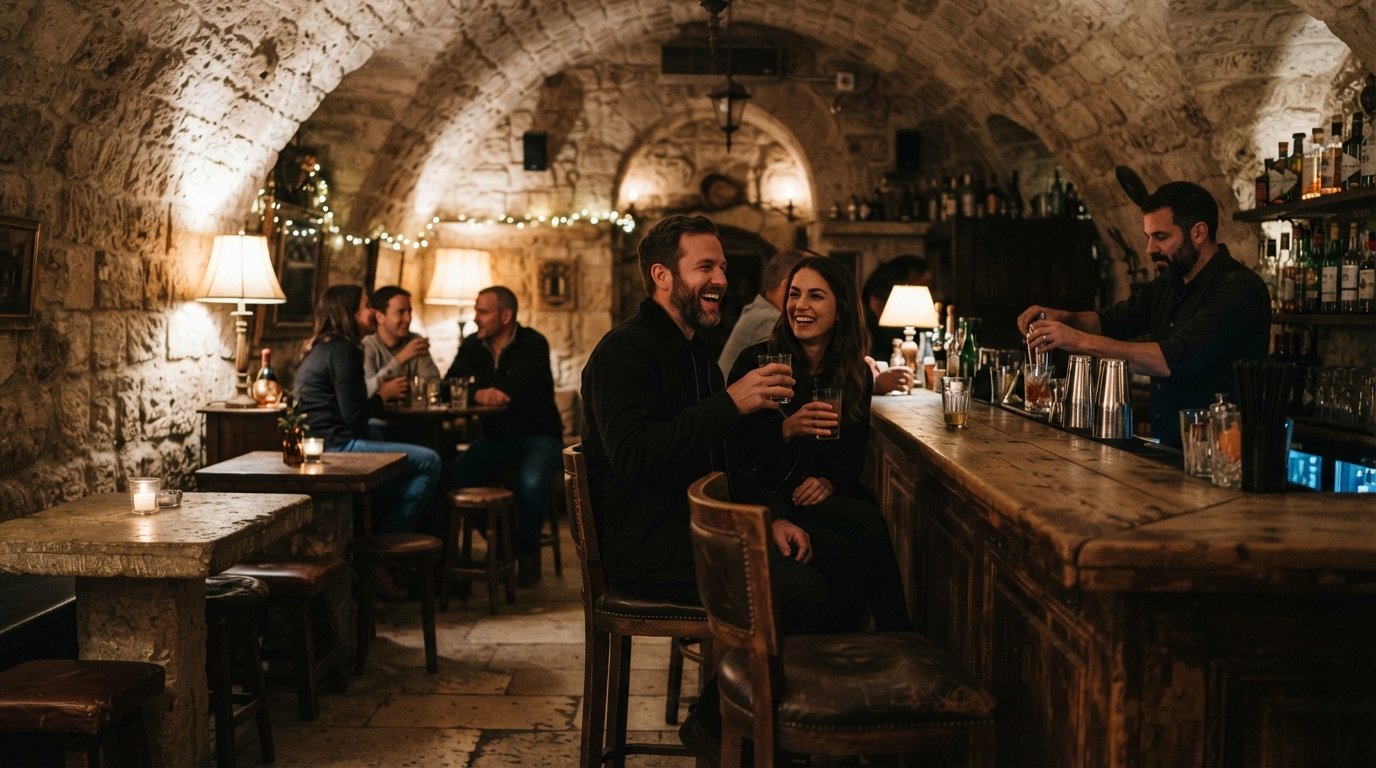
The standout after-dark spot is the American Colony Hotel in Sheikh Jarrah, whose Cellar Bar in the old stone dairy vault has been the watering hole of foreign correspondents, diplomats and aid workers for generations. It is the closest thing the area has to a legendary bar. In the cooler months, it is all low ceilings and old stories; in summer, the Summer Bar takes over in the courtyard roughly from June to October, with the hotel’s shaded, fountain-cooled setting doing most of the work. The atmosphere is not flashy. It is better than that: settled, worldly, faintly conspiratorial.
Beyond the American Colony, the Jerusalem Hotel’s garden bar and Askadinya’s bar cover the low-key drinking scene. The point is not to chase volume. It is to sit somewhere green and stone-built, with a glass in hand and the neighbourhood quieting around you.
If you are after a livelier bar strip, the Jewish-Israeli restaurant-and-bar row that has grown up around the light rail’s Shimon HaTzadik stop is close by, and West Jerusalem’s nightlife is only a short tram ride away. But East Jerusalem itself prefers to keep the evening modest.
Things to do / what to see
Start at Damascus Gate and let the market pull you in. It is the most atmospheric entrance to the Old City and a sight in itself, especially when the light catches the stone and the plaza is full of movement. From there it is a short walk north to the Garden Tomb on Conrad Schick Street, a serene garden with knowledgeable volunteer guides. It is open Monday to Saturday, free to enter, with donations welcome. The contrast is striking: one minute you are in the pulse of the gate, the next in a place where the air seems to soften.
Give a half-day to the Mount of Olives. Most people take a taxi to the summit viewpoint for the panorama, then walk downhill past Jewish cemeteries to the Church of All Nations and the ancient olive trees of the Garden of Gethsemane at the bottom. The churches keep split hours, roughly morning and mid-afternoon, and close over the lunch break, so time it carefully. The view is the obvious reason to come, but the descent is the real pleasure: the city opening and closing around you as you walk.
The Garden of Gethsemane & Church of All Nations pair is one of those Jerusalem scenes that stays with you long after you leave. The olive grove is ancient in feel if not in every individual tree, and the church’s mosaic front has a solemn, almost cinematic weight to it. It is a place of pilgrimage, yes, but also of texture: bark, stone, shadow, incense, footsteps.
Back in the New City fringe of East Jerusalem, the Rockefeller Archaeological Museum on Sultan Suleiman Street is worth an hour for its Holy Land antiquities and 1930s architecture. Check current access, since it now largely runs on guided tours. Even if you are not a museum person, the building itself rewards a visit; it has that restrained, institutional elegance that feels very much of its era.
Round it off with an unhurried browse of the Educational Bookshop on Salah al-Din Street, a decades-old Palestinian bookshop and café that is a cultural landmark in its own right. This is where East Jerusalem’s intellectual life becomes visible: shelves, conversation, coffee, politics, fiction, history. It is one of the best places in the city to sit still and read the room.
Don’t miss in East Jerusalem
Garden Tomb
Rockefeller Archaeological Museum
Salah ad-Din Street markets
Shopping & markets
Shopping in East Jerusalem is street-level and unpretentious. Salah al-Din Street is the main drag — gold and jewellery shops, spice and sweet sellers, bakeries, clothing stores and phone kiosks, plus the money changers who will usually give you a better rate on shekels than most banks. It is a working shopping street for locals rather than a souvenir run, which is exactly why it feels so alive. You come here for bread, for a charger, for saffron, for a new shirt, for the small practical things that keep a neighbourhood humming.
The Damascus Gate market, spilling through the gate and along the first stretch of the Old City’s Muslim Quarter, is the place for spices, olives, fresh produce, nuts and Palestinian sweets like knafeh and baklava, best bought by pointing and haggling gently. There is no need to perform expertise. A smile, a gesture, a little patience — that is enough.
The long-standing Educational Bookshop on Salah al-Din Street is the cultural stop: a rare English-and-Arabic bookshop with a café, strong on Middle East politics, history and fiction. It is the sort of place that reminds you cities are also made of arguments, reading lists and cups of coffee.
Remember the local calendar. Many shops here close on Fridays for the Muslim day of rest and reopen Saturday, the reverse of West Jerusalem. Cash in shekels is far more useful than a card in the smaller stalls and shops. That is not a nuisance; it is part of the texture of the place.
Where to stay in East Jerusalem
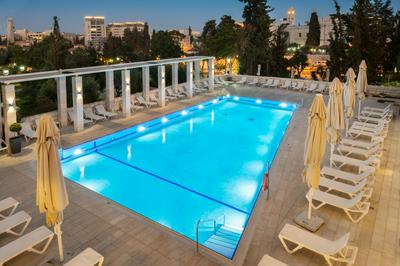
This is one of the best-value and most characterful places to sleep near the Old City, with a cluster of hotels within a 10–15 minute walk of Damascus Gate. The area rewards travellers who care more about atmosphere than polished uniformity. Here, a hotel can feel like part of the neighbourhood instead of a sealed-off island from it.
At the top sits the five-star American Colony Hotel on Louis Vincent Street in Sheikh Jarrah — a former pasha’s mansion turned into a garden-wrapped institution beloved of writers, diplomats and foreign press. It has the sort of old-world presence that makes arrival feel like an event, even before you have unpacked.
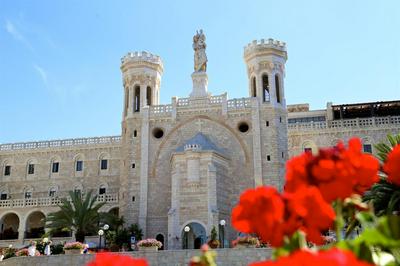
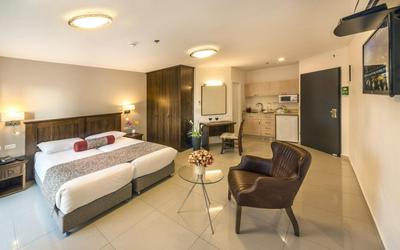
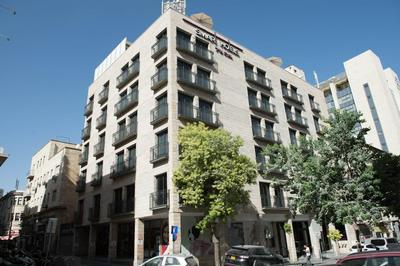
For solid mid-range comfort with a rooftop payoff, the National Hotel and the boutique Legacy Hotel both do panoramic breakfasts over East Jerusalem, and the four-star Ambassador Hotel anchors the consular quarter in Sheikh Jarrah. For romance on a budget, the Jerusalem Hotel, an 1890s Ottoman mansion off Nablus Road with a vine-covered courtyard, is a standout. Streets closer to Damascus Gate and Salah al-Din put you in the thick of the market; up in Sheikh Jarrah it is greener and quieter. Price-wise, the whole area skews mid-range and is generally friendlier on the wallet than comparable West Jerusalem stays.
Hotels in East Jerusalem
Our best-rated stays in this neighbourhood. Prices are approximate “from” rates — confirmed at the provider when you continue. We may earn a commission if you book through our partners — at no extra cost to you.
In this area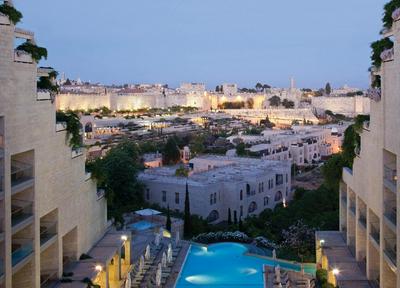 In this area
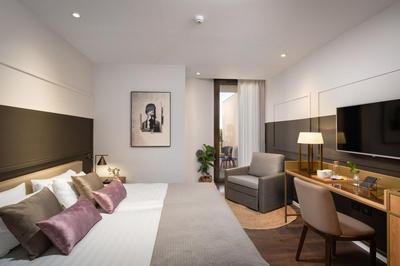 In this area
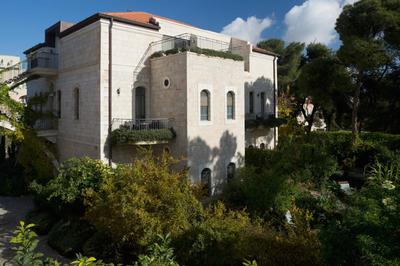 In this area
East Jerusalem
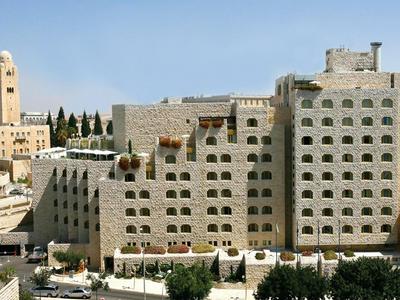
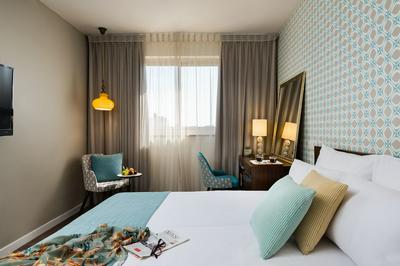
The American Colony Hotel - Small Luxury Hotels of the World
9.2· 945 reviews
approx. from£373 / nightSee prices
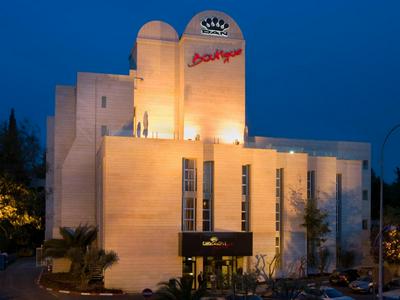 In this area
 In this area
 In this area
 In this area
 In this area
 In this area
 In this area
 In this area
Getting around
East Jerusalem is walkable at its core. Damascus Gate, Salah al-Din Street, Nablus Road and the Garden Tomb are all within a few minutes of each other on foot, and the Old City is right there through the gate. That is the great practical advantage of staying or spending time here: you do not need to keep resetting your map every hour.
The Jerusalem Light Rail (Red Line) is the easy link to the rest of the city. The Damascus Gate and Shimon HaTzadik stops sit on its northern stretch, putting West Jerusalem’s Jaffa Street, the market and the city centre a short, cheap ride away. Buy a single ticket at the platform machine or load an anonymous Rav-Kav card — there is no cash payment onboard.
Local Arab bus lines from the Nablus Road station run to the Mount of Olives and out toward Bethlehem and Ramallah. For the Mount of Olives summit, most people simply take a short taxi up and walk down. From the neighbourhood, reckon on roughly 45–60 minutes by car or shuttle to Ben Gurion Airport, traffic depending.
If you want a final practical note, it is this: East Jerusalem is generally calm and walkable by day with normal big-city awareness. It is a politically sensitive area, so check current local advisories, dress modestly near religious sites, and keep to well-lit streets after dark when the neighbourhood quietens. Do that, and the place opens up beautifully — not as a performance, but as a city quarter that still belongs first to the people who live, work and eat here every day.
Gallery
East Jerusalem in pictures
East Jerusalem — your questions
Is East Jerusalem a good area to stay in?
Yes — especially if you want to be a short walk from the Old City with real Palestinian atmosphere and better value than much of West Jerusalem. The hotels around Damascus Gate, Salah al-Din Street and Sheikh Jarrah, from the American Colony to the Jerusalem Hotel and National Hotel, are central and characterful. It is quieter after dark, so it suits sightseeing and food more than nightlife.
Is East Jerusalem safe for tourists?
By day, the busy areas around Damascus Gate, Salah al-Din Street and Sheikh Jarrah are lively and routinely visited by travellers. Use ordinary city sense, keep valuables close in the crowded market, and dress modestly around religious sites. It is politically sensitive, so check up-to-date local advisories before and during your visit, and plan to head in earlier rather than late as the streets empty after dinner.
What days do shops close in East Jerusalem?
Many shops and family businesses close on Friday, the Muslim day of rest, and are open on Saturday — the reverse of Jewish West Jerusalem, where Shabbat shuts things down. Plan food and shopping around that, and carry cash in shekels, since smaller stalls and shops often do not take cards.
What is East Jerusalem best for?
It is best for Palestinian food, Old City proximity, pilgrimage sites and character hotels on a mid-range budget. It is not the place for late bars or a polished, English-first shopping experience, but it is excellent for long meals, slow coffees and a neighbourhood feel that is still very much alive.