Jerusalem 특집호
Walking Jerusalem's Armenian Quarter in Half a Day
Most of the Old City's quietest quarter is free to walk; what needs timing is a 30-minute cathedral window and a ramparts walk that shuts before vespers begins.

글: Inês AlmeidaOne city, four quarters
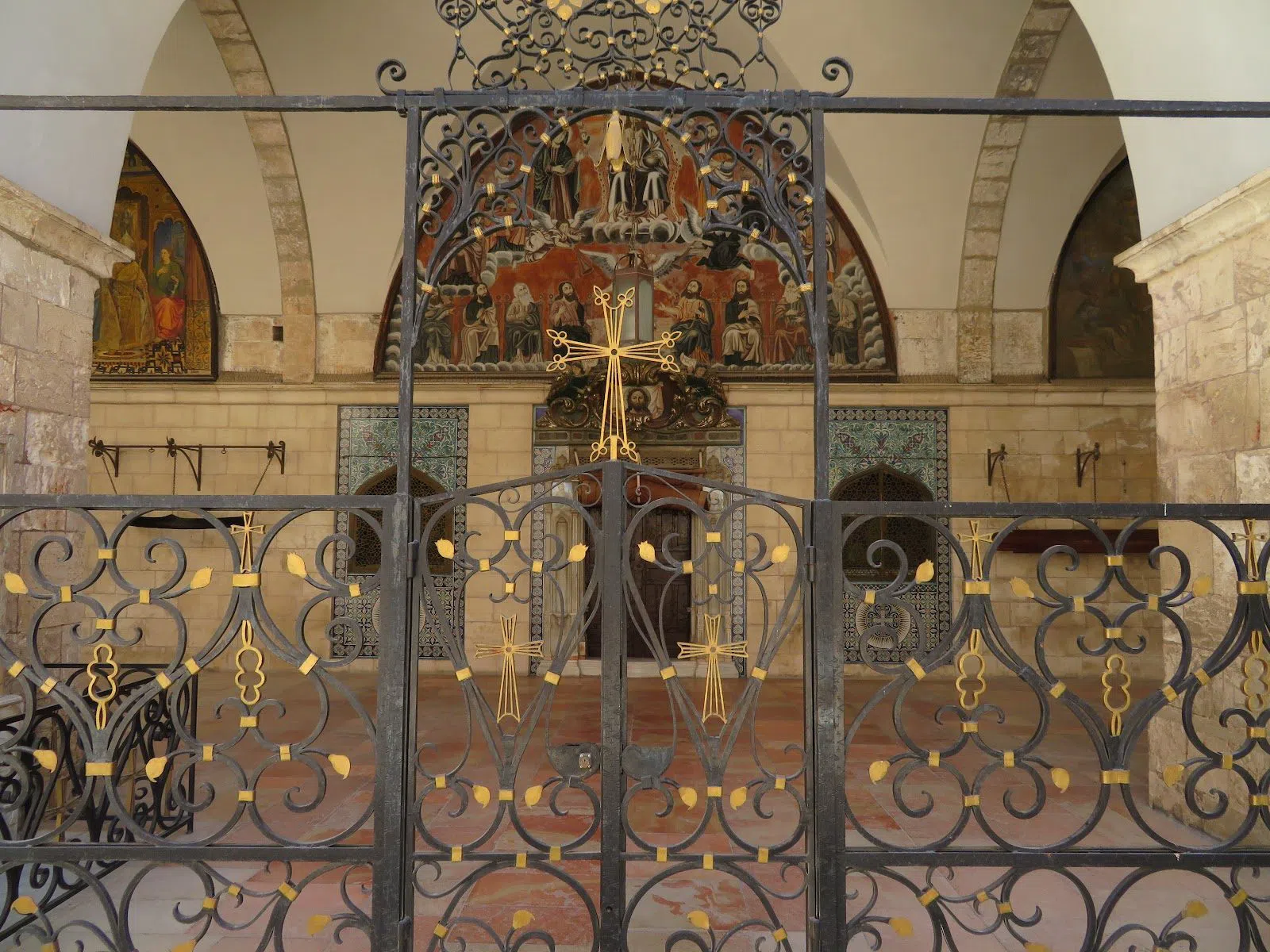
The Cathedral of St James (inside the St James Monastery compound) opens to outsiders for half an hour a day, at the 15:00 vespers, doors from 14:45. Almost everything else in Jerusalem's Armenian Quarter (Armenian Patriarchate Road) is free to walk, including the lane that rises from Jaffa Gate between blank honey-coloured walls hung with hand-painted street-name tiles in Armenian, Arabic, Hebrew and English. Come in the morning only and you will find the cathedral doors shut.

Armenian Patriarchate Road and the monastery gates
This is the smallest and quietest of the Old City's four quarters. The road carries almost no shopfronts and almost no crowd, and the ceramic street-name tiles are the clearest thing to read as you climb. Most of what you see costs nothing, and a guide's fee here buys explanation rather than admission.
The street is public and takes a walking group of any size. The monastery compound behind the gates is private. Keep voices down and stay out of residential doorways.
Christ Church Guest House & Coffee Shop (55 Armenian Patriarchate Street, just inside Jaffa Gate) sits at the top of the road, a walled stone courtyard with café tables under trees against the pale 19th-century façade and homemade cakes on the counter. The coffee shop opens daily 09:00 to 16:00, prices are ₪, and there is room in the courtyard for a group. This is the oldest Protestant church in the region; the church and its Heritage Centre keep their own narrower hours, and you book group visits there in advance.

Jerusalem 여행 계획하기
예약 파트너의 실시간 가격입니다.
많은 객실이 무료 취소 가능합니다. 예약 시 당사가 수수료를 받을 수 있습니다.
The Tower of David before you walk in
Tower of David Jerusalem Museum (the citadel at Jaffa Gate) is the orientation stop to use before you enter the quarter, reopened after a large renovation. The citadel has a deep dry moat and an archaeology garden in the inner courtyard, and the Phasael tower rooftop gives a 360-degree view over the Armenian Quarter rooftops to the Dome of the Rock. Entry is ₪55 for adults, ₪44 for students and ₪35 for children aged 5 to 18.

Hours swing by day. Sunday opens only at noon, and Friday and Saturday close at 15:00. Guided museum tours in English run daily, groups should book ahead, and the site is largely accessible since the renovation.
The southern ramparts walk
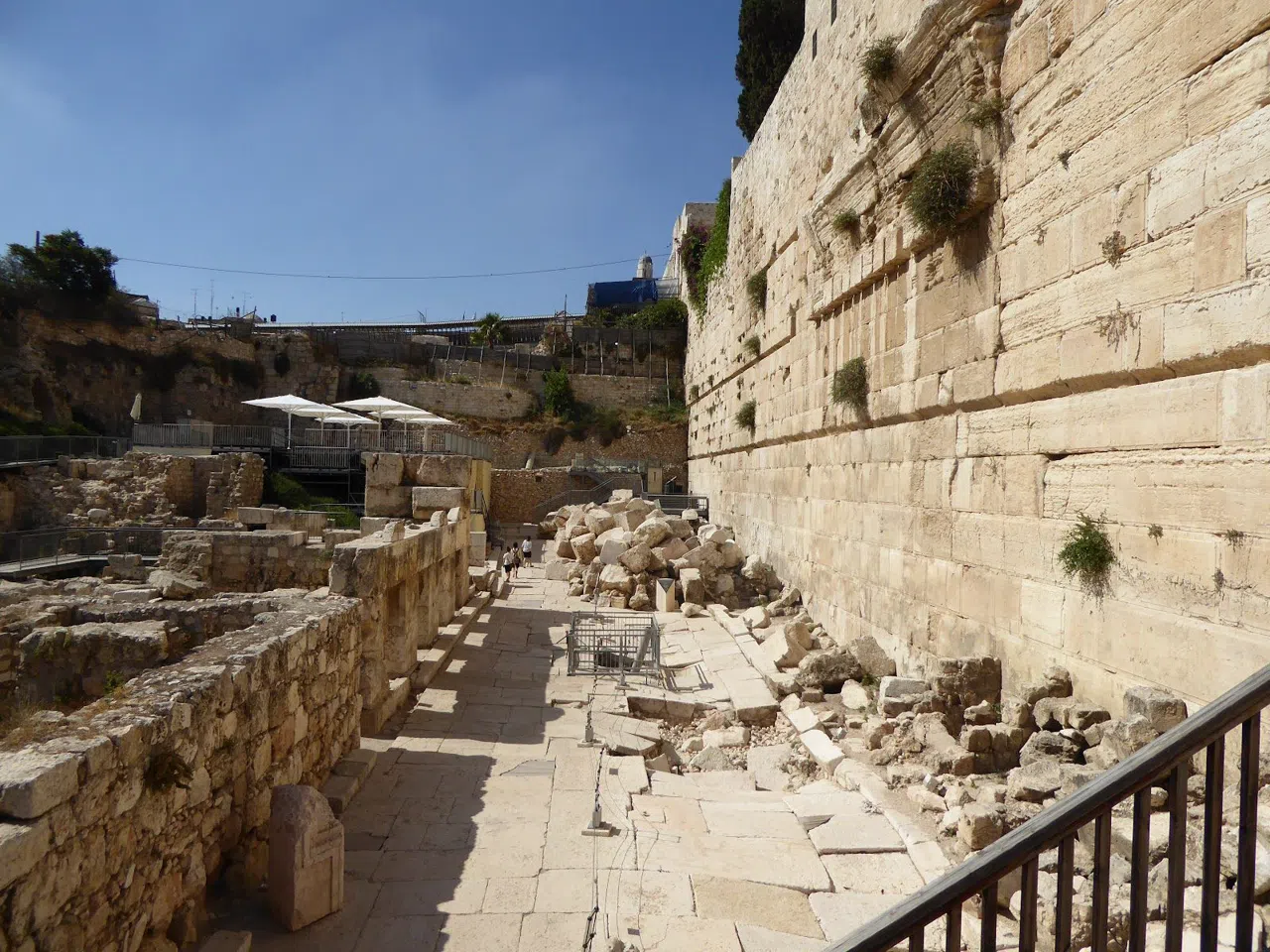
The southern Ramparts Walk (Jaffa Gate to Zion Gate and on to Dung Gate) is the one way to see over the quarter's walls into its private courtyards. You walk a narrow stone parapet with crenellations at hip height, looking straight down onto courtyards, washing lines and tiled roofs that the street never shows you. It takes 45 minutes.

Tickets are ₪25 for adults, ₪15 for children, students and seniors, and ₪18 a head in parties of 20 or more. The ticket office is at Jaffa Gate and tickets are valid all day. Walk it before the cathedral's afternoon window, because the route closes mid-afternoon and earlier on Fridays. The steps are uneven and the walk is not suitable for wheelchairs, prams or anyone unsteady.
Vespers at the Cathedral of St James
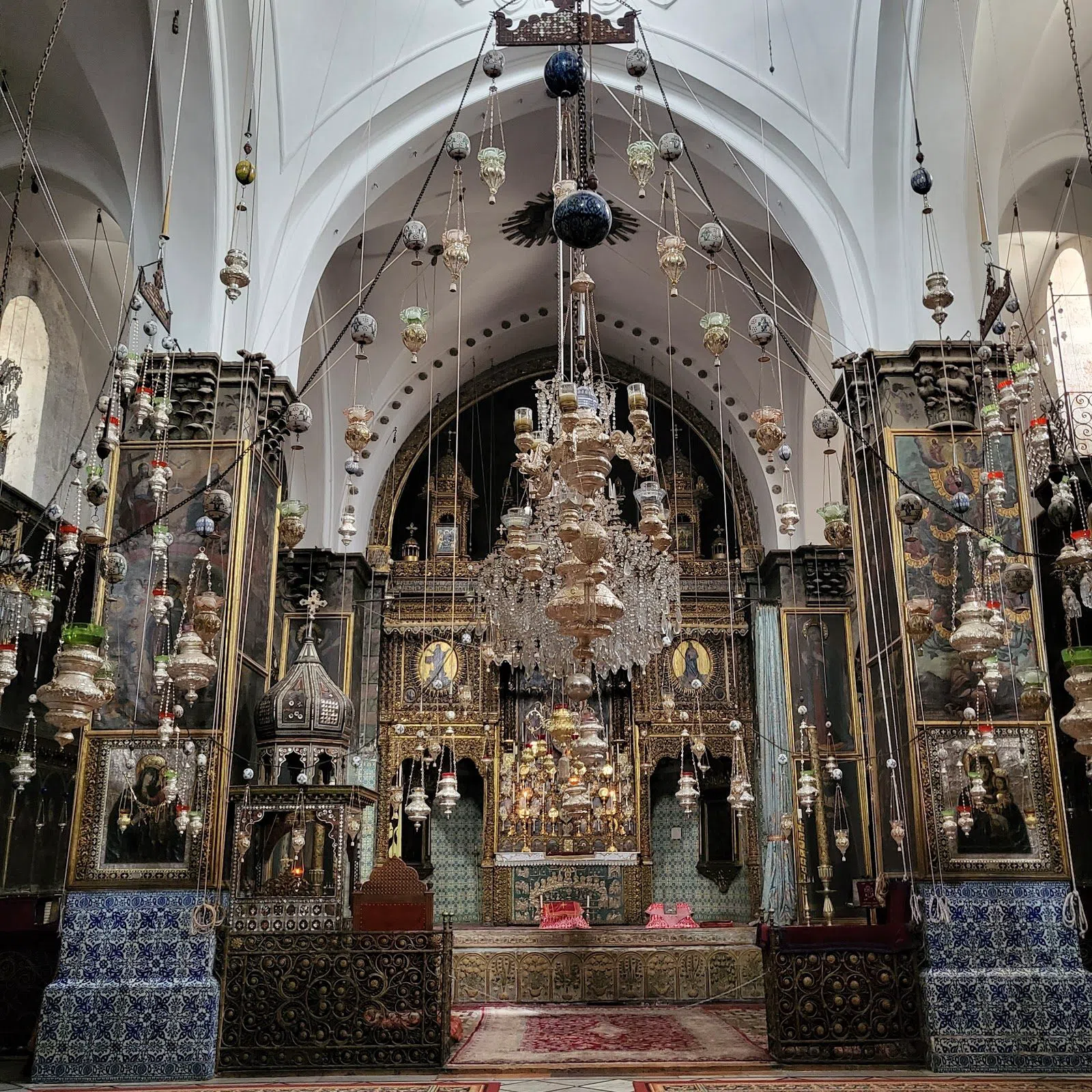
The 12th-century interior has no electric light. Hundreds of oil lamps and silver censers hang on chains over a stone floor laid with carpets, between floor-to-ceiling blue-and-white tile panels and dark carved wood. Published hours are Monday to Friday and Sunday 06:30 to 07:30, daily 15:00 to 15:30, and Saturday 06:30 to 09:20.
The 15:00 half hour is the window outsiders are given, and it is a service rather than a viewing slot. Modest dress is required and women cover their heads. Stand at the back and stay silent. A small group is fine on those terms; a coach party is not welcome.
Doors that need asking first
St Mark's Syriac Orthodox Church (up Ararat Street) is a tiny chapel behind a plain door, hard to find, with a dim nave half-screened by an embroidered curtain, a dark leather-painted icon of Mary and Jesus, and steps down to a stone crypt. A caretaker often gives the talk in person. Visiting hours run 08:30 to 15:30 on weekdays and shorter on Saturdays, and the doors close during the 07:00 daily mass. Entry is free and a donation is expected. The church sits inside the Armenian Quarter and belongs to the Syriac community, so this corner of the Old City holds more than one church.


Convent of the Olive Tree (Church of the Holy Archangels, Deir al-Zeitoun) is a small flagstoned courtyard behind an iron grille gate, with an ancient gnarled olive tree ringed by a low stone wall, whitewashed arches and a hanging lamp above the church door. Armenian tradition places the house of the high priest Annas here. You enter only by prior permission from the Armenian Patriarchate, and only in a small pre-arranged group. Without that permission you are standing at a locked door.
Calouste Gulbenkian Library (inside the Patriarchate compound) holds the largest Armenian manuscript collection outside Armenia, in a 1930s reading room of tall dark shelving packed with Armenian-script spines, long tables under pendant lamps and manuscript cases. It opens Monday to Friday 14:00 to 18:00 by appointment, arranged by email to [email protected], for researchers and very small groups. Leave it off a general sightseeing afternoon.

Goveroun Bardez and the lease dispute
Goveroun Bardez (the Cows' Garden, below the Patriarchate) is a large open gravel parking lot inside the walls, fenced with hoardings and makeshift barricades, hung with protest banners in Armenian and English, with residents keeping watch from plastic chairs. The 98-year lease signed over this ground is in open dispute, on land the community says covers a quarter of the quarter.
You can walk past at any hour and it costs nothing. Read the room before you bring anyone else. Residents are not an exhibit and filming them is not welcome.
Ceramics at Sandrouni and Jerusalem Pottery
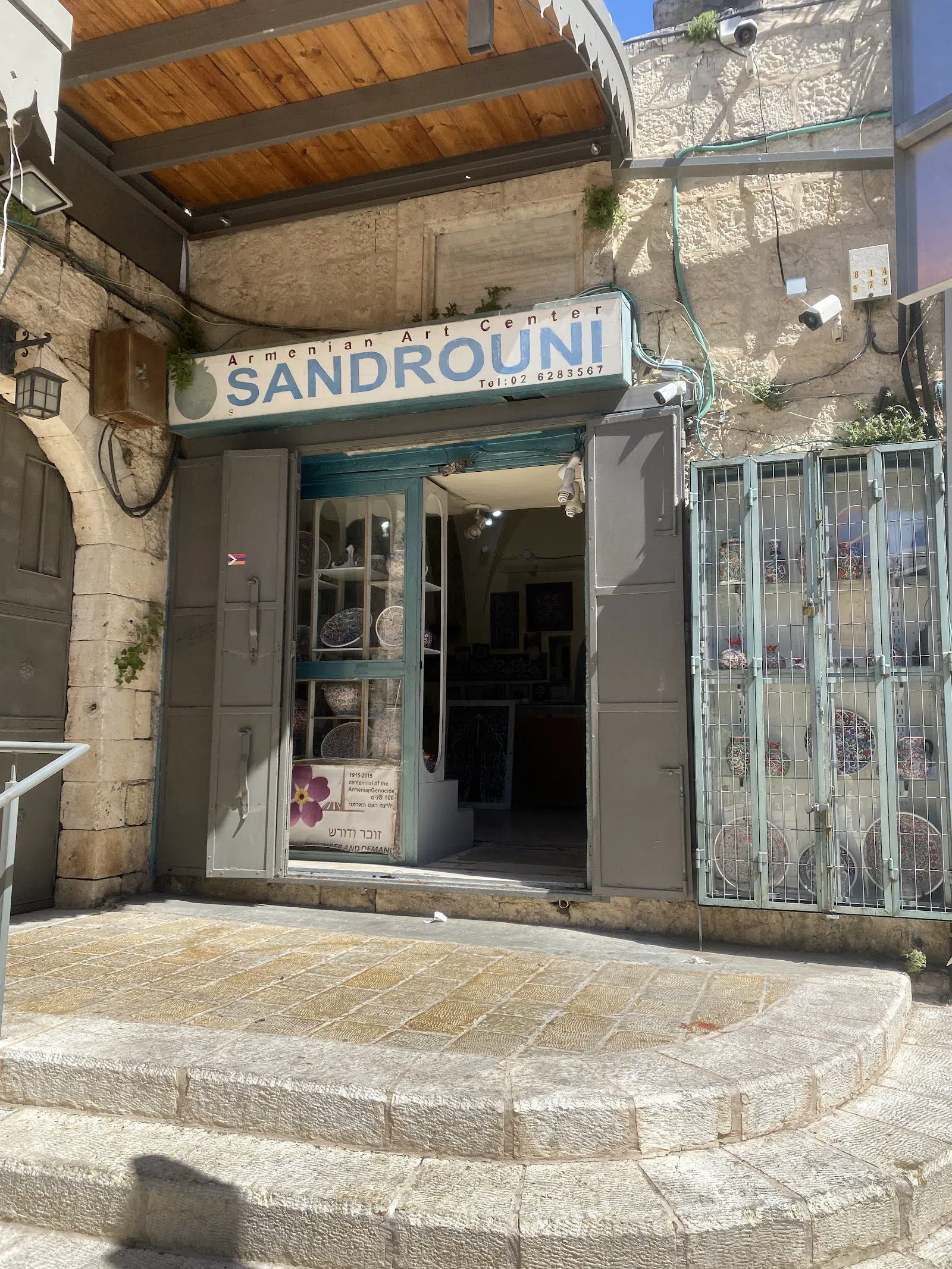
Garo and Sonia Sandrouni Armenian Art Center (87 Armenian Patriarchate Road) is a small vaulted room a few steps from St James, every wall tiled and shelved with hand-painted bowls, gazelles, pomegranates and blue-and-white Jerusalem street-name tiles, with paintbrushes and unfired blanks on the work bench. It is a working studio and you can walk in, Monday to Saturday 09:00 to 19:00, at ₪₪ to ₪₪₪. Staff will explain how the pieces are painted, though 20 people fill the single room.
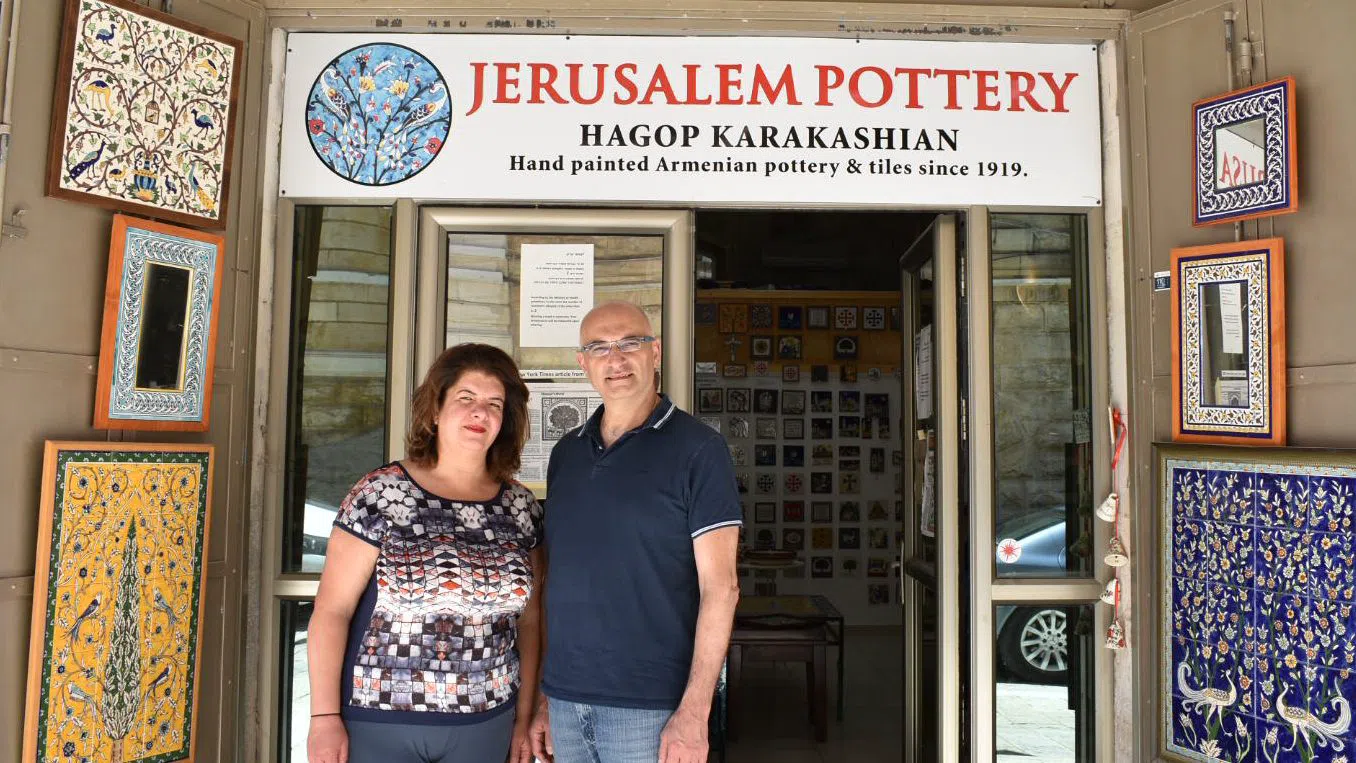
Jerusalem Pottery (3 Greek Orthodox Patriarchate Street, Christian Quarter) is run by the Karakashian family, the third generation of the potters who brought the craft to Jerusalem in 1919. Behind the green door are a kiln at the back, trays of tiles drying, and the original moulds for the Old City's 1960s Arabic-and-English street-name signs. Hands-on sessions trace how Armenian pottery reached the city; groups come by arrangement, and you phone ahead on +972 2 626 1587. It is a short detour out of the quarter.
Lunch at Bulghourji or the Armenian Tavern
Bulghourji (6 Armenian Patriarchate Street) is built into the inner face of the Old City wall in a former bulgur mill, with stone arches, Armenian embroidery, framed family photographs and shaded courtyard tables. The Kalajian family have run it since 2004 and it is the more dependable of the quarter's two Armenian kitchens. It opens Sunday to Thursday 10:00 to 22:00 and Friday until mid-afternoon, closed Saturday, at ₪₪. Groups are fine.
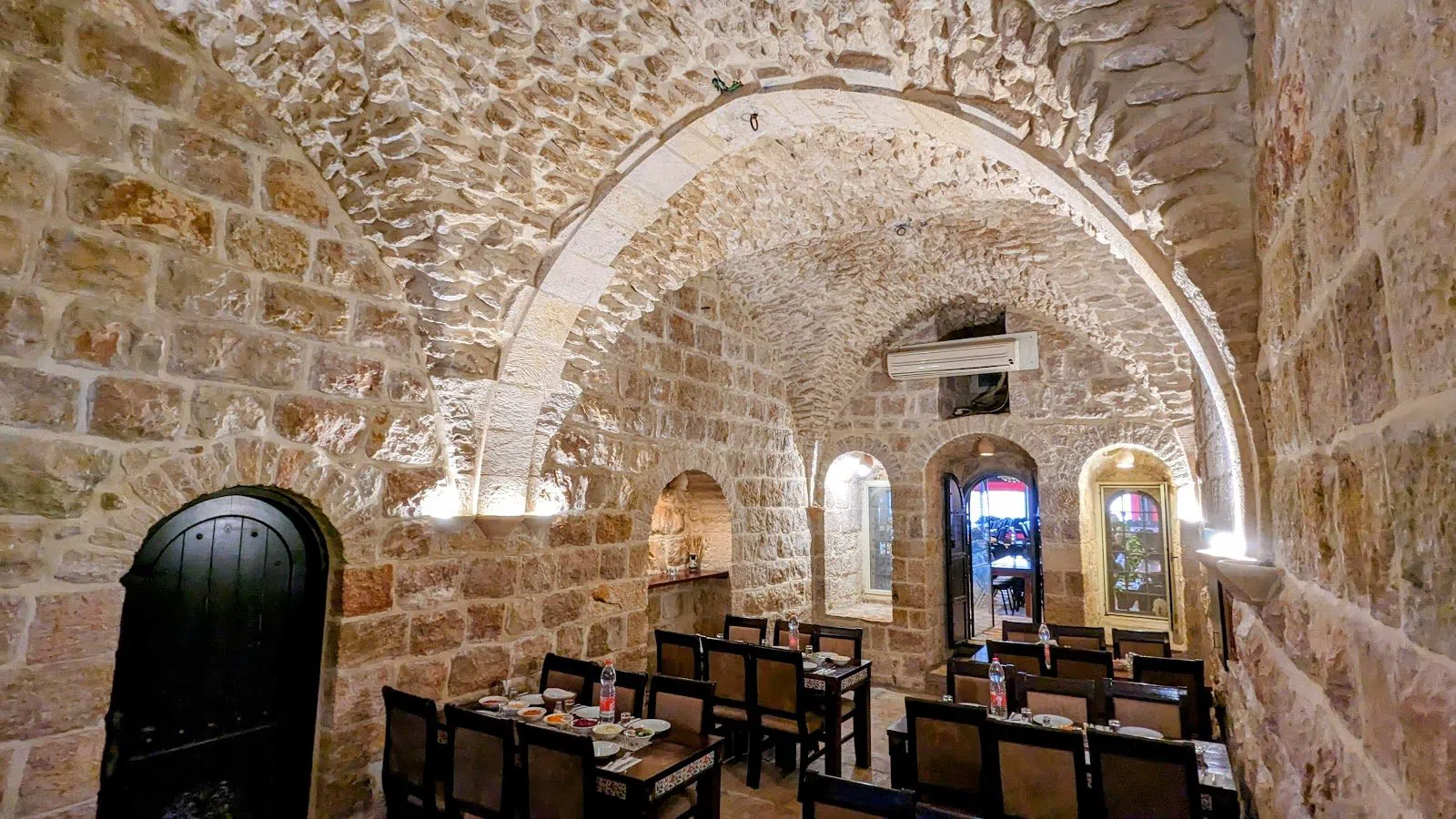
Armenian Tavern (79 Armenian Patriarchate Road) takes you down a steep flight of stone stairs into a Crusader-era vaulted cellar, where hand-painted Armenian tiles are set into the walls and a tiled fountain, copper pots, icons and antiques crowd every surface. It has been open since 1994 and costs ₪70 to ₪140 a head. Hours have been erratic in recent years and listings have shown temporary closures, though diners reported it serving in 2026. Ring the day before on +972 2 627 3854 rather than walking a party down those stairs on spec.

Zion Gate and Dormition Abbey
Zion Gate is the end of the walk, an L-shaped Ottoman gateway in honey limestone whose whole facade is pitted and cratered with 1948 bullet and shell scars, a crenellated parapet above and the Mount Zion road falling away outside. The damage sits at eye level. The gate is open at all hours, free, and the forecourt is wide enough to stand a group in while someone explains it.

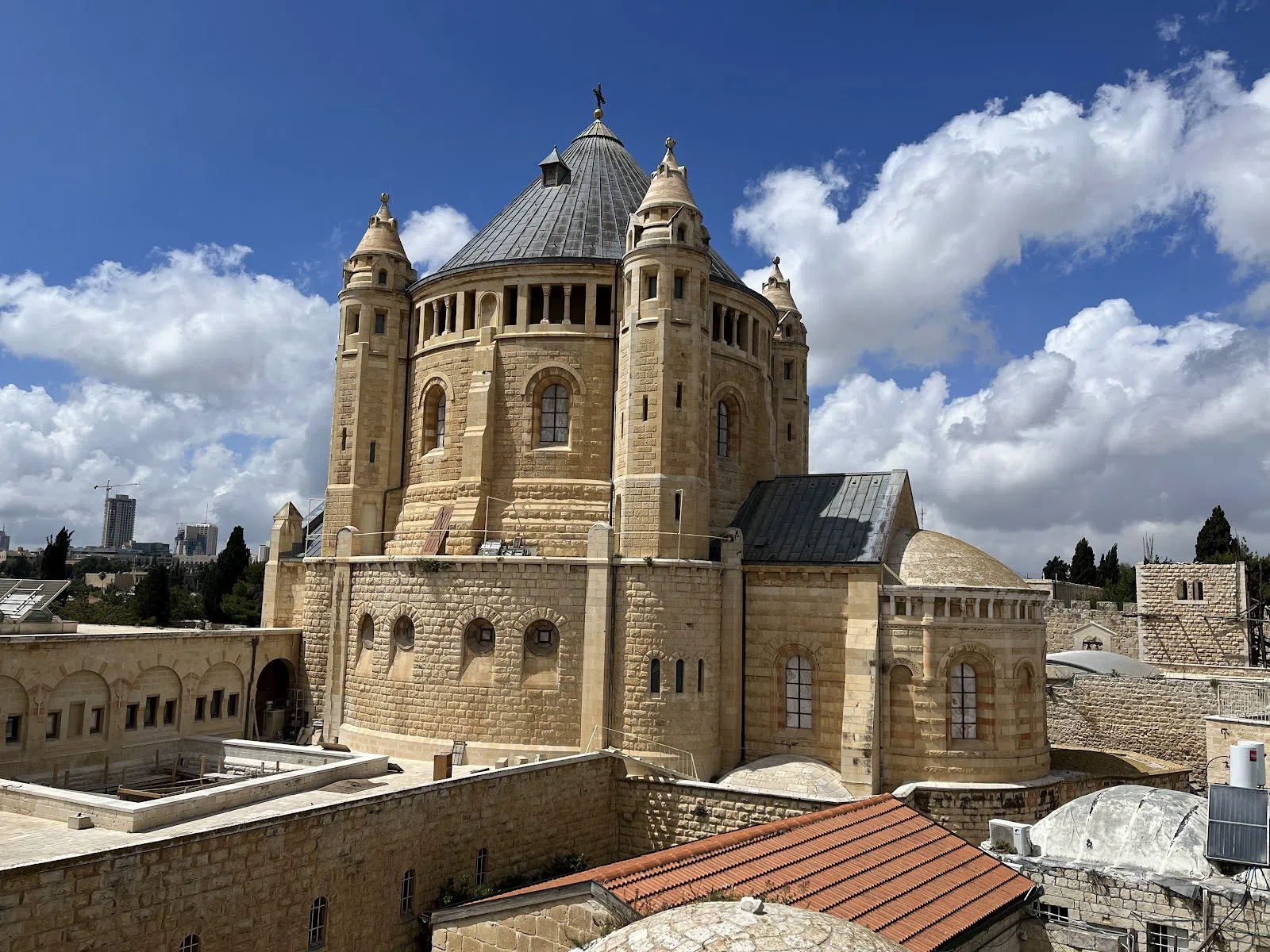
Dormition Abbey (Hagia Maria Sion, two minutes outside Zion Gate) is the obvious extension, a grey conical-roofed German Benedictine bell tower on Mount Zion above a circular church with a gold-and-blue Madonna mosaic in the apse, and a crypt holding the reclining stone-and-ivory figure of Mary. It opens Monday to Saturday 09:00 to 17:00 and on Sunday afternoons, with a midday break at some seasons. Groups are taken free of charge, donations are welcome, and you cover shoulders and knees and keep silence inside.
How long it takes and what to book ahead
Half a day is the honest shape of it: the walls, the lane, the cathedral window and a meal. The fixed appointment is 15:00, and the ramparts have to come before it. Nothing here forms a queue, because most of the doors are free and the two that sell tickets sell them at the gate.
The doors you cannot open on the day are the library, which needs an email appointment, and the convent, which needs permission from the Patriarchate. Guided half-day walks of the Old City run six days a week, Monday to Friday and Sunday, and the platform selling the best-rated one flags it as likely to sell out, so book ahead once your dates are fixed.
Best time to go
Come in the afternoon and let the vespers window set your hour. Start on the walls, drop into the lane, and keep the quarter's two dining rooms for after the service, when the road empties out again.
Friday is the tightest day in the week: the ramparts close earlier, the museum shuts in mid-afternoon and Bulghourji stops serving then too. Saturday takes Bulghourji out altogether and shortens St Mark's. Sunday gives you no morning at the museum, so walk the road first and climb the citadel later. Around the Good Friday ceremonies the Convent of the Olive Tree opens more widely, and that is the one date in the year when its courtyard is reasonable to plan around.
Who the half day suits
It suits a visitor with an afternoon to spend quietly, who will cover up, keep silent through a service and accept that several doors stay shut. What you get for that is an empty stone lane, a view down into courtyards nobody photographs from the street, and 30 minutes in a cathedral lit by oil lamps.
Practical notes
Bulghourji closes on Saturday, the museum closes mid-afternoon on Friday and Saturday, and the ramparts close before the cathedral opens. Email the library, arrange the convent through the Patriarchate, phone the Armenian Tavern and the pottery studio, and book museum and church group visits in advance. See the Jerusalem guide and the Jerusalem hotel search.
떠나기 전에
Can visitors go inside the Cathedral of St James?
The cathedral admits outsiders for the 15:00 vespers, with doors from 14:45 and the service running to 15:30. Published hours also list Monday to Friday and Sunday 06:30 to 07:30 and Saturday 06:30 to 09:20. Modest dress is required, women cover their heads, and silence is expected. Small groups are fine on those terms; coach parties are not welcome.
Does the Armenian Quarter cost anything to visit?
Armenian Patriarchate Road, the Cathedral of St James at vespers, St Mark's, Zion Gate, Goveroun Bardez and Dormition Abbey all cost nothing, though St Mark's expects a donation. You pay at two places: the southern Ramparts Walk, ₪25 for adults, ₪15 for children, students and seniors, and ₪18 a head in parties of 20 or more; and the Tower of David Jerusalem Museum, ₪55 for adults, ₪44 for students and ₪35 for children aged 5 to 18.
How long does the walk take and when should I start?
Half a day. The 15:00 cathedral window is the one fixed point, so build the afternoon around it and walk the ramparts first; that route takes 45 minutes and closes mid-afternoon, earlier on Fridays.
Do I need to book a guided tour, or can I walk it alone?
The streets are public and free to walk unguided. Guided half-day walks of the Old City run six days a week, Monday to Friday and Sunday, and the best-rated one carries a likely-to-sell-out warning, so book ahead if your dates are fixed. You also need a guide for the Convent of the Olive Tree, which requires prior permission from the Armenian Patriarchate.
Is the route accessible for wheelchairs or prams?
The Ramparts Walk is not suitable for wheelchairs, prams or anyone unsteady on uneven steps. The Tower of David Jerusalem Museum is largely accessible after its renovation, and the Armenian Tavern sits down a steep flight of stone stairs.