
At seven in the morning, Jaffa Gate smells of wet limestone and cardamom coffee, and the lane past the security check holds a delivery cart, a shopkeeper hauling up his shutters, and bells somewhere off to the north. By eleven that same hundred metres is a slow scrum of shoulders and raised phones. Most of what you need to know about walking the Old City of Jerusalem (the walled square kilometre beginning at Jaffa Gate) is the difference between those two hours.
One square kilometre, four quarters, seven gates
The walls enclose roughly one square kilometre, divided into the Christian, Muslim, Jewish and Armenian quarters and pierced by seven working gates. Walking in is free through any of them, and the streets themselves are never ticketed. Every price below belongs to a specific building, tunnel or rampart. Walking groups form on the Jaffa Gate plaza because it is the only open space wide enough to gather in, and because nearly every stop in this guide stands within a 20-minute walk of it. That proximity is why the Old City works as one considered half-day on foot rather than five separate errands across a week.
The gates are also the throttle. Bags go through security, and large groups are routinely split at the bottleneck, so a party of twenty should expect to reassemble inside rather than arrive as one body. Couples and pairs barely register it. Inside, the lanes are stone, frequently stepped, often wet from being washed down, and vaulted over in the bazaar stretches, so your phone loses its fix, shade arrives unpredictably, and grip on your shoes matters more than anything else you packed.
Start twenty paces in at the citadel
Go straight to the Tower of David Jerusalem Museum (immediately inside Jaffa Gate) before you go anywhere else. Since the 2023 rebuild it is the best single orientation stop in the city: the layers of wall, the shape of the quarters, who built what and who tore it down, laid out so that the rest of the day reads as a sequence instead of a blur. Entry is 55 NIS adult, 44 NIS student and 35 NIS for children aged 5 to 18. It is genuinely built for groups now, with wide ramps, timed entry and group rates, so it absorbs a coach party without the party ruining it for two people on their own. Watch the irregular opening: Sunday it does not open until 12:00, Tuesday runs late to 20:00, and Friday and Saturday it closes at 15:00.
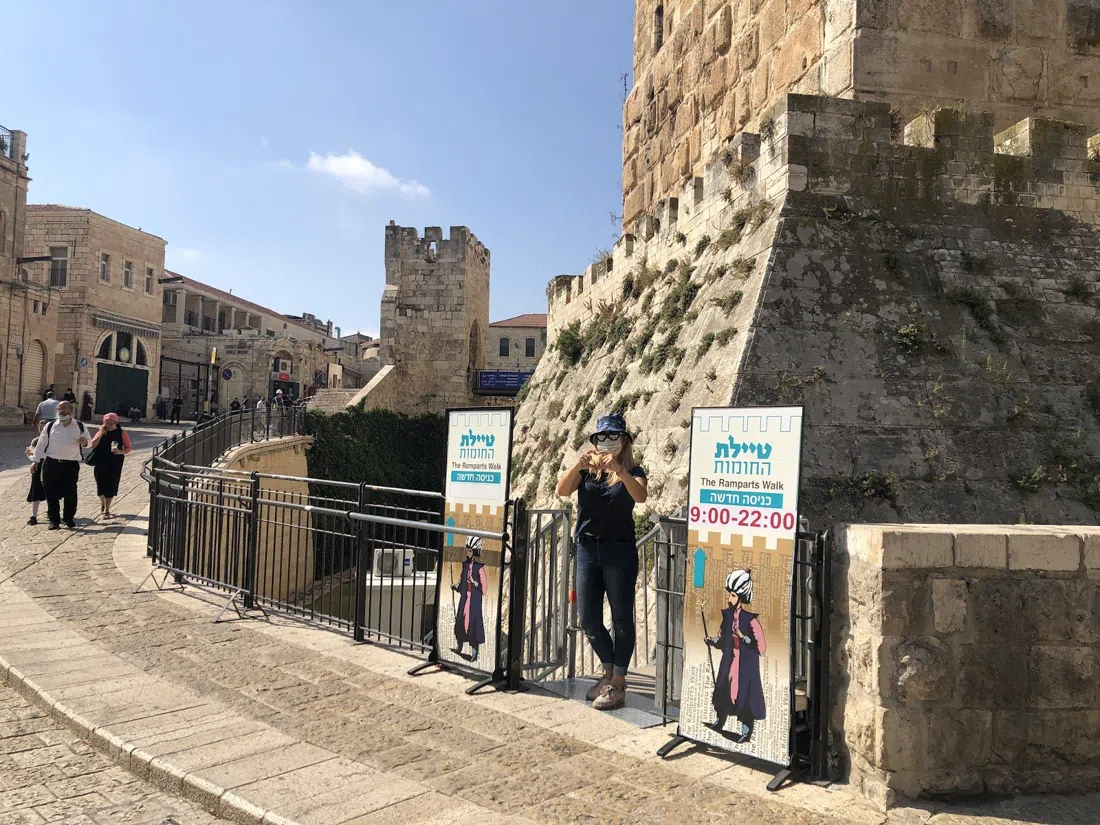
From the same Jaffa Gate ticket office you can buy the Ramparts Walk (the walkway along the top of the Old City walls), 25 NIS adult and 15 NIS concession, dropping to 15 NIS a head for groups of 20 or more. There are two separate sections and the ticket is valid all day, so you can climb one now and the other later. Be honest with yourself about the format first: it is stairs, with no lift and no way to take a buggy up, the walkway narrows to single file in places, and a large group strings out badly along it. It closes around 16:00 Sunday to Thursday, 14:00 on Friday, and all day Saturday. For two people with decent knees it is the cheapest hour of perspective in the city, and you look down into courtyards and school yards nobody photographs.
The Christian Quarter and the queue at the tomb
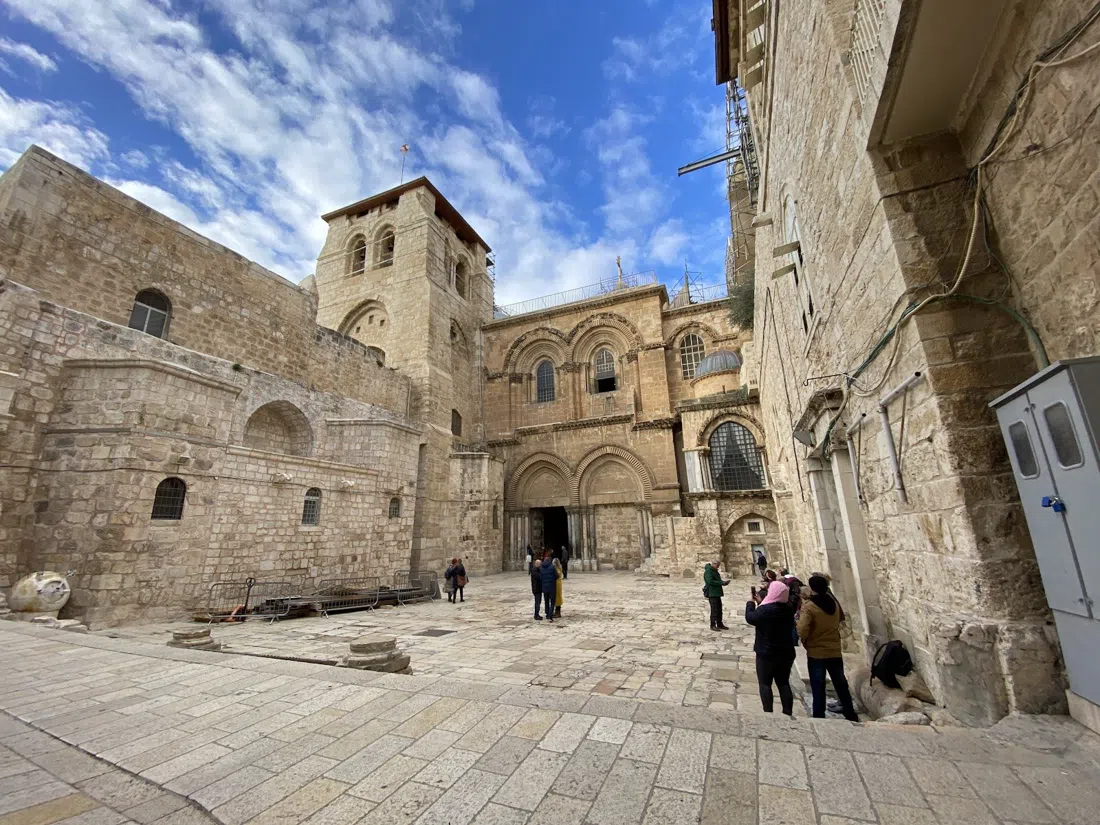
The Church of the Holy Sepulchre (Christian Quarter, a ten-minute walk in from Jaffa Gate) is not a monument you tick off. It is a working church shared by several communities, and the day inside it is organised around their liturgies, not around visitors. Entry is free, no booking exists, and groups are tolerated rather than scheduled. Processions take priority absolutely: when one moves, the queue for the Edicule, the small shrine over the tomb, stops dead until it has passed. Opening is 05:00 to 20:00 from April to September and 04:00 to 19:00 from October to March, and the Edicule queue alone runs 30 to 60 minutes from mid-morning onward. Serious walkers arrive at opening, when the incense is still the loudest thing in the building. If you only have a morning, spend it here rather than spreading yourself thin.
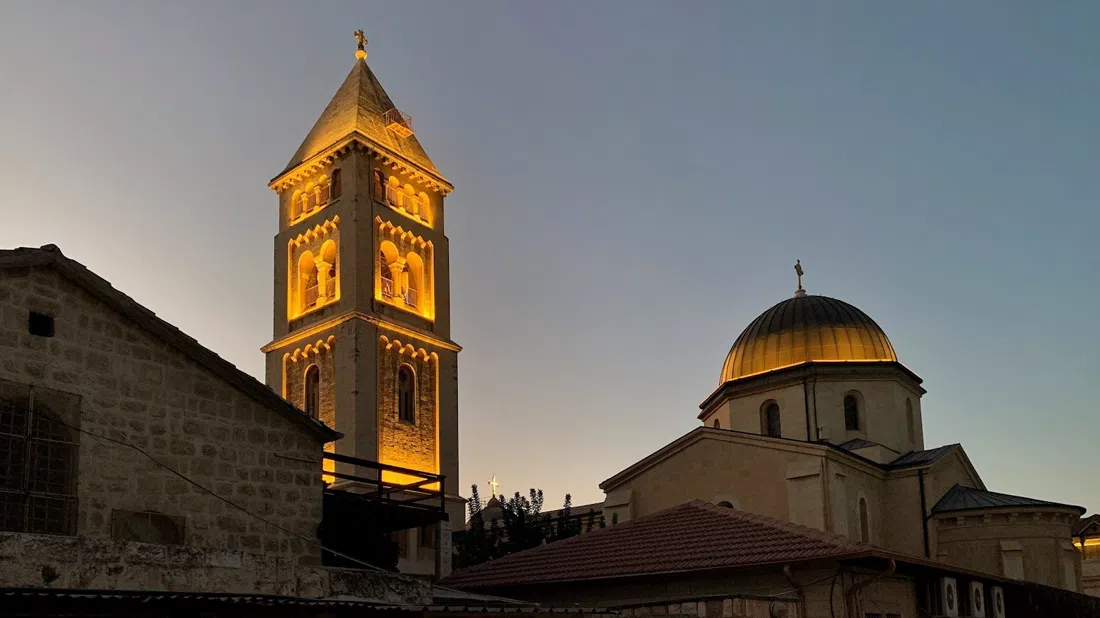
A minute away in the Muristan, the Lutheran Church of the Redeemer bell tower (Christian Quarter) costs 15 NIS, which also covers the excavations beneath the church. It is the highest publicly accessible point inside the walls and the only place you get the Holy Sepulchre's domes from above rather than head-on. The spiral stair is one-way-at-a-time in places, so groups go up in batches and everybody waits their turn; it is open Monday to Saturday, 10:00 to 17:00. Skip it if you have bad knees or dislike enclosed stairwells, because there is no graceful way to turn back halfway.
Walking the Via Dolorosa slowly
The route through the Muslim Quarter is a devotional path, and it is also a residential street with schoolchildren, scooters and vegetable crates on it. Both things are true at once, and the walkers who get the most out of it are the ones who accept that.
Before you walk it, give a quarter of an hour to the Terra Sancta Museum — Via Dolorosa (Muslim Quarter, on the route itself). Only the multimedia and archaeological sections are open; tickets are 15 NIS per section or 20 NIS combined, free for under-12s, with a reduced rate from five people upward and nine languages available. The 15-minute film is the cheapest way to understand what the stations are and why they sit where they do, and in my experience children take it far better than a guide talking over street noise for an hour.
Halfway along, the Austrian Hospice of the Holy Family (corner of the Via Dolorosa and Al-Wad Street) is the standard mid-walk reset. Five shekels gets you onto the rooftop terrace, which is the cheapest good view in the Old City by a wide margin, and Café Triest downstairs does apple strudel and coffee for roughly 25 to 50 NIS. Rooftop and café both run 10:00 to 22:00 daily and the terrace takes walk-ins without fuss. Rooms and group meals are a different matter: the house advises something like 16 months' notice for group bookings, so this is a stop, not a lunch plan, unless you booked it more than a year ago.
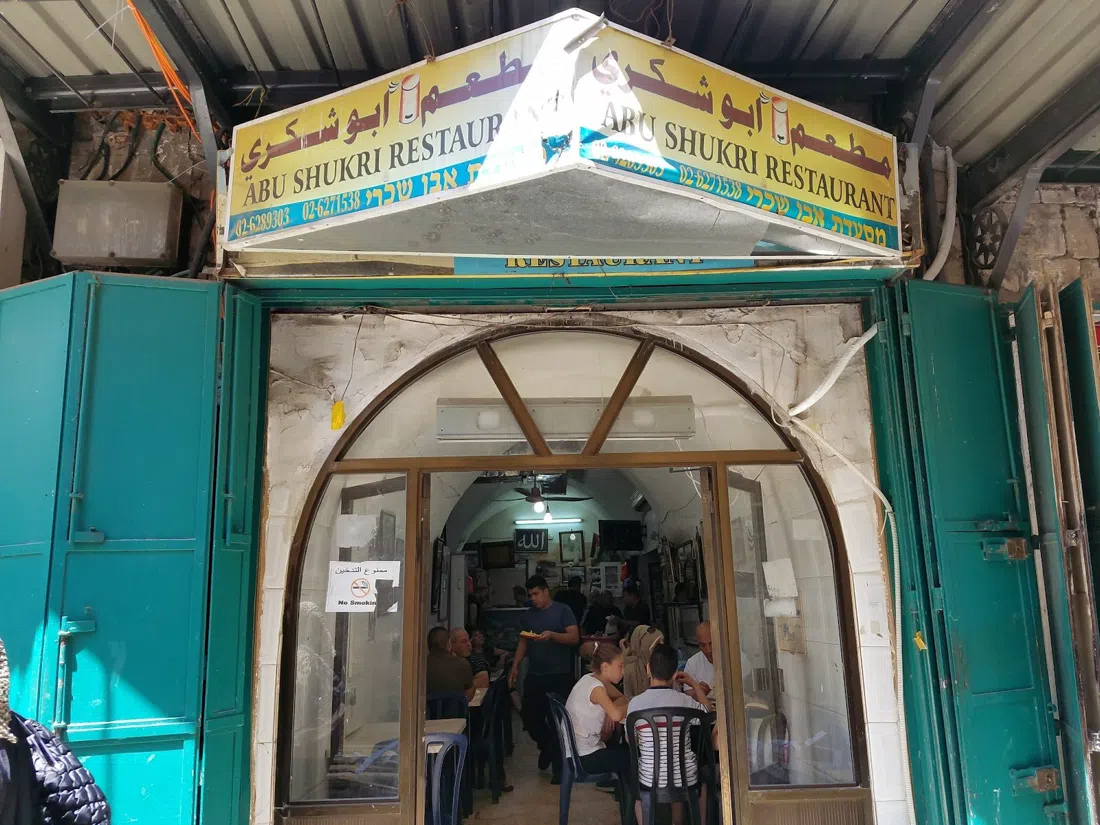
For lunch, Abu Shukri (Al-Wad Street, beside the Fifth Station) has been ladling hummus since 1948 and remains the honest answer, at roughly 30 to 50 NIS a head. It is a small room with communal tables and no reservations. Six or eight people will get seated in stages; a coach party has no chance. They open early and close when the pots are empty, so build the walk to arrive before 14:00 rather than after. Arriving at 15:00 hungry is a mistake you only make once.
The Wall, the tunnels beneath it and the esplanade above
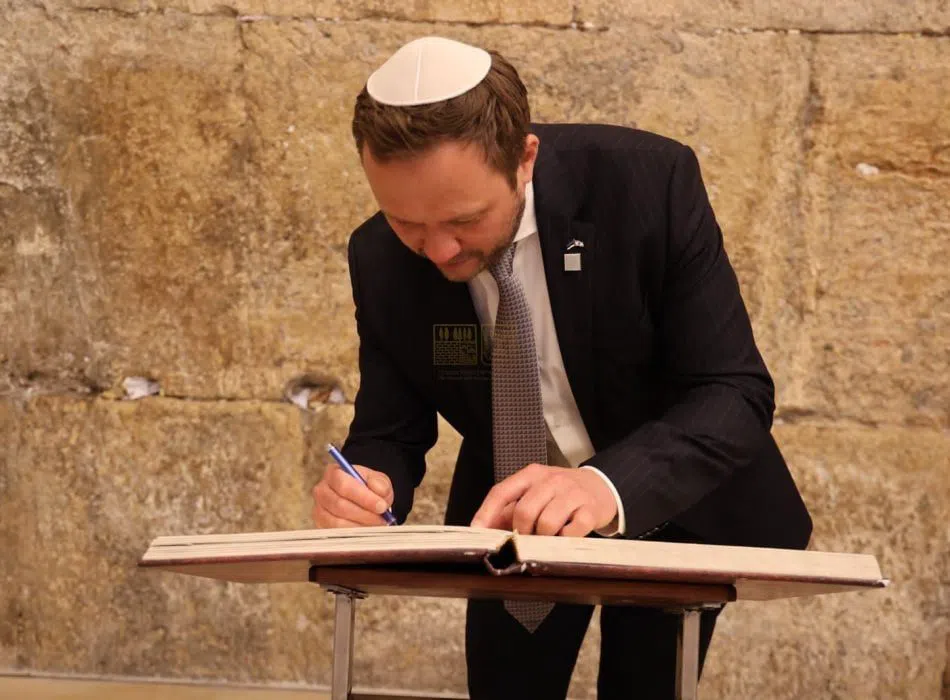
The Western Wall Plaza (Jewish Quarter, reached downhill through the Jewish or Dung Gate approaches) is open 24 hours a day, every day of the year, free, and to all faiths. Everyone passes a metal detector and a bag check, and men are handed a paper kippah at the entrance. Shoulders and knees covered, heads covered for men. The rule that catches walking groups out more than any other is that on Shabbat and festivals there is no photography and no phone use at all. Put the phone away before you reach the plaza and you avoid being the person who gets asked. It is a place of prayer with a permanent congregation; standing at the back for ten minutes and watching tells you more than the photograph would.
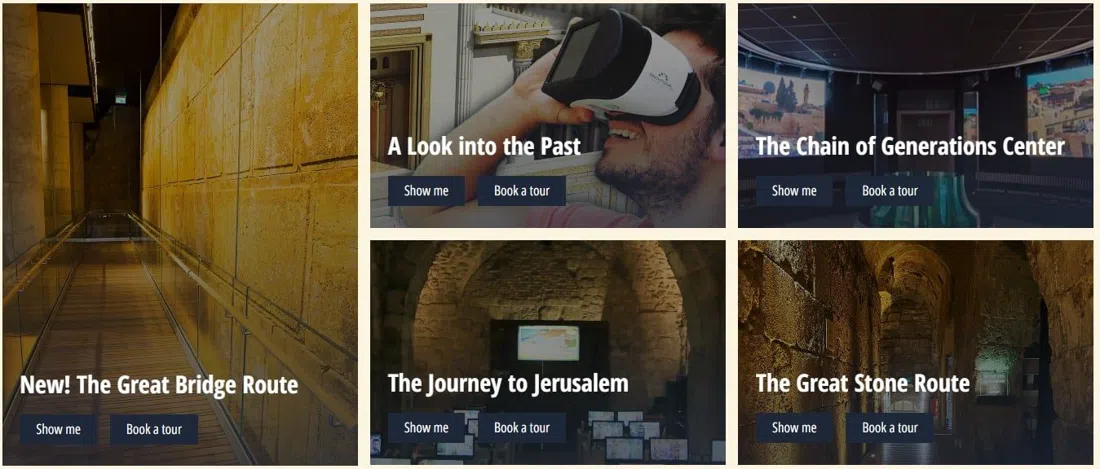
Beneath it, the Western Wall Tunnels (Jewish Quarter, entered beside the plaza) are guided only and capped at 35 people per tour, with entry slots every 20 minutes. Tickets are 38 NIS adult and 25 NIS concession, including the roughly 70-minute guided walk; hours are Sunday to Thursday 07:00 to 23:00 and Friday 07:00 to 13:00, closed on Shabbat and festivals. Independent groups need a minimum of 18 people and book through the Heritage Foundation call centre. Slots go weeks ahead, which makes this the one thing on the whole itinerary to reserve before you fly, not on the morning.
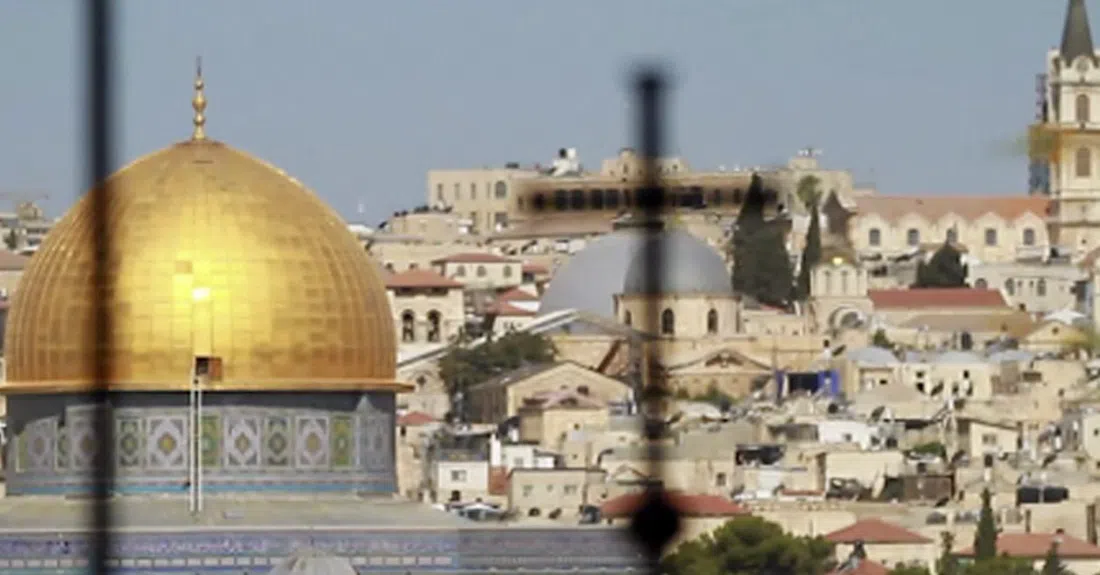
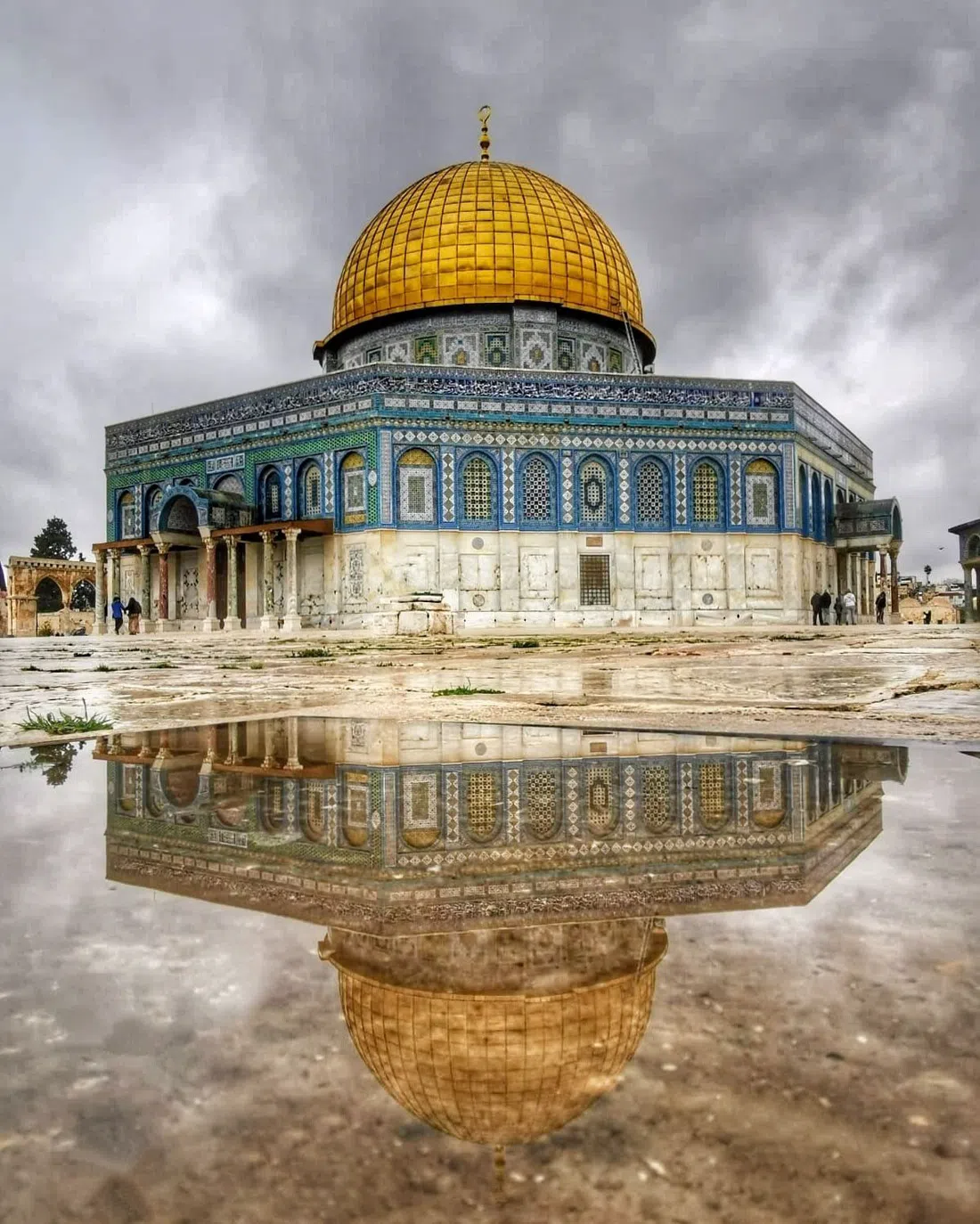
The Temple Mount / Haram al-Sharif esplanade (above the Western Wall) has the tightest access of anything here, and it deserves to be approached on its own terms rather than as a viewpoint. Non-Muslims enter only by the wooden Mughrabi Bridge ramp beside the Western Wall, and only Sunday to Thursday, roughly 07:30 to 11:00 and 13:30 to 14:30 in summer, an hour earlier in winter, closed Friday, Saturday and Muslim holidays. Entry is free. No prayer books, Bibles or visible religious symbols, and you cannot go inside the Dome of the Rock or Al-Aqsa themselves. Groups queue as one line and can be turned back with no notice and no explanation, so treat it as a bonus that may not happen rather than a fixture in the plan.
Rooftops and a quarry most walkers miss
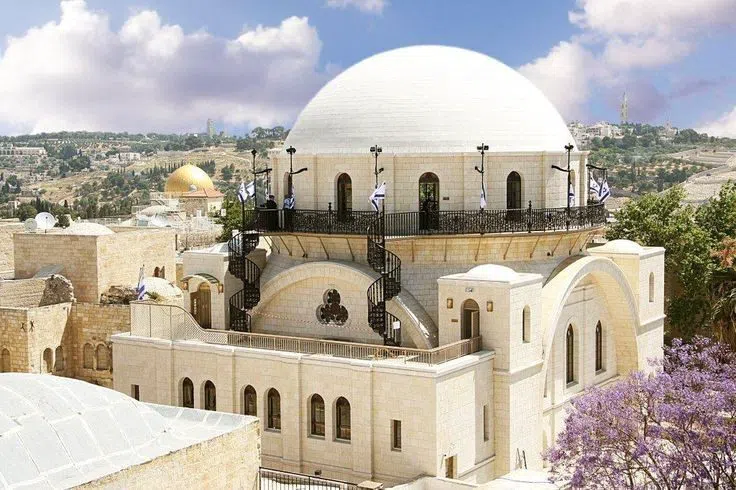
The Hurva Synagogue (Jewish Quarter, on the main square) is free to look into, and the dome balcony is reached by arranged tour with a reservation through Jewish Quarter Tourism, around 60 NIS adult and 45 NIS child on the combined Jewish Quarter ticket, which also works for groups. Rebuilt and rededicated in 2010 after being blown up in 1948, its 360-degree balcony gives you the Jewish Quarter rooftop view the ramparts simply cannot reach.
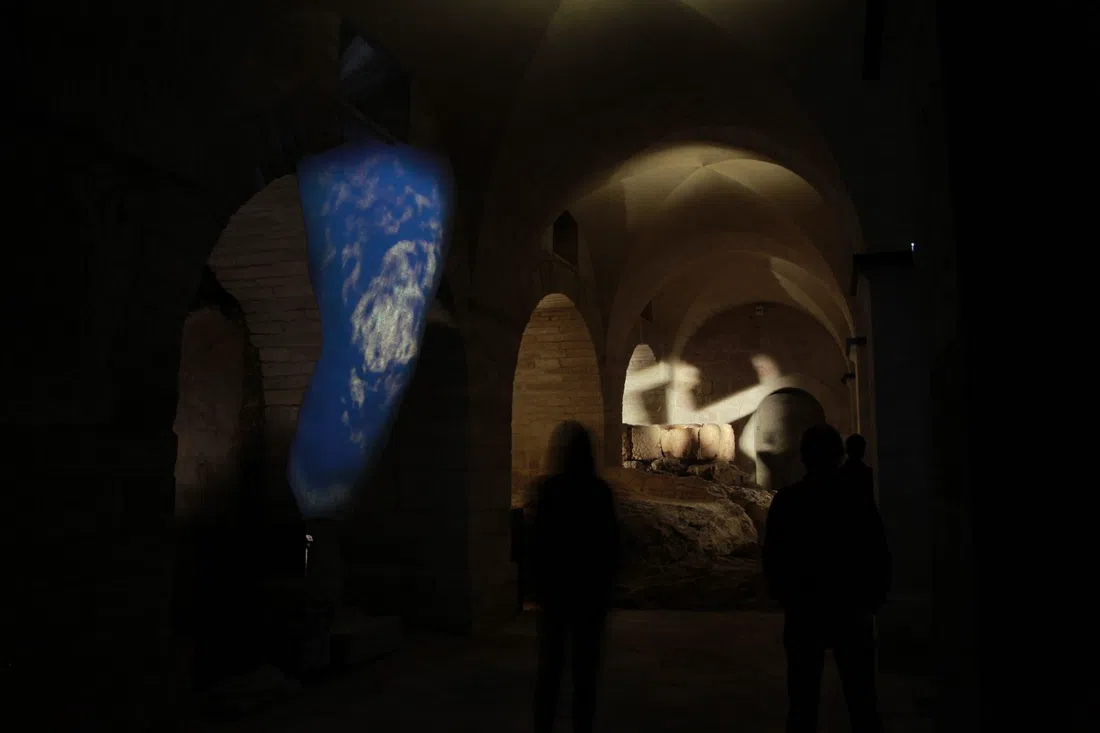
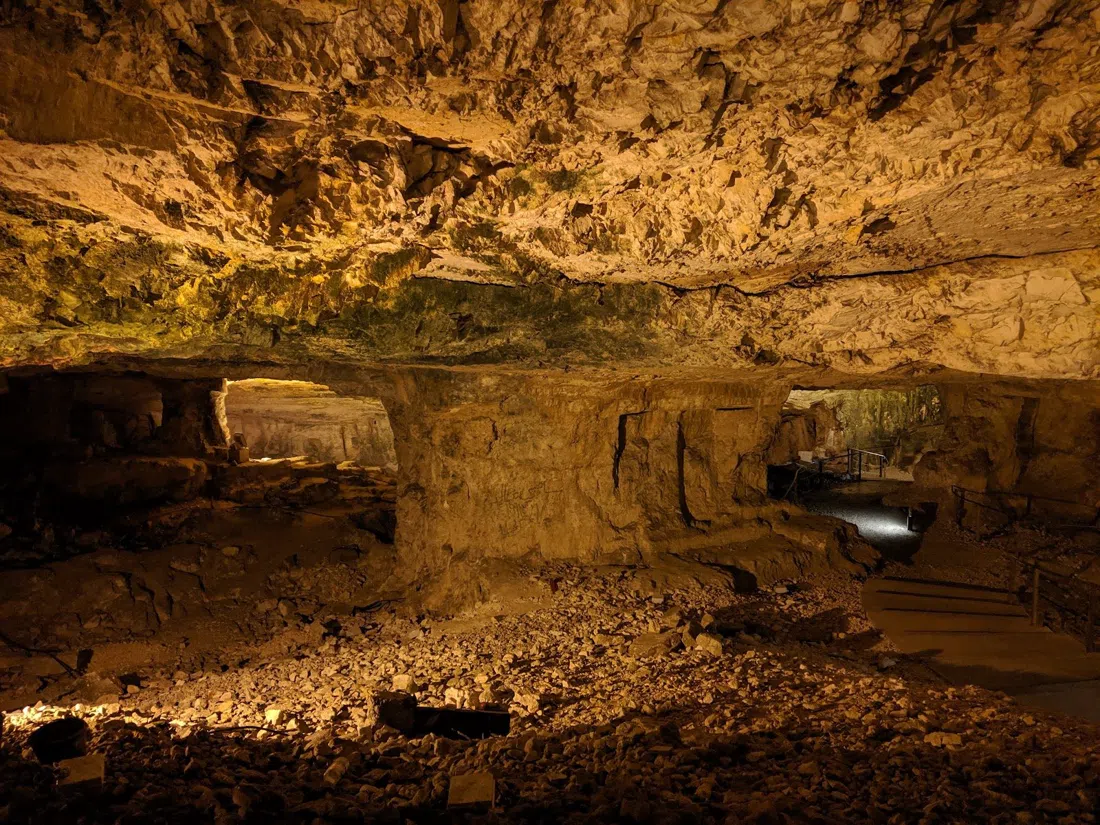
North of the walls, Zedekiah's Cave / King Solomon's Quarries (just downhill from Damascus Gate) reopened in 2023 after a three-year refit. Self-guided entry is 25 NIS adult and 15 NIS concession, or 45 NIS with the 'Mysteries Beneath the Walls' audiovisual show, which runs 45 to 60 minutes and is pitched at ages 7 and up. Book that ahead. It is closed Friday and Saturday, and it is a strong group site, with 20-plus rates, dedicated slots Sunday to Thursday between 10:00 and 15:00 or 16:00 by prior arrangement, and paid evening openings. A vast cool man-made cavern is also the best possible answer to a hot afternoon.
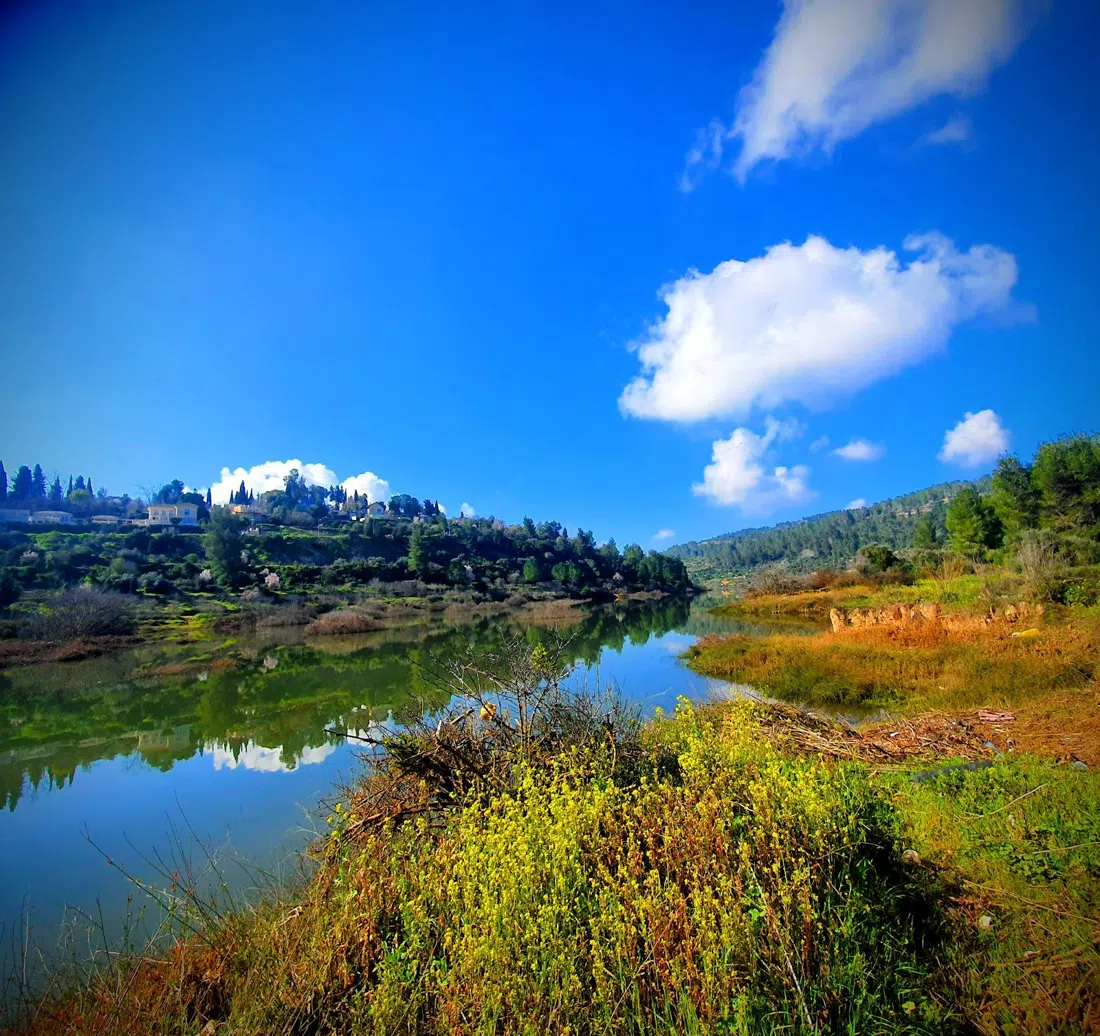
Finish, or begin, at the Mount of Olives Viewpoint / Rehavam Ze'evi Observation Point (outside the walls to the east). It is a free open deck, accessible around the clock, with coach parking alongside, a 25-minute walk or a short taxi from Dung Gate. Go in the last hour before sunset, when the limestone turns amber and the whole walled square kilometre arranges itself into something you can finally read. Every other view you had that day gets measured against this one.
Queues, doors and what to book ahead
The pattern is simple. The great free places (the walls, the Wall, the Sepulchre) cost nothing and are governed by hours and prayer, so your only lever is arriving early. The ticketed places are cheap, but three of them run on fixed capacity: the tunnels with their 35-person cap and 20-minute slots, the Hurva balcony by reservation, and the Zedekiah's Cave show. Book those and you will not queue for anything else all day.
A guided full-day option exists and is worth weighing on its merits. Guided departures run seven days a week and start from 180 USD per person, and the leading one is flagged as likely to sell out, so if you want a guide on a specific date, sort it early. What you buy is sequencing, access negotiated on your behalf, and someone who can explain a mosaic without reading a plaque. What you give up is the ability to stand still for twenty minutes because a door opened. Doing it yourself at the door costs well under 200 NIS in tickets.
Is it worth it
Yes, without qualification, but for the walking rather than for a checklist. In one half-day on foot you move through four quarters, two thousand years of building, three living religious traditions still using their buildings as intended, and lunch that has not changed since 1948. It suits couples, solo walkers and small groups of six to eight best: those sizes fit Abu Shukri's room, the Redeemer's stair and the single-file rampart without anyone waiting. Twenty-plus groups get real discounts on the ramparts and at Zedekiah's Cave and are welcome at the citadel, but they should plan to split at the gates and forget the hummus. It suits anyone with mobility limits far less honestly, since the ramparts and the bell tower are stairs only and the lanes themselves are stepped stone. Build the day from the plaza, the citadel, the church and the terraces instead, and you lose surprisingly little.
Best time to go
Be inside the walls by opening, the Sepulchre at 04:00 or 05:00 depending on the season and the citadel when it unlocks, and you will have walked the Via Dolorosa before the coaches arrive. The Edicule queue builds from mid-morning, so anything involving that tomb belongs in the first two hours. Midday is for underground and indoors: the tunnels, Zedekiah's Cave, the Terra Sancta film. Late afternoon is for height, the Redeemer tower until 17:00 and the Hurva balcony, and the last hour before sunset belongs to the Mount of Olives, always.
The week matters more than the month. Sunday to Thursday is the only window for the Temple Mount esplanade, the tunnels and Zedekiah's Cave. Friday closes early across the board, with the ramparts shutting around 14:00 and the tunnels at 13:00. Saturday closes the tunnels, the ramparts and the quarry entirely, while the Wall and the Sepulchre stay open, and on Shabbat the no-photography rule at the plaza is absolute. Summer means a genuinely hot stone oven by noon, so plan a subterranean middle; winter brings shorter hours and slippery lanes, but also the Sepulchre almost to yourself at 04:00.
Getting there, cash and timing
The light rail stops within a few minutes' walk of Jaffa Gate, which is the easiest arrival and avoids the parking problem altogether; for the Mount of Olives, walk out through Dung Gate or take a short taxi. Carry shekels. Ticket offices generally take cards, but the 5 NIS rooftop, lunch on Al-Wad Street and a bottle of water in the bazaar all go more smoothly in cash, in small notes. Budget roughly 158 NIS per adult for the full ticketed set (citadel, ramparts, Terra Sancta combined, hospice rooftop, bell tower, tunnels) plus 30 to 50 NIS for lunch, and nothing at all for the Wall, the Sepulchre, the esplanade or the sunset viewpoint.
Allow five hours for a proper half-day and eight if you add the esplanade and the Mount of Olives; anything under three hours becomes a march. Dress for the doors, not the weather. Shoulders and knees covered is the baseline everywhere, a scarf or light layer solves it in summer heat, and it saves being turned away at the one place you came for. Staying inside or just outside the walls turns the early start from an ordeal into a short walk, and the Jerusalem hotel search is the fastest way to compare what sits in the centre. For the rest of the city beyond the gates (markets, museums, the neighbourhoods people actually live in), start with our Jerusalem guide.