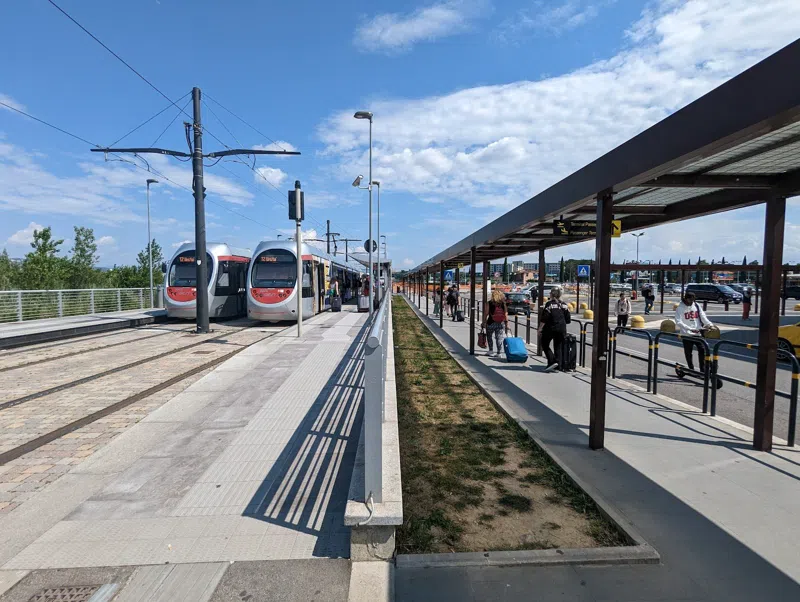

Jerusalem doesn't have a skyline you can read from one point, and it doesn't have a single street that explains it either. What it has is a tram. Board the Jerusalem Light Rail at its western terminus and, without changing seats, you will pass a Holocaust memorial, a national cemetery, a covered market full of teenagers eating knafeh, the seam line where West Jerusalem becomes East Jerusalem, and a shopping mall on the city's northern edge where the ride simply stops being interesting — which is the most honest ending it could have.
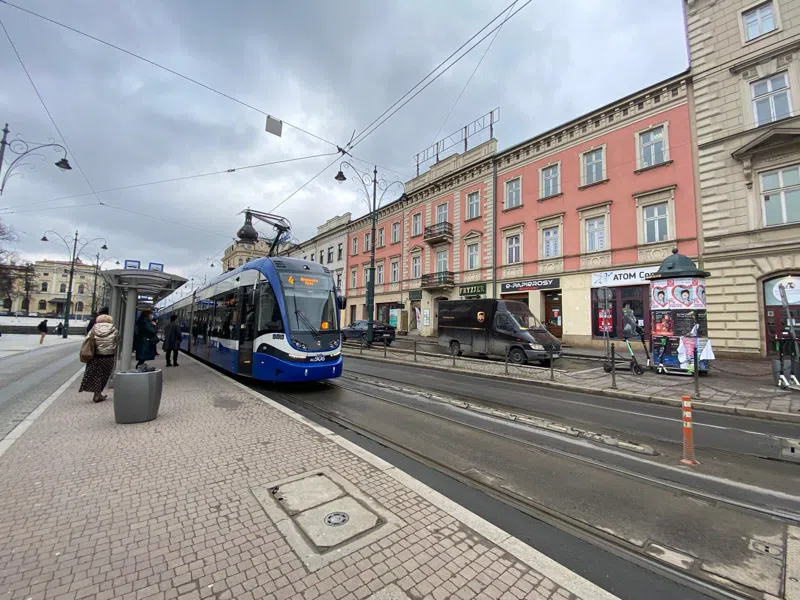
The Red Line runs from Mount Herzl in the southwest to Neve Yaakov in the northeast, a single track laid straight through every fault line the news cycle keeps rediscovering. It operates Sunday to Thursday from 5:30am to 11:30pm, on Fridays until about an hour before sundown, and not at all during Shabbat or Jewish holidays — it resumes roughly half an hour after Shabbat ends. A single fare is a flat ₪5.90 regardless of distance, tapped on a Rav-Kav card bought from any station machine. Ride the whole line and you've spent less than the price of a coffee to see more of Jerusalem's actual daily life than most three-day itineraries manage.
This is a route guide, in order, west to east, with the honest door policy and group notes for each stop along the way.
The Western Hills: Mount Herzl and Yad Vashem
Start where the line starts. Mount Herzl National Memorial Site (Har Herzl), in the Mount Herzl district on the city's western edge, is Israel's national cemetery and ceremonial ground — Theodor Herzl is buried here, along with the country's political and military leadership and rows of soldiers' graves. It's open public parkland, free to walk, and quiet in a way that sets the tone for the whole ride: this isn't a photo-op start, it's a civic one. Group educational tours run through Yad LaBanim or the adjoining Herzl Museum on request, but you don't need to book anything just to walk the grounds.
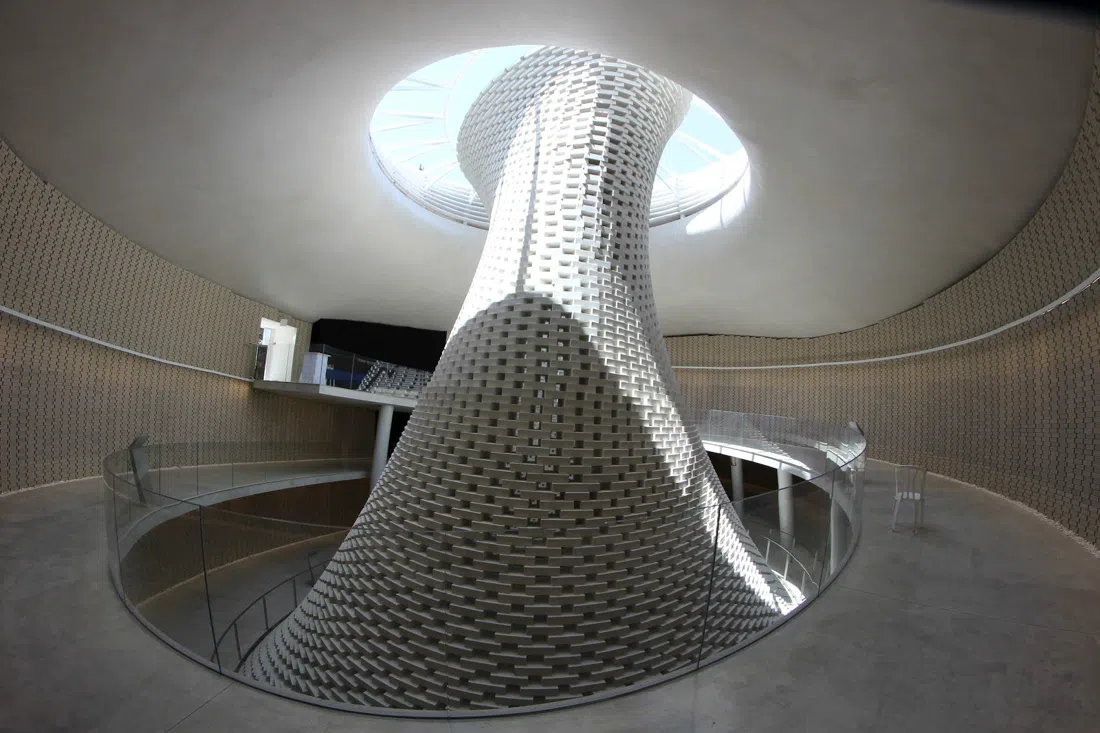
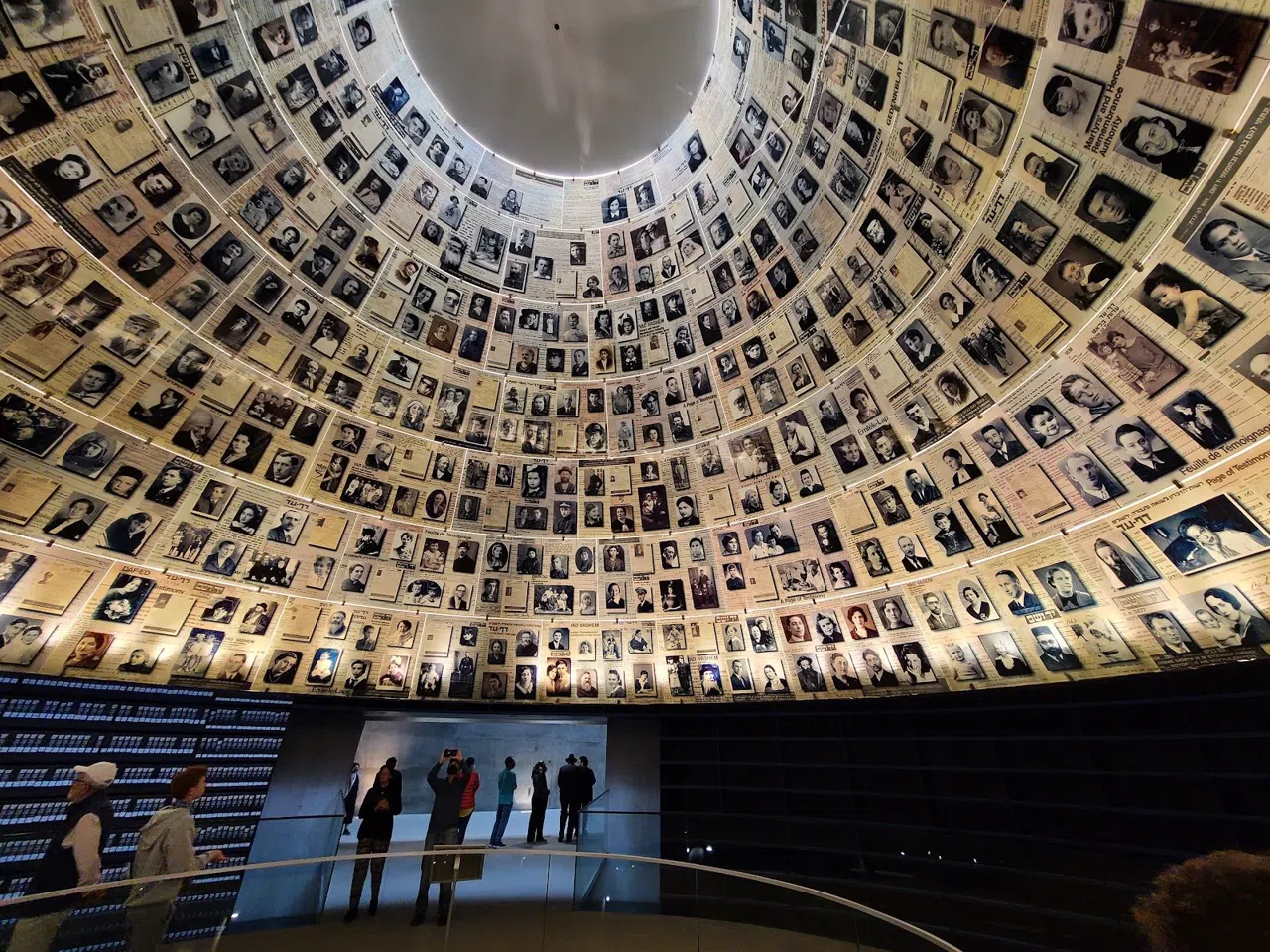
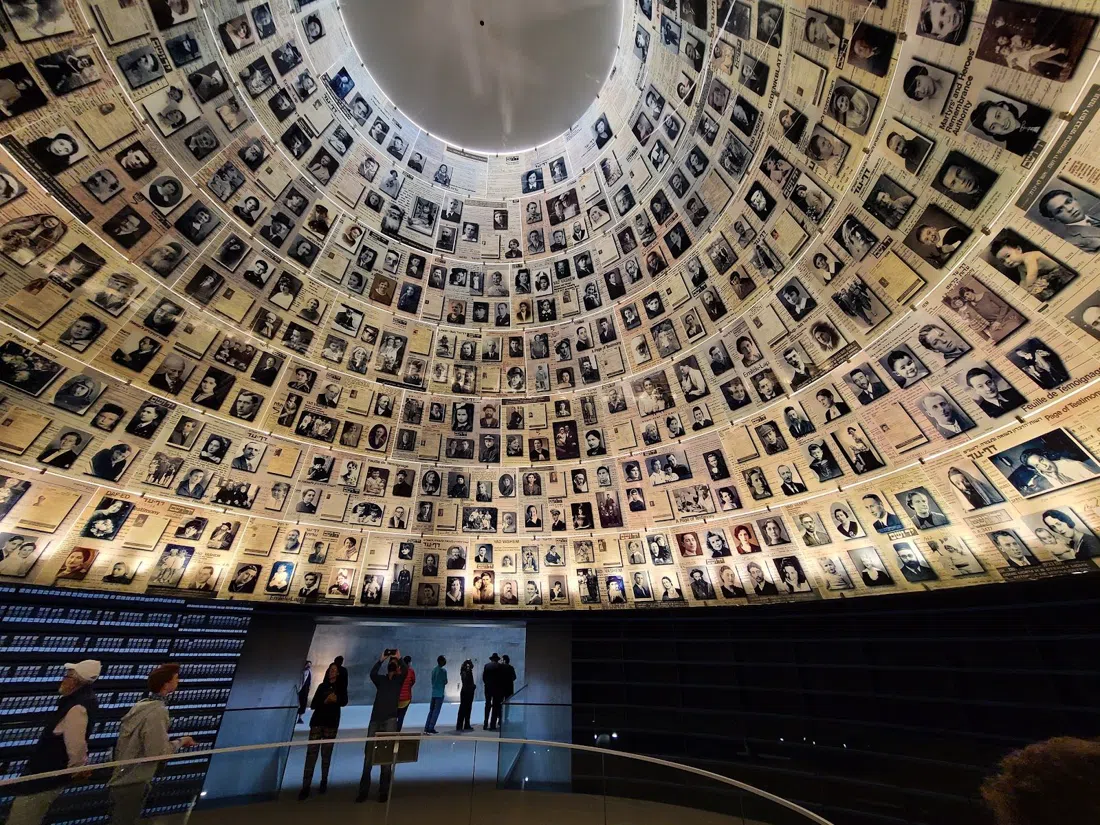
Sharing the same terminus stop is Yad Vashem — The World Holocaust Remembrance Center, and it deserves the first hour of your day, not the last. Entry is free, but every visit — solo or group — requires an advance online reservation; there is no walk-in queue, and turning up without a slot means turning around. Give it a minimum of two to three hours, go in the morning while you're fresh, and dress and behave as you would at any memorial: this is not content, it's a record. Because Mount Herzl is the literal first stop, it functions as the moving balcony's opening frame — you board here before the tram drops downhill into everything that follows.
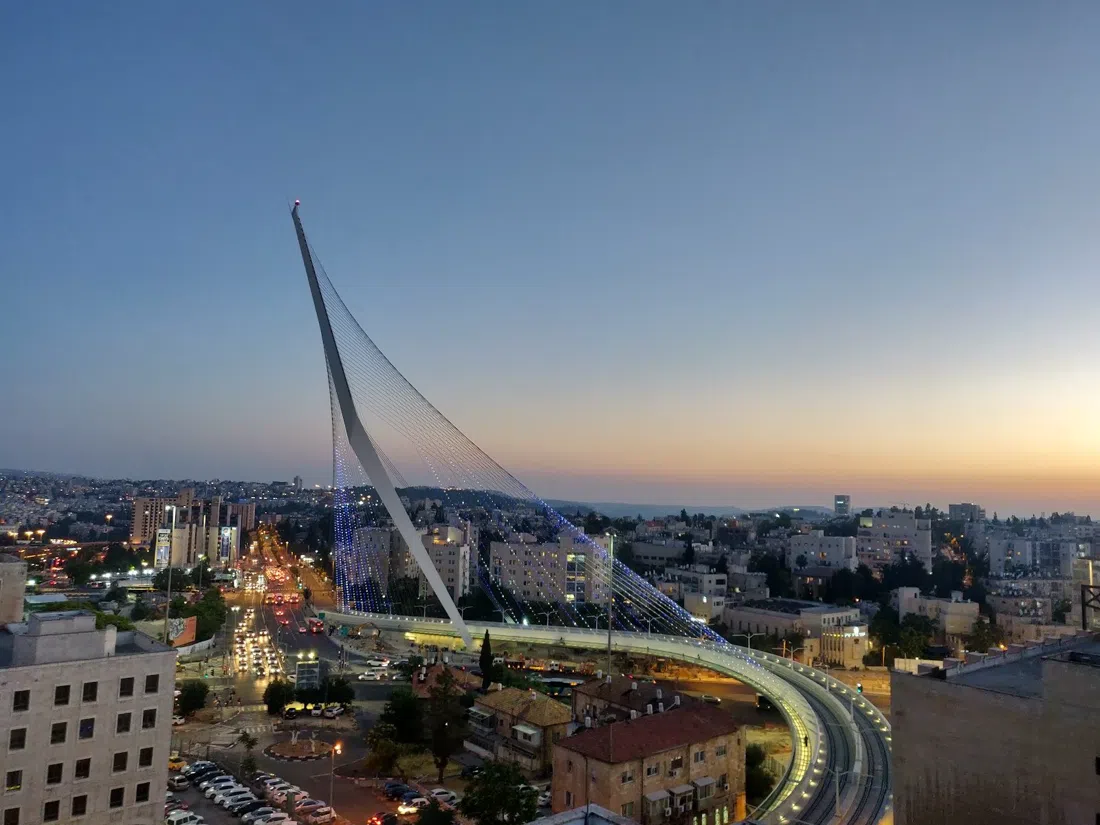
Leaving the station, the car crosses under the cables of the Chords Bridge (Bridge of Strings), Santiago Calatrava's harp-shaped span over the highway at the city's western entrance. It's public infrastructure — no ticket, no booking, any size group can walk or ride across it freely — and it's also the single most photographed few seconds of the entire journey, a clean architectural exclamation mark before the tram settles into its long, unglamorous middle section.
The Commuter Spine: Central Station to the Market
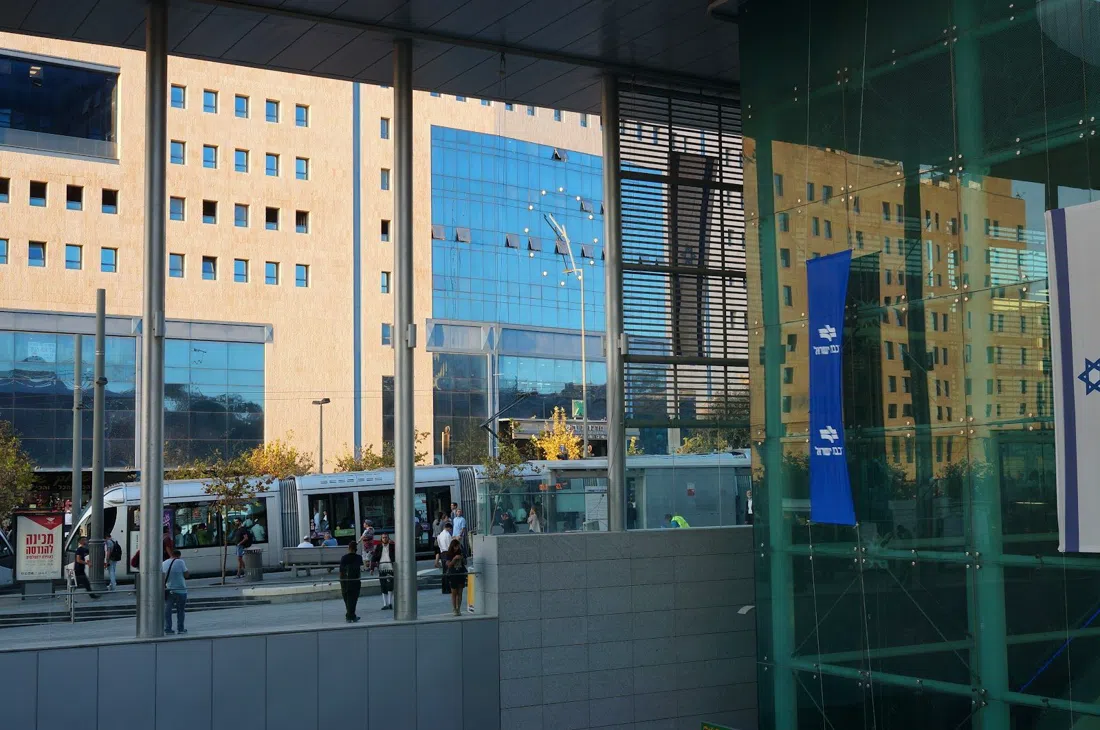
A few stops on, the tram slides past the Jerusalem Central Bus Station (Binyanei Ha'uma), and this is the stop worth actually getting off at, not just passing. It's a fully public transit building that absorbs school trips, soldiers heading back to base, and tour buses in equal measure — free to enter, with a food court where a meal runs a few tens of shekels. It has none of the postcard appeal of what's coming, and that's exactly the point: this line is a commuter spine first and a tourist route second, and the bus station is where you feel that hardest.
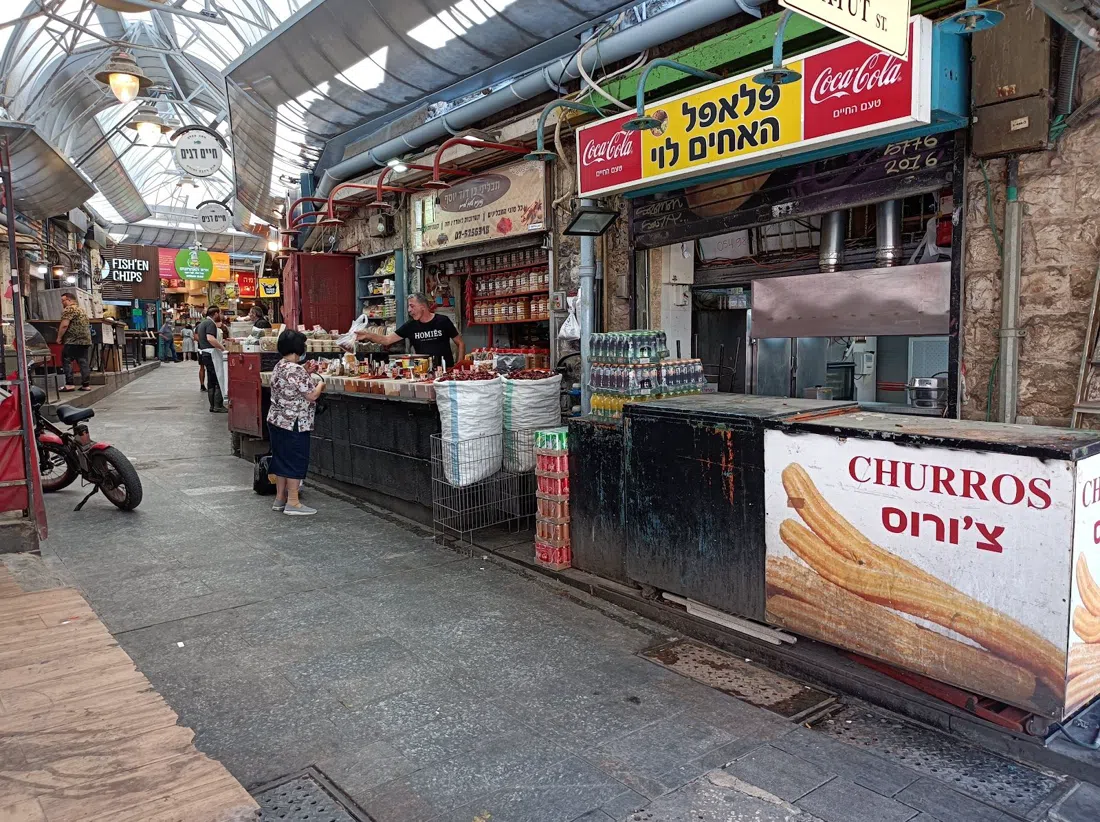
One stop later is Mahane Yehuda Market, and if you only get off the tram once, make it here. This is the most secular, mixed-crowd stretch of the whole route — stallholders shouting prices, students grabbing lunch, and by evening a bar scene that spills into the covered alleys. It's very group-friendly by day, food-tour operators run regular walks through it, and entry costs nothing; budget ₪ to ₪₪ for anything you eat. Go between late morning and early afternoon for the market at full volume, or come back after dark on a Thursday for the version of Jerusalem that looks nothing like the one three stops away.
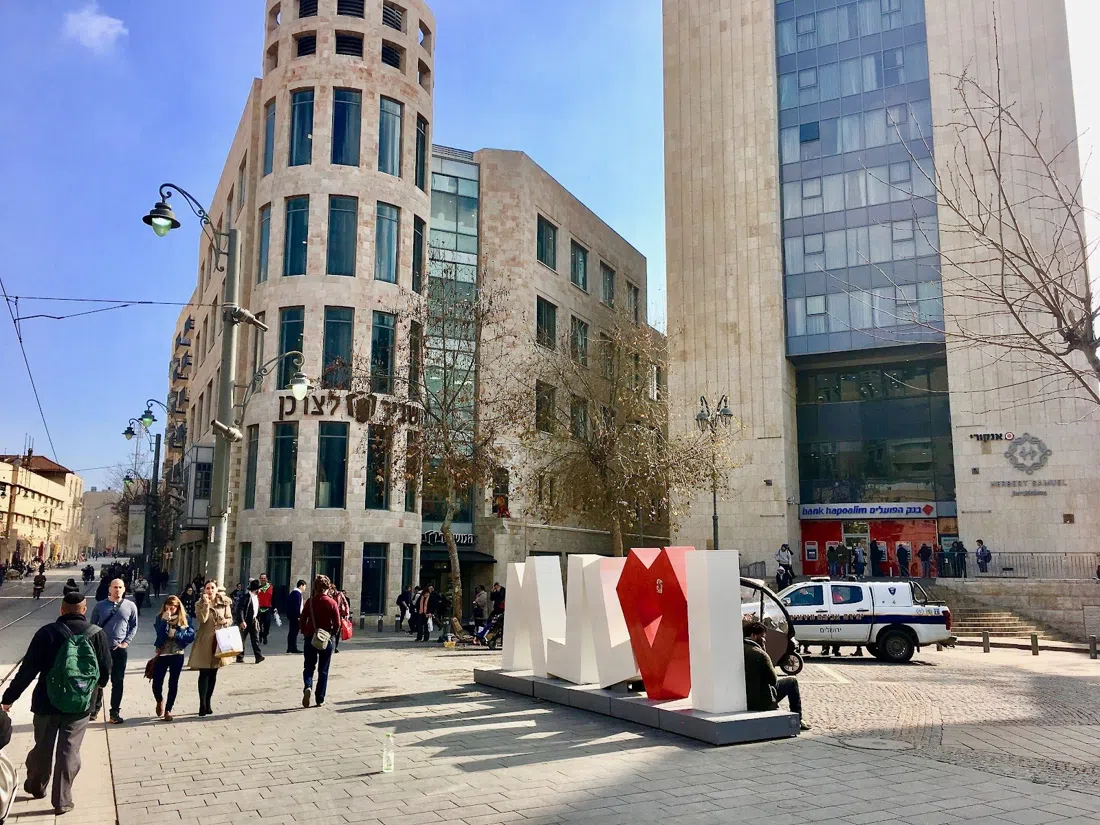
Continuing east, the line reaches Zion Square & Ben Yehuda Street Pedestrian Mall, downtown's civic heart and the city's default rally and gathering point. It's an open public street with no restriction on group size, free to walk, with food and shops running ₪ to ₪₪. This is the last unambiguously secular-Israeli beat before the tram bends toward the Old City walls — take it as the hinge point of the ride, the last stretch where the crowd looks like it could be downtown in any Mediterranean capital.
To the Walls: City Hall and Damascus Gate
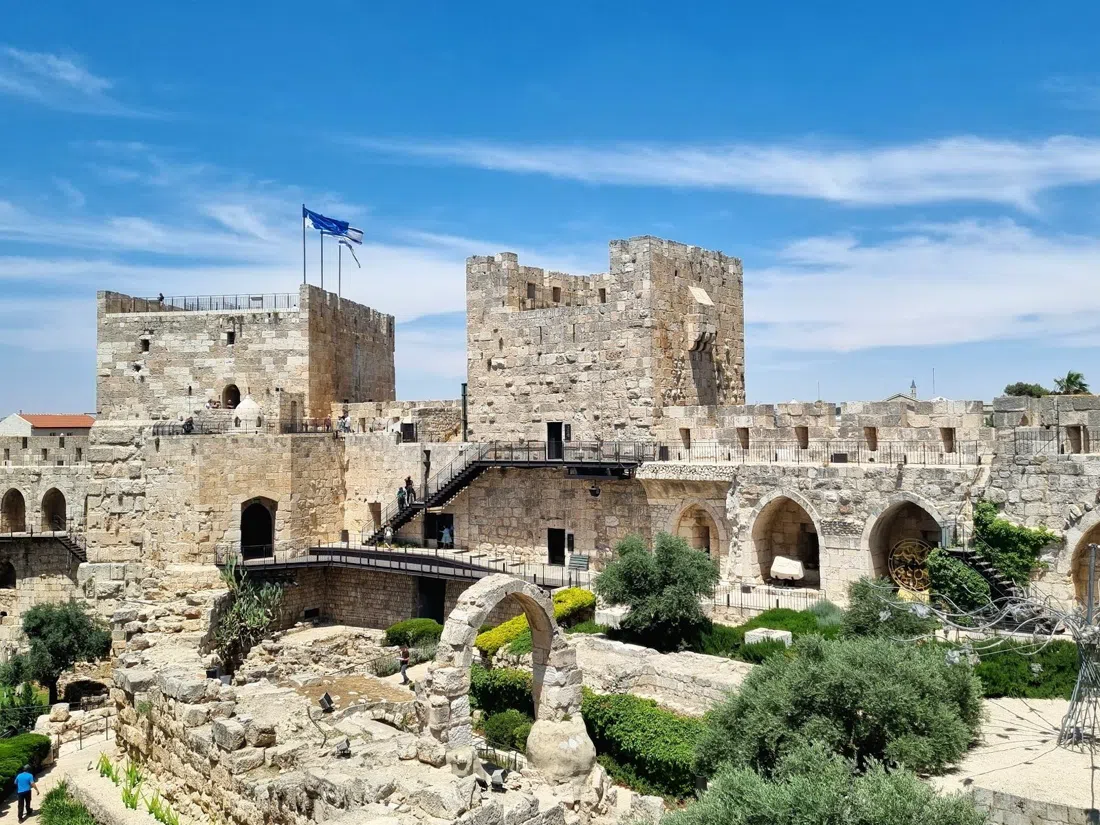
Get off near City Hall for the Tower of David Jerusalem Museum, reachable on foot from the stop and worth the short walk — this is the bridge from tram to Old City stone. It reopened with a full permanent-exhibition renewal in 2023 and is still running strong; adult entry is around ₪54, and group tours and pre-booked group tickets are a core part of how it operates, so larger parties should book ahead rather than turn up and queue.
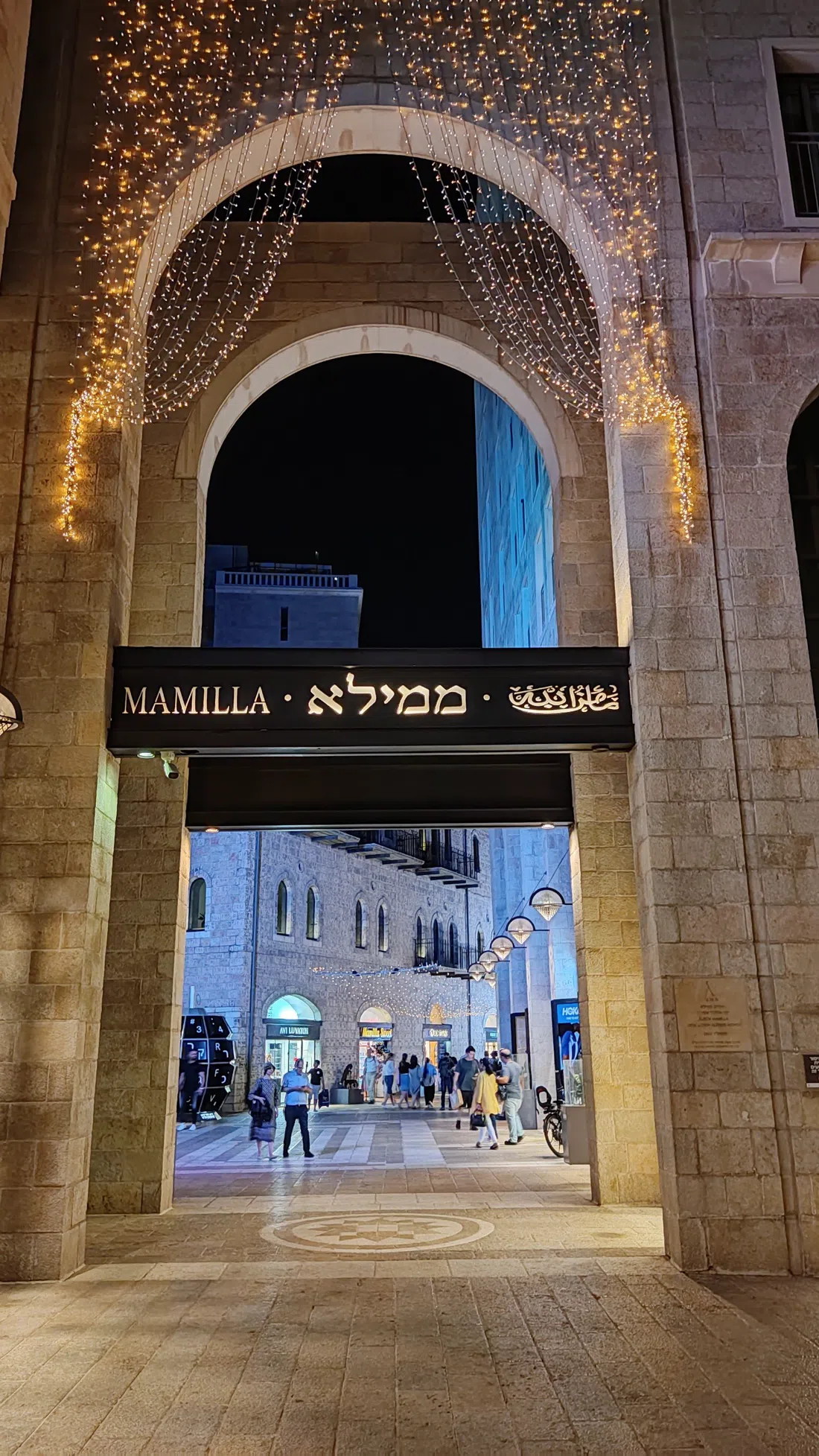
A short walk from the same stop is Mamilla Avenue, an open-air shopping street that functions like a standard upscale mall — it handles groups and tour buses easily, has no door policy, and is free simply to walk through, with shops and dining running ₪₪ to ₪₪₪₪. It's the polished, first-world final approach to the Old City, and it's worth noting precisely because of what comes two stops later.
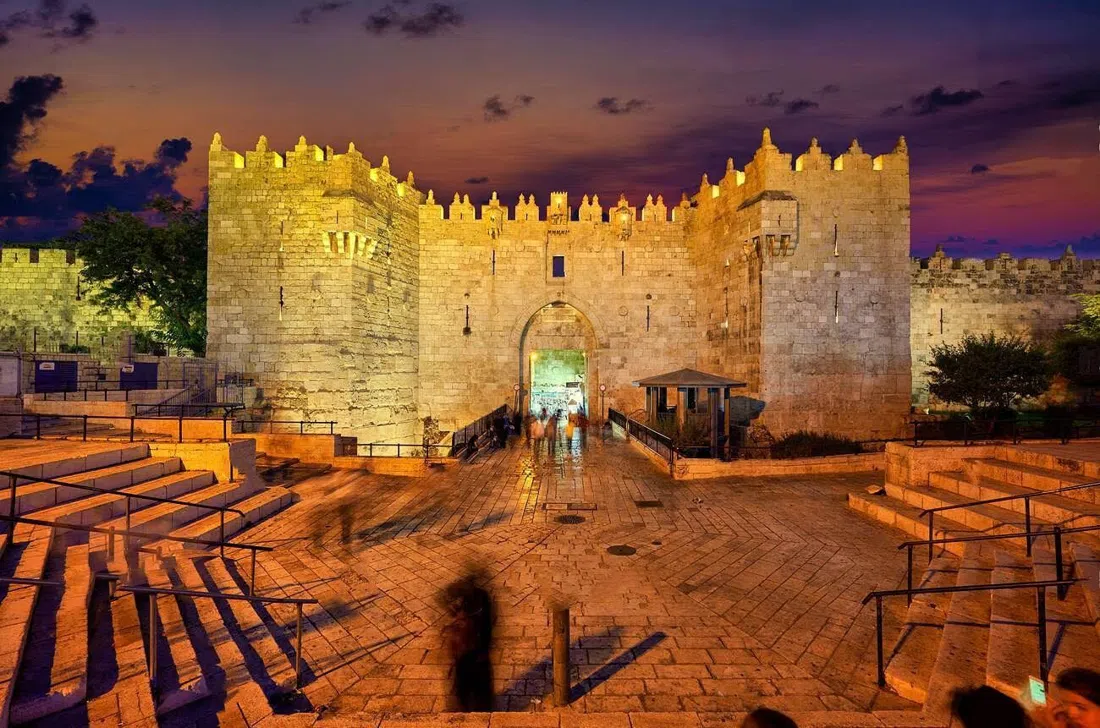
That's Damascus Gate (Shaar Shchem), and this is the pivot the entire article — and the entire ride — is built around. It's a public plaza open to any group, free, and it's the stop where the tram's ridership visibly flips from West to East Jerusalem: different languages, different dress, a different rhythm to the street. It can get dense, and conditions here shift day to day, so check the situation before you go, as you would for any major East Jerusalem plaza — this is standard practice, not alarm. Don't treat it as a backdrop; it's a working gate into a living Old City quarter, busiest and most atmospheric in the late afternoon before sunset.
Beyond the Gate: American Colony and Ammunition Hill
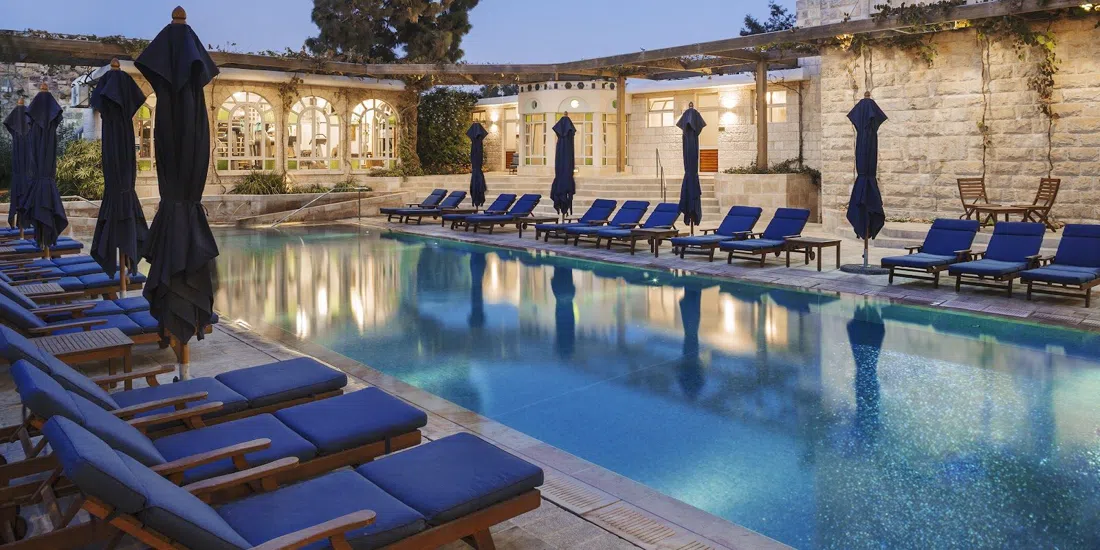
A few minutes past Damascus Gate, get off at Shivtei Israel for the American Colony Hotel, a four-minute walk away. This historic hotel and courtyard bar has functioned for well over a century as the closest thing the city has to a genuinely neutral room — journalists, diplomats, and everyone in between have used its courtyard as common ground. It's a small, boutique property, so the hotel wing itself is limited, but it takes groups for dining or courtyard drinks with advance notice; budget ₪₪₪ to ₪₪₪₪. If you're building an evening around the ride, this is the place to end it — not because it's the prettiest stop, but because its whole history is about being the one place in Jerusalem where the argument pauses.
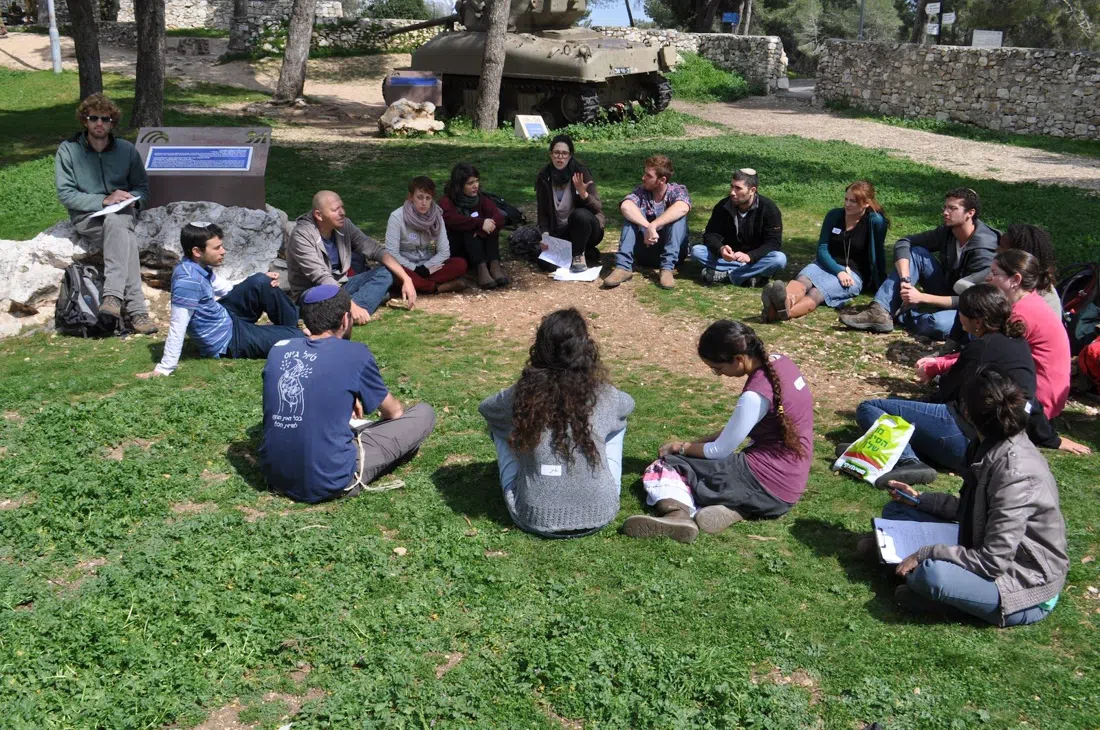
Continuing north, the tram runs directly over the seam line itself at Ammunition Hill National Memorial Site (Givat HaTachmoshet), the actual site of the 1967 battle for this part of the city. It's not an abstraction here — it's the ground under the tracks. The site runs organized group and school tours by reservation, including evening slots, for around ₪25 adult admission. This is the stop that gives the whole 'fractured city' framing something concrete to stand on, rather than leaving it as metaphor.
The Eastern Edge: French Hill to Pisgat Ze'ev
Past Ammunition Hill the line runs through French Hill / Givat Shapira, a university-adjacent neighborhood that's religiously and politically mixed in a way few other stops on the route are. It's public and free to walk, and Hebrew University runs bookable group campus tours nearby if you want a formal look rather than a passing one. This is where the tram's northbound car visibly empties out — the last mixed, in-between beat before the line reaches its true edge.
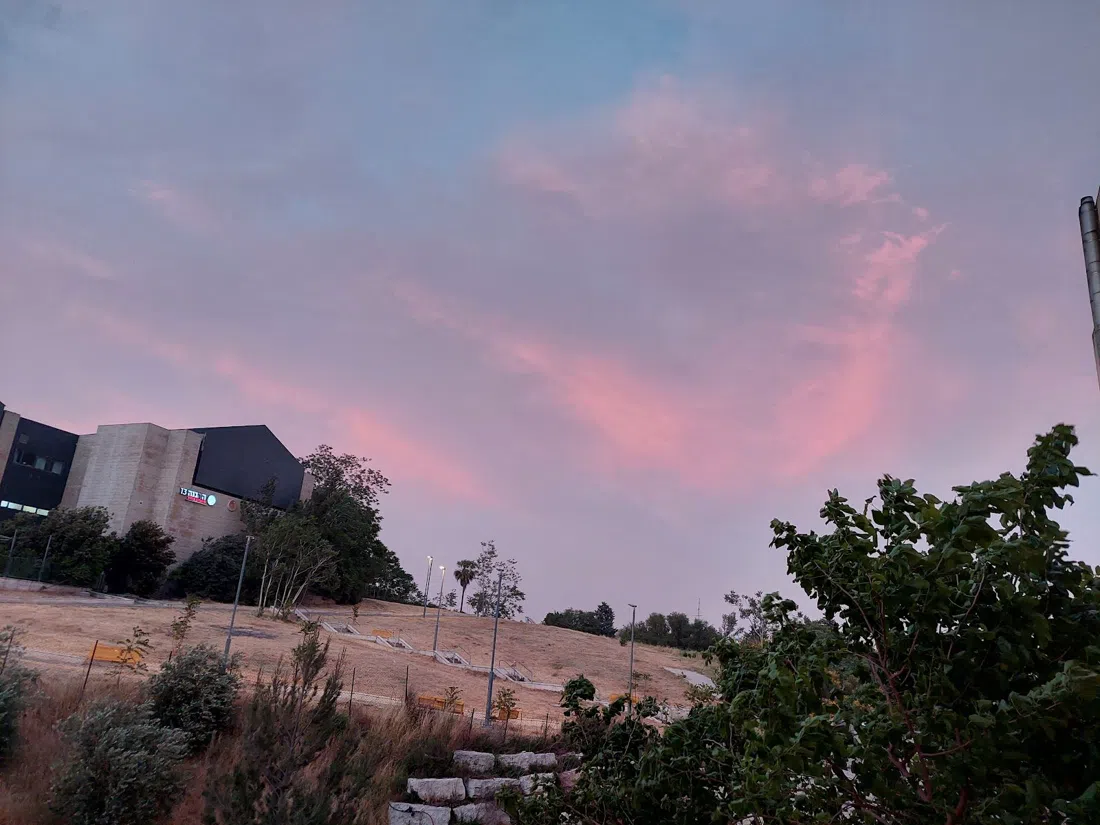
That edge is the Pisgat Ze'ev Center Mall, and this is deliberately where the ride — and this piece — ends. It's a standard shopping mall, no restrictions, easily absorbs any size group, free to enter, with dining running ₪ to ₪₪. There is nothing photogenic about it, and that's the honest close to a journey that started at a national memorial: the light rail isn't a sightseeing shuttle dressed up as public transport, it's public transport that happens to pass every sightseeing highlight the city has, on its way to somewhere as ordinary as a food court.
Planning the Ride: Transport, Cash, and Timing
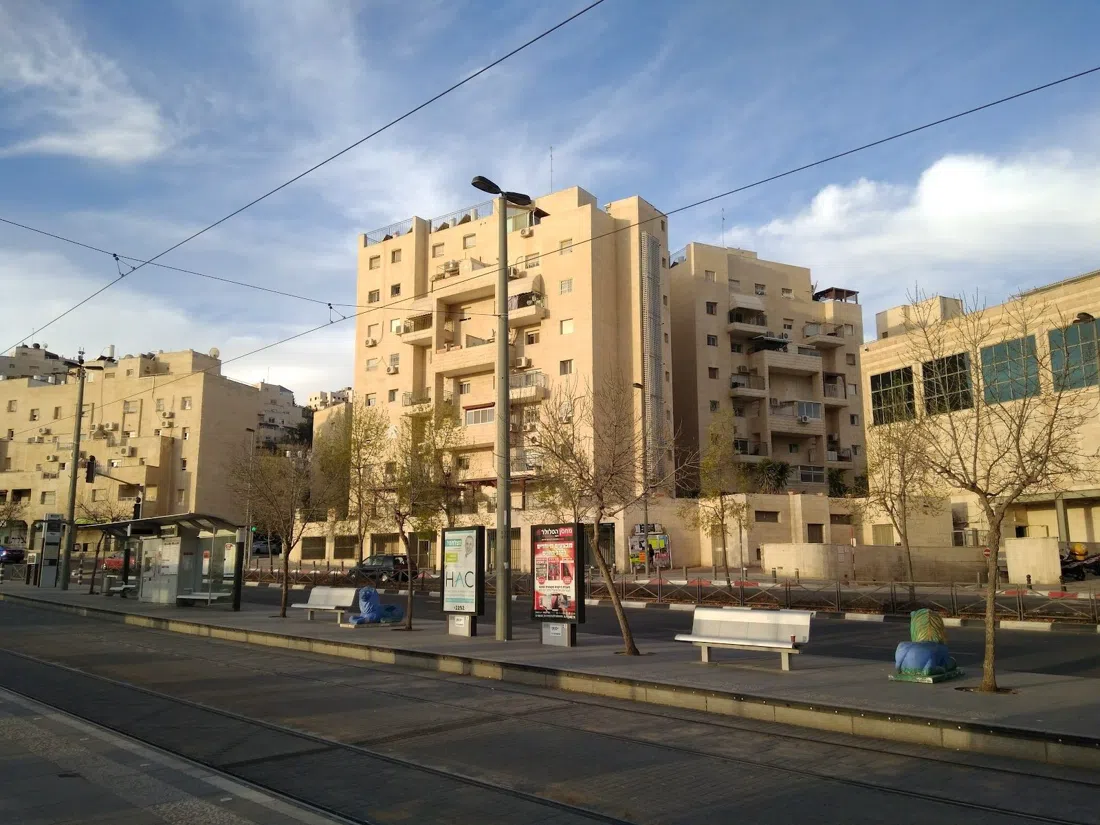
Transport. Buy a Rav-Kav card at any station machine (a small refundable deposit applies) and load it with cash or card; a single ride anywhere on the line is a flat ₪5.90, and the card also works on Jerusalem's buses. The full end-to-end run takes a little under 45 minutes if you don't get off anywhere — but you should, at least at Mahane Yehuda and Damascus Gate.
Timing. Trains run roughly every few minutes at peak and are frequent enough all day that timetables barely matter — the exception is Shabbat. Service stops about an hour before sundown on Friday and does not resume until roughly half an hour after Shabbat ends on Saturday night; plan any Friday-afternoon or Saturday leg of your trip around this, since no trams and reduced buses run citywide during that window.
Cash. Most stops along the route take cards, but Mahane Yehuda's stallholders and the Old City's smaller vendors near Damascus Gate often prefer or require cash — carry small shekel notes for market food and gate-side snacks.
Dress and conduct. Yad Vashem, Mount Herzl, and Ammunition Hill are memorial sites, not backdrops — modest dress (shoulders and knees covered) and quiet conduct are expected, and photography rules are posted and enforced at Yad Vashem specifically. Near Damascus Gate and through the Old City approach, the same modest-dress guidance applies out of practical courtesy as much as custom.
Where to sleep. If you're basing a trip around the line, staying anywhere between the City Hall and Damascus Gate stops puts both the Old City and the market walkable from your door — start with a Jerusalem hotel search for options along that stretch, and see the full Jerusalem guide for what to pair the ride with on either side of it.
Budget. Beyond the ₪5.90 fares, the only real costs on this route are Tower of David admission (~₪54) and Ammunition Hill (~₪25) — Yad Vashem, Mount Herzl, Mamilla, Ben Yehuda, Damascus Gate, French Hill, and Pisgat Ze'ez Mall are all free to enter, so a full day riding and walking the line can cost under ₪100 outside of meals.